- Search Results
Greece Update : Interview with Professor Michael Hudson
- Professor Michael Hudson, born March 14, 1939, is an American economist, professor of economics at the University of Missouri in Kansas City and a researcher at the Levy Economics Institute at Bard College, former Wall Street analyst, political consultant, commentator and journalist.
- Hudson devoted his entire scientific career to the study of debts: both domestic (loans, mortgages, interest payments) and external. In his works he consistently advocates the idea that loans and exponentially growing debts that outstrip profits from the economy of the “real” sphere are disastrous for both the government and the people of the borrowing state.
- The current article is his interview with Sharmini Peries of The Real New Network, 6th May 2017 on his view that bond holders, banks, and IMF bear responsibility for having made irresponsible loans to Greece, so it is not right for them to force yet more austerity on Greece.
Background to the Greek Debit Crisis
The Greek government-debt crisis (also known as the Greek Depression) is the sovereign debt crisis faced by Greece in the aftermath of the financial crisis of 2007–08. The Greek crisis started in late 2009, triggered by the turmoil of the Great Recession, structural weaknesses in the Greek economy, and revelations that previous data on government debt levels and deficits had been undercounted by the Greek government.
As the Great Recession spread to Europe, the amount funds lent from the European core countries (e.g. Germany) to the peripheral countries such as Greece began to decline. Reports in 2009 of Greek fiscal mismanagement and deception increased borrowing costs; the combination meant Greece could no longer borrow to finance its trade and budget deficits at an affordable cost
This led to a crisis of confidence, indicated by a widening of bond yield spreads (Greek bonds compared to other EU bonds) and rising cost of risk insurance on credit default swaps compared to the other Eurozone countries, particularly Germany. (Credit default swaps are a financial contract whereby a buyer of corporate or sovereign debt in the form of bonds attempts to eliminate possible loss arising from default by the issuer of the bonds. This is achieved by the issuer of the bonds insuring the buyer’s potential losses as part of the agreement)
Greece’s large deficit was created by running a large foreign financial investment surplus to fund its government debt. As the inflow of money stopped during the crisis, reducing the foreign financial surplus, Greece was forced to reduce its budget deficit substantially. Countries facing such a sudden reversal in capital flows typically devalue their currencies to resume the inflow of capital; however, Greece was unable to do this, and so has instead suffered significant income (GDP) reduction, another form of devaluation.
Watch the video here (15min) or read the transcript
Sharmini Peries:
“It’s the Real News Network. I am Sharmini Peries coming to you from Baltimore. The European Commission announced on 2nd May 2017, that an agreement on Greek pension and income tax reforms would pave the way for further discussions on debt release for Greece.“The European Commission described this as good news for Greece. The Greek government described the situation in similar terms. However, little attention has been given as to how the wider Greek population are experiencing the consequences of the policies of the Troika.
“On May Day thousands of Greeks marked International Workers Day with anti-austerity protests. One of the protester’s a 32-year-old lawyer perhaps summed the mood, the best when she said …”
Speaker 2:
“The current Greek government, like all the ones before it, have implemented measures that has only one goal, the crushing of the workers, the working class and everyone who works themselves to the bone. We are fighting for the survival of the poorest who need help the most.”Sharmini Peries:
“To discuss the most recent negotiations underway between Greece and the TROIKA, which is the European Central Bank, the EU and the IMF, here’s Michael Hudson. Michael is a distinguished research professor of Economics at the University of Missouri, Kansas City.“He is the author of many books including, “Killing the Host: How Financial Parasites and Debt Bondage the Global Economy” and most recently “J is for Junk Economics: A Survivor’s Guide to Economic Vocabulary in the Age of Deception”. Michael it’s been a while, good to have you back.
Michael Hudson:
“Good to be here.”Sharmini Peries: ”
“Michael, let’s start with what’s being negotiated at the moment.”Michael Hudson:
“I wouldn’t call it a negotiation. Greece is simply being dictated to. There is no negotiation at all. It’s been told that its economy has shrunk so far by 20%, but has to shrink another 5% making it even worse than the depression.“Its wages have fallen and must be cut by another 10%. Its pensions have to be cut back. Probably 5 to 10% of its population of working age will have to immigrate.
“The intention is to cut the domestic tax revenues (not raise them), because labor won’t be paying taxes and businesses are going out of business. So we have to assume that the deliberate intention is to lower the government’s revenues by so much that Greece will have to sell off even more of its public domain to foreign creditors.
“Basically it’s a smash and grab exercise, and the role of Tsipras is not to represent the Greeks because the Troika have said, “The election doesn’t matter. It doesn’t matter what the people vote for. Either you do what we say or we will smash your banking system.”
“Tsipras’s job is to say, “Yes I will do whatever you want. I want to stay in power rather than falling in election.”Sharmini Peries:
“Right. Michael you dedicated almost three chapters in your book “Killing the Host” to how the IMF economists actually knew that Greece will not be able to pay back its foreign debt, but yet it went ahead and made these huge loans to Greece.“It’s starting to sound like the mortgage fraud scandal where banks were lending people money to buy houses when they knew they couldn’t pay it back. Is it similar?
Michael Hudson:
“The basic principle is indeed the same. If a creditor makes a loan to a country or a home buyer knowing that there’s no way in which the person can pay, who should bear the responsibility for this? Should the bad lender or irresponsible bondholder have to pay, or should the Greek people have to pay?“IMF economists said that Greece can’t pay, and under the IMF rules it is not allowed to make loans to countries that have no chance of repaying in the foreseeable future. The then-head of the IMF, Dominique Strauss-Kahn, introduced a new rule – the “systemic problem” rule.
“It said that if Greece doesn’t repay, this will cause problems for the economic system – defined as the international bankers, bondholder’s and European Union budget – then the IMF can make the loan.
“This poses a question on international law. If the problem is systemic, not Greek, and if it’s the system that’s being rescued, why should Greek workers have to dismantle their economy?
“Why should Greece, a sovereign nation, have to dismantle its economy in order to rescue a banking system that is guaranteed to continue to cause more and more austerity, guaranteed to turn the Eurozone into a dead zone? Why should Greece be blamed for the bad malstructured European rules? That’s the moral principle that’s at stake in all this.”
Sharmini Peries:
“Michael, The New York Times has recently published an article titled, “IMF torn over whether to bail out Greece again.” [2]“It essentially describes the IMF as being sympathetic towards Greece in spite of the fact as you say, they knew that Greece could not pay back this money when it first lent it the money with the Troika. Right now, the IMF sounds rational and thoughtful about the Greek people. Is this the case?”
Michael Hudson:
“Well, Yanis Varoufakis, the finance minister under Syriza, said that every time he talked to the IMF’s Christine Lagarde and others two years ago, they were sympathetic.“They said, ‘I am terribly sorry we have to destroy your economy. I feel your pain, but we are indeed going to destroy your economy. There is nothing we can do about it. We are only following orders.‘
“The orders were coming from Wall Street, from the Eurozone and from investors who bought or guaranteed Greek bonds.
“Being sympathetic, feeling their pain doesn’t really mean anything if the IMF says, “Oh, we know it is a disaster. We are going to screw you anyway, because that’s our job. We are the IMF, after all. Our job is to impose austerity. Our job is to shrink economies, not help them grow. Our constituency is the bondholders and banks.”
“Somebody’s going to suffer. Should it the wealthy billionaires and the bankers, or should it be the Greek workers? Well, the Greek workers are not the IMF’s constituency. It says: “We feel your pain, but we’d rather you suffer than our constituency.”
“So what you read is simply the usual New York Times hypocrisy, pretending that the IMF really is feeling bad about what it’s doing. If its economists felt bad, they would have done what the IMF European staff did a few years ago after the first loan: They resigned in protest.
“They would write about it and go public and say, ‘This system is corrupt. The IMF is working for the bankers against the interest of its member countries.’ If they don’t do that, they are not really sympathetic at all. They are just hypocritical.”
Sharmini Peries:
“Right. I know that the European Commission is holding up Greece as an example in order to discourage other member nations in the periphery of Europe so that they won’t default on their loans. Explain to me why Greece is being held up as an example.”Michael Hudson:
“It’s being made an example for the same reason the United States went into Libya and bombed Syria: It’s to show that we can destroy you if you don’t do what we say. If Spain or Italy or Portugal seeks not to pay its debts, it will meet the same fate. Its banking system will be destroyed, and its currency system will be destroyed.“The basic principle at work is that finance is the new form of warfare. You can now destroy a country’s economy not merely by invading it. You don’t even have to bomb it, as you’ve done in the Near East. All you have to do is withdraw all credit to the banking system, isolate it economically from making payments to foreign countries so that you essentially put sanctions on it. You’ll treat Greece like they’ve treated Iran or other countries.
“We have life and death power over you.” The demonstration effect is not only to stop Greece, but to stop countries from doing what Marine Le Pen is trying to do in France: withdraw from the Eurozone.
“The class war is back in business – the class war of finance against labor, imposing austerity and shrinking living standards, lowering wages and cutting back social spending. It’s demonstrating who’s the winner in this economic warfare that’s taking place.”
Sharmini Peries:
“Then why is the Greek population still supportive of Syriza in spite of all of this? I mean, literally not only have they, as a population, been cut to no social safety net, no social security, yet the Syriza government keeps getting supported, elected in referendums, and they seem to be able to maintain power in spite of these austerity measures. Why is that happening?”Michael Hudson:
“Well, that’s the great tragedy. They initially supported Syriza because it promised not to surrender in this economic war. They said they would fight back. The plan was not pay the debts even if this led Europe to force Greece out of the European Union.”“In order to do this however, what Yanis Varoufakis and his advisors such as James Galbraith wanted to do was say, “If we are going not to pay the debt, we are going to be expelled from the Euro Zone. We have to have our own currency. We have to have our own banking system.” But it takes almost a year to put in place your own physical currency, your own means of reprogramming the ATM machines so that people can use it, and reprogramming the banking system.
“You also need a contingency plan for when the European Union wrecks the Greek banks, which basically have been the tool of the oligarchy in Greece. The government is going to have to take over these banks and socialize them, and use them for public purposes.
“Unfortunately, Tsipras never gave Varoufakis and his staff the go ahead. In effect, he ended up double crossing them after the referendum two years ago that said not to surrender. That lead to Varoufakis resigning from the government.
“Tsipras decided that he wanted to be re-elected, and turned out to be just a politician, realizing that in order to he had to represent the invader and act as a client politician. His clientele is now the European Union, the IMF and the bondholders, not the Greeks. What that means is that if there is an election in Greece, people are not going to vote for him again. He knows that. He is trying to prevent an election. But later this month (May 2017) the Greek parliament is going to have to vote on whether or not to shrink the economy further and cut pensions even more.
“If there are defections from Tsipras’s Syriza party, there will be an election and he will be voted out of office. I won’t say out of power, because he has no power except to surrender to the Troika. But he’d be out of office.
“There will probably have to be a new party created if there’s going to be hope of withstanding the threats that the European Union is making to destroy Greece’s economy if it doesn’t succumb to the austerity program and step up its privatization and sell off even more assets to the bondholders”
Sharmini Peries:
“Finally, Michael, why did the Greek government remove the option of Grexit from the table in order to move forward?”
Michael Hudson:
“In order to accept the Eurozone you’re using its currency, but Greece needs to have its own currency. The reason it agreed to stay in was that it had made no preparation for withdrawing. Imagine if you are a state in the United States and you want to withdraw: you have to have your own currency. You have to have your own banking system. You have to have your own constitution. There was no attempt to put real thought behind what their political program was.“They were not prepared and still have not taken steps to prepare for what they are doing. They haven’t made any attempt to justify non-payment of the debt under International Law: the law of odious debt, or give a reason why they are not paying.”
“The Greek government has not said that no country should be obliged to disregard its democratic voting, dismantle its public sector and give up its sovereignty to bondholders. No country should be obliged to pay foreign creditors if the price of that is shrinking and self destruction of that economy.”
“They haven’t translated this political program of not paying into what this means in practice to cede sovereignty to the Brussels bureaucracy, meaning the European Central Bank on behalf of its bondholders.”
Sharmini Peries:
“All right Michael, we will keep an eye on this. It looks like it’s going to get more heated in Greece. At least the people and the movements are planning to protest this new deal. I thank you so much for joining us and I hope you can join us again. I understand you are on your way to Greece in a few weeks and we’ll be expecting a report back from you about what you find there. Thank You.”
Michael Hudson:
“Thanks for having me on.”Sharmini Peries:
“Thank you for joining us here on the Real News Network”- In international law, odious debt, also known as illegitimate debt, is a legal doctrine that holds that the national debt incurred by a regime for purposes that do not serve the best interests of the nation, should not be enforceable.
Citations
[1] http://michael-hudson.com/2017/05/imf-to-greece-sorry-well-destroy-you/
[2] https://www.nytimes.com/2017/04/21/business/dealbook/international-monetary-fund-greece-bailout.html?_r=0
[3] https://mises.org/library/will-imf-bail-out-greece-againI discovered MGTOW on Sunday, after a weekend that ended with a woman I was dating telling me I was not worth her time and that if I tried to approach her again she would tell the entire office I’m a virgin. I explained that in detail in my intro. Before this weekend I had no idea about the red pill or any of the ideas discussed here, but I know that if I hadn’t found it, I wouldn’t be trying to crawl out of the hole she got me in. I would have probably ended my life, the emotional pain I felt was so much. This incident was the final straw, it wasn’t an isolated one but the accumulation of everything just really got to me.
It has been so hard to try to understand why this happened to me or why it happens to a lot of men. In all honesty, is hard to change a lifetime of trauma in only a couple of days here, but I’m trying my hardest. I promise. I’m reading and listening to everything all the guys here have sent me. But I still woke up this morning feeling very sad. I’m 25- years-old, and I know my life hasn’t been great, and that maybe I should much stronger mentally but this morning, just thinking about going to work and seeing this woman walk around the office, just made want to vomit out of sheer anger. I’ve suffered from panic attacks since I was a teenager, and I’m afraid that it might happen to me at work. The level of cruelty she showed towards me, make me believe that she might enjoy seeing me like that. Not sure if anybody else here has ever had a panic attack in a public setting, but it’s one of the most horrifying things ever.
I guess I’ m not sure why panic attacks happen to me, but maybe it’s connected to how I was brought up, or maybe is genetic. I don’t know. The past couple days I’ve been thinking a lot about how I grew up. I was raised by a single mother, who had a lot of boyfriends throughout my childhood, my aunts, and my grandmother. I never had a male figure in my life, so I never really knew how a man had to behave. My mother’s love always felt conditional. If I behaved the way she wanted me to then she acted caring. She wanted me to always be polite, a gentleman, and be quiet. She always told me she didn’t want me to become like my father. None of the men she dated ever stuck around for long. As a kid I honestly always hoped one of them would stick around and be my dad. Like, I just wanted someone to take me to the park, or an ally in this house full of women. I never had a voice in this house.
All my childhood and teenage years my mom wanted to have just caged at home. I never had any friends because I had to go from school straight home to take care of grandma or help my aunts. I didn’t mind. I’m not ungrateful. They did provide for me, but I never felt much love. I always felt like my aunts, my mom, and my grandma would project their hatred towards the men in their lives on me. Sometimes I just wanted a hug you know? Or like to feel protected or like someone had my back. Of course, I was always super shy and quiet because that’s how my mother taught me. I was an easy target for bullies at school. When I showed up with a black eye or bruises none of them told me to fight back or that they would help me out. They would instead be mad at me. I always felt they were so ashamed of me just because I was a boy.
My mother didn’t want me to hang out with other boys or young men. She never allowed me to play sports, or to join any activities. I wasn’t allowed to bring friends into the house and I had all the duties of “the man of the house.” Whatever that meant. To me it meant that on weekends I had to mow the lawn, or clean the house, or run errands. It was a pretty sad childhood and teenage years. When I became a teen I felt like me being a young man caused a lot of conflict at home. Like my mom and my aunts didn’t want me to be masculine. I was just normal you know? Like any other 16 or 17 year –old boy I wanted to do things. One time one of my aunts accidentally caught me masturbating, and it was like the end of the world was coming. She told my mom and she scold me. She told me I was disgusting and that nice people didn’t do those things. I felt so ashamed and embarrassed. Little by little I just became a shadow of a boy. It was like she didn’t want me to be a man, or like being masculine was a crime. It really messed me up, and of course, I had to dad, no uncles, no grandpa, and not even cousins because my aunts never married or had kids. I was the only boy in that family. I felt so alone and like they didn’t understand me or wanted to.
When I finally moved out of that house I tried to start a normal life, but it was very difficult to get my mind off what I had been trained to feel. Believe it or not my panic attacks and anxiety actually got worse once I moved out. I felt so incompetent, like I didn’t know what to do with so much freedom, and that would make me freak out. For the first time in my life I started trying to go on dates, often very unsuccessfully. I’m not a model or an actor, but I think I look Ok, so I always thought that if women were not paying attention to me it was because of my personality. Sadly, even at this stage in life I couldn’t find supportive men around me or friends. Co-workers at the office were all married with kids or in long-term relationships with their girlfriends. Sometimes I just wanted to go out for a beer you know? Like to have a buddy to talk about that new movie or that one awesome football game, or whatever. I noticed that most of the guys at the office either hanged out with other guys that were married or with their high school friends. I didn’t have any high school friends and at some I just stopped trying to invite co-workers out for beers. Rejection hurts a lot, and I guess I was already wrecked emotionally to take more. When I turned 21, a few years back, I thought of looking for my dad, but I knew my mom wouldn’t tell me anything, and maybe he wouldn’t want to see me.I kept on trying to date. Back then I felt like asking a girl out was the bravest thing a guy could do. Sometimes they would say yes, but then when I asked for a second date they would just act like if I was harassing them. Dating apps just made me feel even more stupid. I felt like it was a job interview just to get a date. I thought, “Is there really not a single woman that’s interested in me?” That hurts a lot. It make questioned whether I was the problem, or maybe if I had listened to my mother, or maybe if I had a better job, or if I started going to the gym they would find me more attractive. At the same time, I often feel like I have no voice, like nothing I say matters. At work and everywhere else I’m often told, “You shouldn’t talk about that because you are straight white male.” I just feel so dismissed, like my thoughts just don’t matter for being a straight male. I mean just because I’m a straight male doesn’t mean I can’t feel compassion right. Why do women and society have to make me feel like I’m the worst monster just because of how I was born?
For those of you who don’t know yet, I was recently dating a woman from work, which I now see was a terrible mistake. We went out for a couple months, but she didn’t want to have sex. I’m a virgin, and of course I was excited with the prospect of having sex. After a couple months dating I decide to plan a weekend getaway as a special occasion for us to finally be intimate. She cancelled on me the day we were supposed to leave (Friday). Then she wouldn’t reply to my calls or texts. There was no reason for her to act that way. We hadn’t argued or anything. I was really upset and shocked by her behavior. I went to her apartment on Saturday and she very aggressively told me she wanted to do with me and that if I approached her again she would tell the whole office that I’m a virgin. It just f~~~ing broke me down badly. I’m still not fully ok, but thanks to the fact that I discovered this site I’m trying to get out of this hole. This girl would always tell me that she thought I was too innocent and pure for her, but I guess I thought she meant it in a good way. I don’ t do drugs, I don’t drink often, I have no tattoos, I’m respectful. But now I see that being innocent or naïve is a negative quality for women.
Saturday I did drink a lot after she told me those things. I got really drunk because I was angry and hurt. On my way home I took an Uber, and the driver told me he had seen the same “lost puppy” eyes I had on so many other young men. Then he told me about MGTOW, and that’s how I go here. I don’t want to be a mangina. I don’t want to disappoint all the guys that have shared their wisdom with me here, but I know still feel weak mentally. It really makes sad that I never had a father in my life. I wondered how different I would be if I had had an ally in my life growing up. At 25 I still feel like a child and not a man, and that angers me with myself. Sorry for the very long post. I just have a lot of thoughts in my head right now.
Washington Turn Puerto Rico into the next Venezuela or Greece
This is an update on the ongoing financial crash of Puerto Rico that was discussed in my post here.
Preamble – A New Reality for the Colonists
On 3rd May 2017 the American colony of Puerto Rico (or the United States commonwealth) officially became the largest bankruptcy case in the history of the American public bond market. A fiscal control board imposed on the island’s government by Washington announced that Puerto Rico’s economic crisis had “reached a breaking point.”
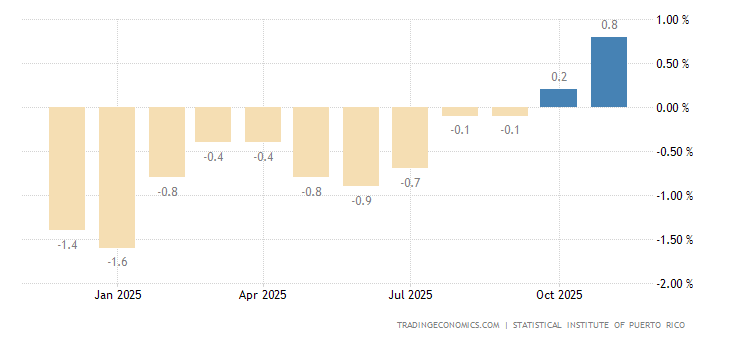
Everywhere in the United States commonwealth, private-sector jobs are being lost. Total employment in Puerto Rico has fallen from 1.25 million in the last quarter of the 2007 fiscal year workers to less than a million almost a decade later.
Without employment, large numbers of Puerto Ricans (who are US citizens) have emigrated. But, despite this flight, the unemployment rate is now 12.4%. Without job prospects, the labor participation rate has plummeted to 40%, two-thirds of the level on the US mainland. About 60% of Puerto Rico’s children live in poverty.
The commonwealth’s debt position is clearly unsustainable, and its economy will be able to recover only if it gets a fresh start. But, unlike US municipalities, Puerto Rico is not protected by the US bankruptcy code. It is well known that decentralized bargaining processes for debt restructuring often lead to disastrous outcomes, with the relief obtained being insufficient to restore debt sustainability.
Aware of this reality, Puerto Rico enacted its own bankruptcy law, but the US Supreme Court struck it down, because the island is de facto an American colony, and the federal bankruptcy code permits only the US Congress to enact bankruptcy legislation over its territory.
Eventually, Congress took action and enacted PROMESA, a law ostensibly designed to facilitate debt restructuring and economic recovery. Reflecting the standard colonialist view that a colony cannot be trusted to make independent decisions, a bipartisan Financial Oversight and Management Board was created to make fiscal decisions for Puerto Rico.

What is being done? I mean – really?
Congress asked for the immediate appointment of a Federal judge to decide how to deal with a staggering $123 billion debt the Commonwealth government and its public corporations owe to both bondholders and public employee pension systems. Detroit’s bankruptcy, by comparison, involved just $18 billion — one-ninth the size of Puerto Rico’s.
Supreme Court Chief Justice John Roberts, acting under a provision of the Puerto Rico Oversight, Management, and Economic Stability Act (known as PROMESA) appointed federal Judge Laura Taylor Swain from the Southern District of New York to take over the Puerto Rico case.
Few press reports on Puerto Rico’s troubles, however, have bothered to examine the deeper issues behind this crisis.
First, the colonial relationship that has prevailed between the U.S. and Puerto Rico since 1898 is no longer viable.
Puerto Rico is the largest overseas territory still under the sovereign control of the United States, and it is the most important colonial possession in this nation’s history.
That relationship produced uncommon profits for American subsidiaries on the island for more than a century, even as the federal government kept claiming that the Commonwealth of Puerto Rico, created in 1952, was a self-governing territory. But now, with a Washington-appointed board directly overseeing the island’s economy, and with a pivotal Supreme Court decision last year affirming that Congress continues to exercise sovereign power over Puerto Rico, the mask of self-governance has been removed.
There will be no huge infusion of U.S. public dollars to prop up its collapsing economy, a scenario that is nearly impossible with a Trump White House and a Republican-controlled Congress.
Political leaders in both Washington and San Juan, whether they like it or not, are being propelled to fashion a new political and economic status for the territory. They will have to finally decide whether to completely annex Puerto Rico as the 51st state or acknowledge that it still remains a distinct nation, with the right to its own sovereignty and independence. This means Puerto Rico will have to source bailout funds and adopt austerity and will be the American Greece – beholden to the Federal Reserve.
Second, the impact of Puerto Rico’s bankruptcy will continue to reverberate throughout the U.S. bond market, far more than most Wall Street analysts have so far acknowledged.
The PROMESA control board has warned that even with massive cuts to government services and new projected revenues from higher taxes and fees, Puerto Rico will still generate slightly less than $8 billion in budget surpluses over the next 10 years, when some $35 billion in debt service comes due. In other words, three-quarters of the outstanding debt cannot be repaid.
That is not just a haircut for American bondholders; it is a head-shaving, one that will send shock waves throughout the municipal bond market. After all, bonds backed by the full faith-and-credit of local government entities have long been considered among the safest of investments.
It is worthy to note that a significant amount of the debt has been bought by US pension funds. At a time when the baby boomers have tarted to retire this may put US pension and mutual funds in financial straits.
Years of court battles between Puerto Rico and contending groups of creditors are now certain. “The economy of Puerto Rico will be put on hold for years,” Andrew Rosenberg, adviser to the Ad Hoc Group of Puerto Rico General Obligation Bondholders, told the Associated Press. “Make no mistake: The board has chosen to turn Puerto Rico into the next Argentina.”
The Case for Excess (or Greed is Good)
Civil society groups contend that the plunder of the Puerto Rican people through predatory and even illegal bond deals that island politicians concocted together with top Wall Street firms will now be exposed.
Amazingly, the 23-page petition that the federal government’s own financial control board filed in U.S. District Court in San Juan reached the exact same conclusion that Puerto Rico’s former Gov. Alejandro García Padilla reached back in June 2015 — that the island’s debt is “not payable.”
In the nearly two years since García Padilla sounded the alarm, however, Washington has done almost nothing to alleviate the economic catastrophe afflicting 3.4 million U.S. citizens in Puerto Rico, except to establish the control board by enacting PROMESA.
On an island that has lost 10 percent of its population in the last 10 years, where 46 percent of the population lives below the U.S. poverty level, where the unemployment rate is more than 11 percent, and where the labor force participation hovers around 40 percent, lawmakers in Congress have kept insisting on greater austerity from Puerto Rico’s population.
The reality is such dire conditions would never be tolerated among U.S. citizens in any other jurisdiction, yet they are allowed to persist in Puerto Rico.
Under the control board’s pressure, Gov. Ricardo Rosselló, who took office in January, is eyeing the privatization of the government-owned electric company, the water and sewer authority, even the public transit system. But even massive cuts and selling off public assets can’t solve the problem that there aren’t enough jobs on the island, that young people keep fleeing to the United States, and that Puerto Rico’s government is powerless to fashion its own economic and trade policy independently from the U.S.
The use of the US dollar means the currency is not within their control and therefore independent fiscal policies (such as currency devaluation or interest rate drops) are possible. To be a independent nation Puerto Rico needs a Central Bank, a Treasury, a government bond market, open capital flows and an independent currency. It has none of these.
For decades, Puerto Rico was important to the American economy as a center of sugar cane growing, then as a tax haven for manufacturing and pharmaceutical companies, and as a military stronghold and bulwark against the spread of communism in Latin America. But now it is no longer needed for any of these things.
Most of the U.S. military bases have closed, and Congress began in 1996 to phase out the island’s tax haven status. As soon as the last of the federal tax breaks — known as Section 936 — ended in 2006, corporations started leaving and the island plunged into a recession from which it has yet to recover.
For the past 20 years, a succession of island governments has been closing structural operating deficits with borrowed funds supplied by Wall Street firms eager to market its triple tax-exempt bonds to wealthy and middle-class Americans and Puerto Ricans.
Investors were especially drawn to a provision of the Puerto Rico constitution that required the government to pay general obligation debt service ahead of any other expenses, and by the fact that Puerto Rico and its public corporations were legally prevented from resorting to Chapter 9 bankruptcy, the portion of the bankruptcy code that applies to most local governments and municipalities.
Until 1978, Congress had included all the territories and possessions of the United States under Chapter 9, so Puerto Rico had bankruptcy protection until then. But between ’78 and the early ’80s, there were several changes to U.S. bankruptcy law. In 1984, an amendment was inserted into the law by South Carolina Sen. Strom Thurmond that specifically excluded Puerto Rico from Chapter 9.
No reason was given. No federal policy or interest in the change was spelled out in the amendment process. By a few simple phrases in an amendment that few people noticed, Congress laid the basis for the unique situation Puerto Rico confronted last year. It was not only broke, there was no established legal recourse for it to get a court to decide how its many creditors would get paid or how much.
What next (or is it who cares)?
The PROMESA bill Congress enacted at least created a new type of Chapter 9-like process for the island. The bill stipulates that if the Puerto Rican government and the control board cannot reach voluntary settlements with bondholders, a judge can be appointed and creditors forced to accept a settlement, known as a “cram-down.”
But PROMESA is bringing more problems than solutions. Recently, the Board—seemingly lacking both any understanding of basic economics and democratic accountability to provide checks against its incompetence – published its demands for the next fiscal year. The Board actually predicted that its proposals would turn Puerto Rico’s recession into a depression of a magnitude seldom seen anywhere: a 16.2% decline in GNP in the next fiscal year (and a further decline the year after), which is comparable to the experience of countries undergoing civil wars, or that of crisis-ridden Venezuela – or of Greece before the bailouts.
That is because the Board’s plan gives priority to the island’s creditors. It arbitrarily defines a minimum that must be paid to them in the short run, and forces the government to do whatever it takes to reach that goal, even if it means devastating the local economy. Indeed, the plan all but guarantees a social as well as an economic catastrophe, owing to substantial cuts in pensions, education, and health spending.
With so much money at stake the various groups of bondholders are determined to wage a titanic legal battle against it.
Hedge funds Aurelius Capital Management and Monarch Alternative Capital, insist that Puerto Rico’s Constitution requires them to be paid first from all available revenues. Ambac has insured billions of dollars in sales tax revenue bonds, known as COFINA bonds, that Puerto Rico has issued since 2006, and the company, along with other bond insures, faces enormous losses
While the contending bondholder groups battle in the courts, the PROMESA board has now sided with the Puerto Rico government that bondholders will have to accept major reductions in payments.
Remarkably, the Board’s plan is sketchy when it comes to its central obligation: crafting a plan for debt restructuring. This is shortsighted, because depressing the economy further will fuel a debt spiral. US taxpayers will lose, too: they will pay for the costs entailed by higher emigration. In the long run, even the creditors will lose. The proposed course is not only unfair, but also inefficient and ultimately self-defeating.
Those who advocate servicing part of the outstanding debt payments now claim that this would show that Puerto Rico is willing to pay, which in turn would inspire confidence on the part of creditors and investors. But Puerto Rico’s problem is a lack of capacity to pay, not a lack of willingness. The only way the commonwealth can stimulate confidence is by restoring economic growth.
The plan does include sensible calls for improving tax collection and the efficiency of government spending. But, though necessary, such measures will not resolve the crisis.
The Board is confusing efficiency with austerity. And while it would be nice if one could magically bring about productivity increases, the island’s real problems call not so much for supply-side reforms as for increased demand. Puerto Rico is in a demand-constrained regime, demonstrated by the significant subutilization of its factors of production. The Board’s plan markedly exacerbates this problem, without showing any awareness that it is doing so.
In a demand-constrained regime, recent measures to increase labor-market flexibility – and thus facilitate the lowering of wages by employers – will not result in faster growth. On the contrary, lower wages will lead to decreased spending, aggravating the depression, and further increase the likelihood of immigration to the US, where salaries are substantially higher.
In closing, Federal lawmakers will either have to provide massive assistance to Puerto Rico, or they will have to move rapidly to change the island’s political and economic status. After a century of colonial rule by Washington and decades of predatory debt from Wall Street, the bill has come due.
The PROMESA Board was supposed to chart a path to recovery; its plan makes a recovery a virtual impossibility. If the Board’s plan is adopted, Puerto Rico’s people will experience untold suffering. And to what end? The crisis will not be resolved. On the contrary, the debt position will become even more unsustainable

Citations
https://theintercept.com/2017/05/09/puerto-ricos-123-billion-bankruptcy-is-the-cost-of-u-s-colonialism/
https://www.project-syndicate.org/commentary/puerto-rico-debt-plan-deep-depression-by-joseph-e–stiglitz-and-martin-guzman-2017-02I’m sorry but their is an inherent trend of favouritism for men who are dumb amongst woman. Perhaps it’s because woman don’t like feeling stupid or are able to maintain longterm conversations with someone smart. Perhaps it’s because dumb men are easier to control and manipulate. But idiots seem to have good fortune without even recognizing that they do.
Whatever it is their’s a genuine dislike for smart men outside of when it plays to womans benefit like in academic pursuits. Due to this I think I plan on dumbing myself down purposely in public. Make a little game out of it. I already have been considering doing it because I’ve notice when I act stupid people are surprisingly more socially receptive to me and tend to hold you less responsible for anything.
Perhaps this is one of the final levels of intelligence, feigning stupidity to lure others into a false sense of mental equality.
First of all, please at least understand that I know physical attraction is a full of crap and AWALT, it doesn’t define who they are. I may don’t get to experience enough actual relationships after turned down so many potential opportunities for a variety of personal reasons at different time over the last decade when I could have successfully drove my mental health and net worth nosedive if I let my libido do all the brainwork at the wrong time, I’ve seen enough of them go bananas on me to noticed they’re all the same, predictable, just being plain retards and bring an army of misinformed girlfriends in attempt to “take me down” without even bother ask me what the f~~~ is going on between me and any one of them, why I didn’t go all the way, I don’t care about who and how screwed up more… I could go on but I digress. What I’m trying to get out of this is, there’s something that strangely changed me ever since I decided to go my own way like two years ago. I suspect it may get out of control that it end up get the best if me if I have no one else I can trust to not meddle my voice against me and concentrate on raise me above the influence instead of bring me down to the dirt. I even don’t allow a therapist get deeper into my jungle of red pill creed ’cause I’m now somehow manage to be able to smell a different shapes of blue pills before I know it. Heck, if this goes wrong who know I’d probably rather snap and go on killing spree before take myself out of this f~~~ing stupid planet than give in and reassimilate myself back into gynocentric culture!*
Prior to discover MGTOW I was in gray area when I tried to find my place in the ongoing wars between manosphere and gynocentrism, I used to not be affected so much by how women try to make herself look cute, even the one perceived by many guys to be the hottest in the vicinity. If we haven’t had any direct interaction then why should I care about being encourage into woo over her when there’s no possibility that there’s a good thing come out of us anyway? I don’t care if it’s something romantic or a workable no-straw-attached platonic relationship, I would give her an 8 at best while others give her a 10, even an 11. I mean, I can vividly remember for a long time other guys drool over breasts I’m like uh? Boobies, really? What are you, a big baby?
I’m going to get a bit off the course but I’ll get to that. It’s been six years since I failed to warn a girl to stop, according to my reptilian brain, involuntary play too hard to catch, hot and cold, pull and push, send mixed signals and all of that stupid s~~~. I knew that if she care about me so much as she claimed she do, then she need to stop repeatedly ignore me especially when it’s so blatantly obvious that it was not a non-rhetorical engagement and start act like a friend if she don’t want a, for the lack of a better word, “stalker” to orbit around her without her realized it. It went on for six years on and off and it’s over in a brutal way, I don’t want and won’t to go deep into this bulls~~~ but if you’re dying to know more about this then I expect to be treat with respect the same way I respect and admire many of you, I need to know if I can trust you to not f~~~ it up again like the last time. The reason why I bring this up is because it took me long to get over this mourning of collect pieces of my broken heart back together inside a new stone-cold cage I installed in my chest to protect myself from another moment of humiliation and embarrassing… it wasn’t even completed before the unexpected happening. I went to a bar to see what’s up with some friends since I moved out of my hometown, I was play a pool at that time. When I was about to beat my opponent, I noticed in the corner of my peripheral vision there’s a blonde girl with blue eyes, she didn’t hide her excitation at all, encouraged me to beat him because her turn is next. When I claimed a victory, she leaped a couple of times and we shaked our hands, our eyes met… in a sedative way. When she mentioned her name, I used my other hand to point my ear to sign that I’m deaf and poof! She surprised me when she fingerspell her name out while our eyes and hands still locked, she is pretty good at it. Umm… that’s a bonus I guess? When she set up the pool game and I took a second look at her… oh my god, I don’t know what happened but I saw luminous aura came out of her. For the first time in my entire life, both of my heart and brain completely agreed with each other so my head was being overdosed with dopamine, and my body scream at me to go for it and rip her clothes off in her bed. I keep that all of that to myself and tried to rationalize myself out of it, after I beat her in the pool game, she’s still walk around me and want to fingerspelled “You are a good shoot” and glare at me to see if I start to rapport with her. This is the moment of truth, I never felt this confident about seal my future with a girl before as I am about to stare back at her….but….I stopped the timeline from alter itself on me and looked away, told her to cut it off. I twisted my futile heart with a knife I meant to push out! I know this is what we’ve been look for but I can’t do it, if we rush into the joyous thrill of rollercoaster it’ll bring us much more misery and painful faster than me reflexively rejected her. I feel horrible and s~~~ty when I drove 20 miles back home and when I went straight into bed, I tell myself… was that love at sight that many “seems” to get it but don’t really have a clue what exactly is that? Now I understand this isn’t kind of Disney bulls~~~ that just one little spark suddenly lead everything into all sunshine and rainbow, in reality it come with a bittersweet price, or I tell myself that. If I still give you the impression that I sounds like I’m a blue piller, guess what? I KNOW and subtitles in the YouTube world of manosphere I assume that’s where you learn the most from is at best terrible and poorly understood that I can’t catch up quickly enough with you folks. Try one or two video with both subtitles and mute on to see what I’m talking about. That was over three years ago and I’m still snicker my ass off at other guys go the same way I went through with and think the unicorn myth is a hogwash even after that fluke. Anyway…
I’m finally getting to the point why I spend a half day to type this, I thought ever since I let her get through my fingers I don’t think I would ever fall for any girl as hard as she somehow bypass the cage and get through to my heart in a matter of seconds. She inspired me to get myself together and I still add more locks and layers of ice sheets around my heart in cage, more sophistic than ever so it’ll be much harder for other girls try win me over. It helped me tremendously when I found this forum and put me back on the right track so I figured if I join I’ll be the same guy who want to focus on himself again before that bitch screwed his life over ten years ago. When I started to apply MGTOW principles to my life, I thought now that I’m past my prime (early 30), visual-wise women don’t matter much to me anymore and look more dull as I work on see through their scam and enriching myself but it’s not what I expected, my fancy in different kind of girls has completely changed that I didn’t gather what’s going on inside my head in short time. I mentioned I don’t care about boobs but now if I can get away with a peek, I absolutely would and sometimes I lost the track of time when I looked at a nice shape of t~~~ in the Internet. Some of girls in 5-6 moved up to 6-9, some 7-8 moved down down to 4-7 and call a girl a 10 is still rare to me, I think I just like them more equally. I’m not interest in latinas anymore for some reasons, I’m not used to be a fan of ebony, now I like the one with blue eyes even more, gingers are sexy as f~~~ and of course I’m drooling at blonde girls with blue eyes. Apparently I’m no longer a demisexual or whatever that sexual orientation is real or not, I still keep those thought to myself and if a guy tell me he’ll be my wingman to help me hit on a chick I would tell him to do it himself if he have a gut to put his thingy into that blackhole of oblivious while I observe all over her whole body from a safe distance… yeah his penis is in the right place and I’m not that dumb either, I like my freshlight better thanks. It all boils down to those questions, is it just me, or do going your own way change you look at women in the term of their attractiveness? What am I supposed to do with this, I don’t know what to called it, libido crisis or something so I don’t lose it and make some bad decisions or worse?
*That was an exaggerated sarcasm, only wimmin would overreact to that for all I care. Then again, we all know an ordinarily, sane human is capable of extreme violence under certain situations don’t we?
I'm a deaf tiger, hear me roar!
A Short History of the Neocon Takeover of the United States
This article is the second part of a four-part series on Truthdig called “Universal Empire”—an examination of the current stage of the neocon takeover of American policy that began after World War II. The other parts are here : 1 3 4

By Paul Fitzgerald and Elizabeth Gould
http://www.Truthdig.com
24th April 2017Part 2 : How Neocons Push for War by Cooking the Books
A New Ideology
Most Americans outside Washington policy circles don’t know about Team B, where it came from or what it did, nor are they aware of its roots in the Fourth International – the Trotskyist branch of the Communist International.
Lawrence J. Korb, a senior fellow at the Center for American Progress and assistant secretary of defense from 1981 to 1985, attributed the intelligence failure represented by 9/11 to Team B and had this to say about it in a 2004 article [2] for the Los Angeles Times.
- The roots of the problem go back to May 6, 1976, when the Director of Central Intelligence, George H.W. Bush, created the first Team B to assess a report his agency had done on Soviet strategic objectives. The report—a National Intelligence Estimate, or NIE, completed the previous year—did not endorse a worst-case scenario of Soviet capabilities and, as a result, some outsiders demanded access to the same classified intelligence used by the CIA in preparing it so that they could come to their own conclusions
- The concept of a “competitive analysis” of the data done by an alternative team had been opposed by William Colby, Bush’s predecessor as CIA director and a career professional. But Bush caved in, under pressure from President Ford, who was facing a strong challenge from right-wing Republicans in that year’s presidential primary, as well as from then-Secretary of Defense Donald Rumsfeld’s Pentagon, which was trying to undermine support for Henry Kissinger’s detente with the Soviet Union.
- The outside experts on Team B were led by Harvard professor Richard Pipes and included such well-known Cold War hawks as Paul Nitze, William Van Cleave and Paul Wolfowitz. Not surprisingly, Team B concluded that the intelligence specialists had badly underestimated the threat by relying too heavily on hard data instead of extrapolating Soviet intentions from ideology.
- The Team B report was enthusiastically received by conservative groups such as the Committee on the Present Danger [3]. But the report turned out to be grossly inaccurate. Team B was right about one thing. The CIA estimate was indeed flawed. But it was flawed in the other direction.
Korb went on to explain that a 1978 Senate Select Committee on Intelligence review concluded “that the selection of Team B members had yielded a flawed composition of political views and biases”. And a 1989 review concluded that the Soviet threat had been ‘substantially overestimated’ in the CIA’s annual intelligence estimates.
Still, the failure of Team B in 1976 did not deter the hard-liners from challenging the CIA’s judgments for the next three decades.
Now long forgotten, the origins of the Team B “problem” actually stretched back to the radical political views and biases of political theorist James Burnham, his association with the communist revolutionary Leon Trotsky and the creation of powerful Eastern establishment ad-hoc groups: the Committee on the Present Danger and the American Security Council. [4]
From the outset of the Cold War in the late 1940s, an odd coalition of ex-Trotskyist radicals and right-wing business associations had lobbied heavily for big military budgets, advanced weapons systems and aggressive action to confront Soviet Communism.
Vietnam was intended to prove the brilliance of their theories, but as described by author Fred Kaplan in “The Wizards of Armageddon” (in page 336):
- “Vietnam brought out the dark side of nearly everyone inside America’s national security machine. And it exposed something seamy and disturbing about the very enterprise of the defense intellectuals. It revealed that the concept of force underlying all their formulations and scenarios was an abstraction, practically useless as a guide to action.”
Kaplan ended by writing: “The disillusionment for some became nearly total.” Vietnam represented more than just a strategic defeat for America’s defense intellectuals; it represented a conceptual failure [5] in the half-century battle to contain Soviet-style Communism, but for Team B, that disillusionment represented the opportunity of a lifetime.
Trotskyist Intellectuals become the New York Intellectuals Become Defense Intellectuals
Developed by an inbred class of former Trotskyist intellectuals, the Team B approach represented a radical transformation of America’s national security bureaucracy into a new kind of elitist cult.
In the 1960s, Robert McNamara’s numbers and statistics justified bad policy decisions. Now, personal agendas and ethnic grudges would turn American foreign policy into an ideological crusade.
Today, those in control of that crusade fight desperately to maintain their grip, but only by de-encrypting the evolution of this secret “double government” [6] can anyone understand America’s unrelenting post-Vietnam drift into despotism over the last 40 years.
Rooted in what can only be described as cult thinking, the Team B experiment [7] tore down what was left of the CIA’s pre-Vietnam professional objectivity by subjecting it to politicisation. Earlier in the decade, the CIA’s Office of Strategic Research (OSR) had been pressured by Nixon and Kissinger [8] to corrupt its analysis to justify increased defense spending, but the Team B’s ideological focus and partisan makeup so exaggerated the threat that the process could never return to normal.
The campaign was driven by the Russophobic neoconservative cabal that included Paul Wolfowitz, Richard Pipes, Richard Perle and a handful of old anti-Soviet hardliners such as Paul Nitze and Lt. Gen. Daniel Graham. It began with a 1974 article in The Wall Street Journal by famed nuclear strategist and former Trotskyist Albert Wohlstetter [9] decrying America’s supposed nuclear vulnerability. It ended two years later with a ritualistic bloodletting at the CIA, signaling that ideology and not fact-based analysis had gained an exclusive hold on America’s bureaucracy.
The ideology referred to as neoconservatism [10] can claim many godfathers, if not godmothers. Roberta Wohlstetter’s [11] reputation as one of the pre-eminent Cold Warriors of RAND Corp. was equal to her husband’s. The couple’s infamous parties at their Santa Monica home acted as a kind of initiation rite for the rising class of “defense intellectual.”
But the title of founding father might best be applied to James Burnham. [12] A convert from Trotsky’s inner circle, Burnham championed the anti-democratic takeover then occurring in Nazi Germany and Fascist Italy in his 1941 “The Managerial Revolution” and his 1943 “The Machiavellians: Defenders of Freedom,” while in his 1945 “Lenin’s Heir,” he switched his admiration, if only tongue in cheek, from Trotsky to Stalin.
George Orwell criticised Burnham’s cynical elitist vision in his 1946 essay “Second Thoughts on James Burnham,” [13] writing:
- “What Burnham is mainly concerned to show [in “The Machiavellians”] is that a democratic society has never existed and, so far as we can see, never will exist. Society is of its nature oligarchical, and the power of the oligarchy always rests upon force and fraud. … Power can sometimes be won and maintained without violence, but never without fraud.”
Orwell is said to have modelled his novel “1984” on Burnham’s vision of the coming totalitarian state, which he described as “a new kind of society, neither Capitalist nor Socialist, and probably based upon slavery.”
As a Princeton and Oxford educated scholar (one of his professors at Balliol College was J.R.R. Tolkien), Burnham landed a position as a writer and an instructor in the philosophy department at New York University just in time for the 1929 Wall Street crash.
Although initially uninterested in politics and hostile to Marxism, by 1931, Burnham was radicalized by the Great Depression and, alongside fellow NYU philosophy instructor Sidney Hook [14], was drawn to Marxism.
Burnham found Trotsky’s use of “dialectical materialism” [15] to explain the interplay between the human and the historical forces in his “History of the Russian Revolution” to be brilliant. His subsequent review of Trotsky’s book would bring the two men together and begin for Burnham a six-year odyssey through America’s Communist left that would, in this strange saga, ultimately transform him into the agent of its destruction.
As founder of the Red Army and a firebrand Marxist, Trotsky had dedicated his life to the spread of a worldwide Communist revolution. Stalin opposed Trotsky’s views as being too ambitious, and the power struggle that followed Lenin’s death splintered the party.
By their very nature, the Trotskyists were expert at infighting, infiltration and disruption. [16]
Burnham revelled in his role as a Trotskyist intellectual and in the endless debates over the fundamental principle of Communism (dialectical materialism) behind Trotsky’s crusade. The “Communist Manifesto” approved the tactic of subverting larger and more populist political parties (entryism), and following Trotsky’s expulsion from the Communist party in November 1927, his followers exploited it. The most well-known example of entryism [17] was the so-called French turn, when in 1934 the French Trotskyists entered the much larger French Socialist Party (the SFIO) with the intention of winning over the more militant elements to their side.
That same year, the American followers of Trotsky in the Communist League of America (the CLA) did a French turn on the American Workers Party (the AWP) in a move that elevated the AWP’s James Burnham into the role of a Trotsky lieutenant and chief adviser.
Burnham liked the toughness of the Bolsheviks and despised the weakness of the liberals. According to his biographer, Daniel Kelly: “He took great pride in what he saw as its hard-headed view of the world in contrast to philosophies rooted in ‘dreams and illusions.’ ”
Burnham also delighted in the tactics of infiltrating and subverting other leftist parties and in 1935 “fought tirelessly for the French turn” of a far larger Socialist Party (the SP), some 20,000 strong. The Trotskyists intended “to capture its left wing and its youth division, the Young People’s Socialist League (YPSL) and take the converts with them when they left.” Kelly wrote.
Burnham remained a “Trotskyist intellectual” [18] from 1934 until 1940. But although he laboured six years for the party, it was said of him that he was never of the party, and as the new decade began, he renounced both Trotsky and “the ‘philosophy of Marxism’ dialectical materialism” altogether. He summed up his feelings in a letter of resignation on May 21, 1940:
- “Of the most important beliefs, which have been associated with the Marxist Movement, whether in its reformist, Leninist, Stalinist or Trotskyist variants, there is virtually none which I accept in its traditional form. I regard these beliefs as either false or obsolete or meaningless; or in a few cases, as at best true only in a form so restricted and modified as no longer properly to be called Marxist.”
In 1976, Burnham wrote to a legendary secret agent, identified by biographer Kelly as the British political analyst Brian Crozier [19], that he had never swallowed dialectical materialism or the ideology of Marxism but was merely being pragmatic given the rise of Hitler and the Depression.
But given the influential role Burnham would come to play in creating the new revolutionary class of neoconservatives, and their central role in using Trotsky’s tactics to lobby against any relationship with the Soviet Union, it’s hard to believe Burnham’s involvement with Trotsky’s Fourth International was only an intellectual exercise in pragmatism.
End of Part 2
Part 3 of “Universal Empire” will explore how James Burnham’s involvement with the Office of Strategic Services (OSS) and the creation of the Congress for Cultural Freedom set the stage for a sophisticated doctrinal campaign that would neutralize any political opposition (Communist or not) to Anglo-American culture and make the world safe for the rise of the Machiavellian elite.
Paul Fitzgerald and Elizabeth Gould are the authors of “Invisible History: Afghanistan’s Untold Story,” “Crossing Zero: The AfPak War at the Turning Point of American Empire” and “The Voice.” Visit their websites at invisiblehistory.com and grailwerk.com.
<< Postnotes by Y
In this post the purely political aspects of the changes brought about the neocon Deep State (spearheaded by the CIA) is brought into focus.
However a broader view of American geopolitics and economic policies set in motion after World War II need to be understood in tandem and in context with this article. I have explained the fuller economic picture between 1944 and 1973 in a prior post [20].
Post WWII the United States was attempting to flood the world with US dollars. However as the dollar was still pegged to gold and all other international currencies were pegged to the US dollar, there was little the US could do in terms of developing and financing large CIA neocon operations from its own pocket (read Federal Reserve).
Only when Nixon took the US off the gold standard were there enough fiat dollars to not only fund every illicit operation, but also to bring every politician that could be bought into the fold.
Lastly I would encourage every man to understand the principles of “dialectical materialism” from the citation list [15] as it is the main tool used against us by the neocons.
Thanks for reading – Y >>
Citations
[1] http://www.truthdig.com/report/page2/how_neocons_push_for_war_by_cooking_the_books_20170425
[2] http://articles.latimes.com/2004/aug/08/opinion/oe-korb8
[3] http://rightweb.irc-online.org/committee_on_the_present_danger/#P3662_795366
[4] http://rightweb.irc-online.org/profile/american_security_council/
[5] http://www.nytimes.com/2011/06/08/us/08pentagon.html
[6] http://harvardnsj.org/wp-content/uploads/2014/01/Glennon-Final.pdf
[7] http://www.historycommons.org/timeline.jsp?timeline=neoconinfluence&neoconinfluence_other=neoconinfluence__team_b_
[8] http://spartacus-educational.com/JFKpaisley.htm
[9] http://www.rand.org/about/history/wohlstetter.html
[10] http://www.zerohedge.com/news/2016-12-22/russia-did-it-last-stand-neoconservatism
[11] http://www.nytimes.com/2007/01/11/obituaries/11wohlstetter.html
[12] https://wikispooks.com/wiki/James_Burnham
[13] http://orwell.ru/library/reviews/burnham/english/e_burnh.html
[14] http://www.nytimes.com/1989/07/14/obituaries/sidney-hook-political-philosopher-is-dead-at-86.html?pagewanted=all
[15] https://www.marxists.org/glossary/terms/d/i.htm
[16] http://www.permanentrevolution.net/entry/1085
[17] https://en.wikipedia.org/wiki/Entryism
[18] https://books.google.com.sg/books?id=4BRVbH7LP9wC&pg=PA179&lpg=PA179&dq=trotskyist+intellectual&source=bl&ots=uDRyaI42JR&sig=prD1uySF3WNz5hnxSku2eK_NNHw&hl=en&sa=X&redir_esc=y#v=onepage&q=trotskyist%20intellectual&f=false
[19] https://wikispooks.com/wiki/Brian_Crozier
[20] /forums/topic/the-u-s-petrodollar-and-a-gold-standard-part-1/A Short History of the Neocon takeover of the United States
This article is the first part of a four-part series on Truthdig called “Universal Empire”—an examination of the current stage of the neocon takeover of American policy that began after World War II. The other parts are here : 2 3 4
By Paul Fitzgerald and Elizabeth Gould
http://www.Truthdig.com
24th April 2017Part 1 : American Imperialism Leads the World Into Dante’s Vision of Hell
- “Lasciate ogne speranza, voi ch’intrate.
(Abandon all hope ye who enter here.)”
—Dante, “The Divine Comedy,” Inferno (Part 1), Canto 3, Line 9Before the missiles start flying between Moscow and New York, Americans had better educate themselves fast about the forces and the people who claim that Russia covered up a Syrian government gas attack on Syrians. Proof no longer seems to matter in the rush to further transform the world into Dante’s vision of Hell. Accusations made by anonymous sources, spurious sources and outright frauds have become enough.
Washington’s paranoia and confusion bear an uncanny resemblance to the final days of the Third Reich, when the leadership in Berlin became completely unglued.
Tensions have been building since the fall of 2016 with accusations that Russian media interfered with our presidential election and is a growing threat to America’s national security. The latest WikiLeaks release [6] revealed the tools the CIA uses for hacking. One theory is that the CIA’s own contract hackers were behind Hillary Clinton’s email leaks and not Russians.
The U.S. has a long reputation of accusing others of things they didn’t do and planting fake news stories to back it up in order to provide a cause for war. The work of secret counterintelligence services is to misinform the public in order to shape opinion, and that’s what this is.
The current U.S. government campaign to slander Russia over anything and everything it does bears all the earmarks of a classic disinformation campaign, but this time is even crazier. Considering that Washington has put Russia, China and Iran on its anti-globalist hit list from which no one is allowed to escape, drummed-up charges against them shouldn’t come as a surprise. But accusing the Russians of undermining American democracy and interfering in an election is tantamount to an act of war, and that simply is not going to wash.
This time, the United States is not demonising an ideological enemy (USSR) or a religious one (al-Qaida, ISIS, etc.). It’s making this latest venture into the blackest of propaganda a race war, the way the Nazis made their invasion of Russia a race war in 1941, and that is not a war the United States can justify or win.
The level and shrillness of the latest disinformation campaign has been growing for some time. But the American public has lived in a culture of fake news (formerly known as propaganda) for so long many have grown to accept fake news as real news. George Orwell saw this coming, and here it is.
As a big supporter of U.S. military intervention in Cuba and an avowed practitioner of “yellow journalism,” in 1897, William Randolph Hearst admonished the illustrator he’d sent to Cuba who’d found no war to illustrate: “You furnish the pictures, and I’ll furnish the war.” Hearst eventually got his war, and America’s experiment in imperialism [7] was off and running.
Americans should know by now that their country’s wars are fertile ground for biased, one-sided, xenophobic, fake news, and the United States has been in a permanent state of war since 1941. Although the targets have shifted over the years, the purpose of the propaganda hasn’t. Most cultures are coerced, cajoled or simply threatened into accepting known falsehoods demonizing their enemies during wartime. But no matter how frequently repeated or cleverly told, no lie can hold if the war never ends.
The legendary cold warrior, Time and Life magazines’ Henry Luce, considered his personal fight against Communism to be “a declaration of private war.” He’d even asked one of his executives whether or not the idea was probably “unlawful and probably mad.” Nonetheless, despite his doubts about his own sanity, Luce allowed the CIA to use his Time/Life magazines as a cover for the agency’s operations [8] and to provide credentials to CIA personnel.
Luce was not alone in his service to the CIA’s propaganda wars. Recently declassified documents reveal the CIA’s propaganda extended to all the mainstream media outlets. Dozens of the most respected journalists and opinion makers during the Cold War considered it a privilege to keep American public opinion from straying away from CIA control.
Now that the new Cold War has turned hot, we are led to believe that the Russians have breached this wall of not-so-truthful journalists and rattled the foundation of everything we are supposed to hold dear about the purity of the U.S. election process and “freedom of the press” in America.
Black propaganda is all about lying. Authoritarian governments lie regularly. Totalitarian governments do it so often nobody believes them. A government based on democratic principles like the United States is supposed to speak the truth, but when the U.S. government’s own documents [9] reveal it has been lying over and over again for decades, the jig is up.
Empires have been down this road before, and it doesn’t end well. Americans are now being told they should consider all Russian opinion as fake and ignore any information that challenges the mainstream media and U.S. government on what is truth and what is the lie. But for the first time in memory, Americans have become aware that the people Secretary of State Colin Powell once called “the crazies” have taken the country over the cliff.
The neoconservative hitmen and hit-ladies of Washington have a long list of targets that pass from generation to generation. Their influence on American government has been catastrophic, yet it never seems to end. Sen. J. William Fulbright identified their irrational system for making endless war in Vietnam 45 years ago in a New Yorker article titled “Reflections in Thrall to Fear. [10]”
- The truly remarkable thing about this Cold War psychology is the totally illogical transfer of the burden of proof from those who make charges to those who question them. The Cold Warriors, instead of having to say how they knew that Vietnam was part of a plan for the Communisation of the world, so manipulated the terms of the public discussion as to be able to demand that the skeptics prove that it was not. If the skeptics could not then the war must go on—to end it would be recklessly risking the national security.
Fulbright realized that Washington’s resident crazies had turned the world inside out and concluded, “We come to the ultimate illogic: war is the course of prudence and sobriety until the case for peace is proved under impossible rules of evidence [or never]–or until the enemy surrenders. Rational men cannot deal with each other on this basis.”
But these were not rational men, and their need to further their irrational quest only increased with the loss of the Vietnam War.
Having long forgotten the lessons of Vietnam and after a tragic repeat in Iraq that the highly respected Gen. William Odom considered “equivalent to the Germans at Stalingrad,” the crazies are at it again. With no one to stop them, they have kicked off an updated version of the Cold War against Russia as if nothing had changed since the last one ended in 1992.
The original Cold War was immensely expensive to the United States and was conducted at the height of America’s military and financial power. The United States is no longer that country. Since the Cold War was supposedly about the ideological “threat” of Communism, Americans need to ask before it’s too late exactly what kind of threat does a capitalist/Christian Russia pose to the leader of the “Free World” this time?
Muddying the waters in a way not seen since Sen. Joe McCarthy and the height of the Red Scare in the 1950s, the “Countering Disinformation and Propaganda Act [2]” signed into law without fanfare by President Obama in December 2016 officially authorizes a government censorship bureaucracy comparable only to George Orwell’s fictional Ministry of Truth in his novel “1984.”
Referred to as the Global Engagement Center, the official purpose of the new bureaucracy will be to “recognize, understand, expose, and counter foreign state and non-state propaganda and disinformation efforts aimed at undermining United States national security interests.”
But the real purpose of this totally Orwellian center will be to manage, eliminate or censor any dissenting views that challenge Washington’s newly manufactured version of the truth and to intimidate, harass or jail anyone who tries.
Criminalizing dissent is nothing new in time of war, but after 16 years of ceaseless warfare in Afghanistan, a Stalingrad–like defeat in Iraq and with Henry Kissinger advising President Trump on foreign policy, the Global Engagement Center has already assumed the characteristics of a dangerous farce.
The brilliant American satirical songwriter of the 1950s and ’60s Tom Lehrer once attributed his early retirement to Henry Kissinger, saying, “Political satire became obsolete [in 1973] when Henry Kissinger was awarded the Nobel Peace Prize.” Kissinger’s duplicitous attempts at securing an “honorable peace” in America’s war in Vietnam deserved at least ridicule. His long, drawn-out negotiations extended the war for four years at the cost of 22,000 American lives and countless Vietnamese.
According to University of California researcher Larry Berman, author of 2001’s “No Peace, No Honor: Nixon, Kissinger, and Betrayal in Vietnam [5],” the Paris Peace Accords negotiated by Kissinger were never even expected to work, but were only to serve as a justification for a brutal and permanent air war once they were violated. Berman writes, “Nixon recognized that winning the peace, like the war, would be impossible to achieve, but he planned for indefinite stalemate by using the B-52s to prop up the government of South Vietnam until the end of his presidency. … [But] Watergate derailed the plan.”
The Vietnam War had broken the Eastern establishment’s hold over foreign policy long before Nixon and Kissinger’s entry onto the scene. Détente with the Soviet Union had come about during the Johnson administration in an effort to bring some order out of the chaos, and Kissinger had carried it through Nixon and Ford.
But while dampening one crisis, détente created an even worse one by breaking open the longstanding internal-deep-state-struggle for control of U.S. policy toward the Soviet Union. Vietnam represented more than just a strategic defeat; it represented a conceptual failure in the half-century battle to contain Soviet-style Communism.
The Pentagon Papers [3] revealed the extent of the U.S. government’s deceit and incompetence, but rather than concede that defeat and chart a new course, its proponents fought back with a Machiavellian ideological campaign known as the “experiment in competitive analysis” or, for short, Team B.
Writing in the Los Angeles Times in August 2004 in an article titled “It’s Time to Bench ‘Team B’ [4], ” Lawrence J. Korb, a senior fellow at the Center for American Progress and assistant secretary of defense from 1981 to 1985, came forward on what he knew to be the real tragedy represented by 9/11.
“The reports of the Sept. 11 commission and the Senate Select Committee on Intelligence missed the real problem facing the intelligence community, which is not organization or culture but something known as the ‘Team B’ concept. And the real villains are the hard-liners who created the concept out of an unwillingness to accept the unbiased and balanced judgments of intelligence professionals.”
End of Part 1
Part 2, traces Team B’s hard-liners back to their roots in the Fourth International, the Trotskyist branch of the Communist International and the Machiavellian culture of American philosopher and political theorist James Burnham, whose present-day disciples threaten to ignite a third world war.
Paul Fitzgerald and Elizabeth Gould are the authors of “Invisible History: Afghanistan’s Untold Story,” “Crossing Zero: The AfPak War at the Turning Point of American Empire” and “The Voice.” Visit their websites at invisiblehistory.com and grailwerk.com.
Citations
1. http://www.truthdig.com/report/item/american_imperialism_world_dantes_vision_of_hell_20170424
2. /forums/topic/white-house-signs-the-countering-disinformation-and-propaganda-act-into-law/
3. https://www.archives.gov/research/pentagon-papers
4. http://articles.latimes.com/2004/aug/08/opinion/oe-korb8
5. http://www.simonandschuster.com/books/No-Peace-No-Honor/Larry-Berman/9780743217422
6. http://www.economist.com/news/united-states/21718562-agency-which-exists-find-out-secrets-fails-keep-them-wikileaks-embarrasses
7. http://fch.fiu.edu/FCH-2006/Spivey-A%20Visual%20Conversation.htm
8. http://www.globalresearch.ca/the-cia-and-the-media-50-facts-the-world-needs-to-know/5471956
9. http://www.alternet.org/story/149393/wikileaks'_most_terrifying_revelation%3A_just_how_much_our_government_lies_to_us
10. http://www.newyorker.com/magazine/1972/01/08/reflections-in-thrall-to-fearSpeech by the President of the Russian Federation at the military parade on Red Square in Moscow to mark the 70th anniversary of Victory in the 1941–1945 Great Patriotic War.
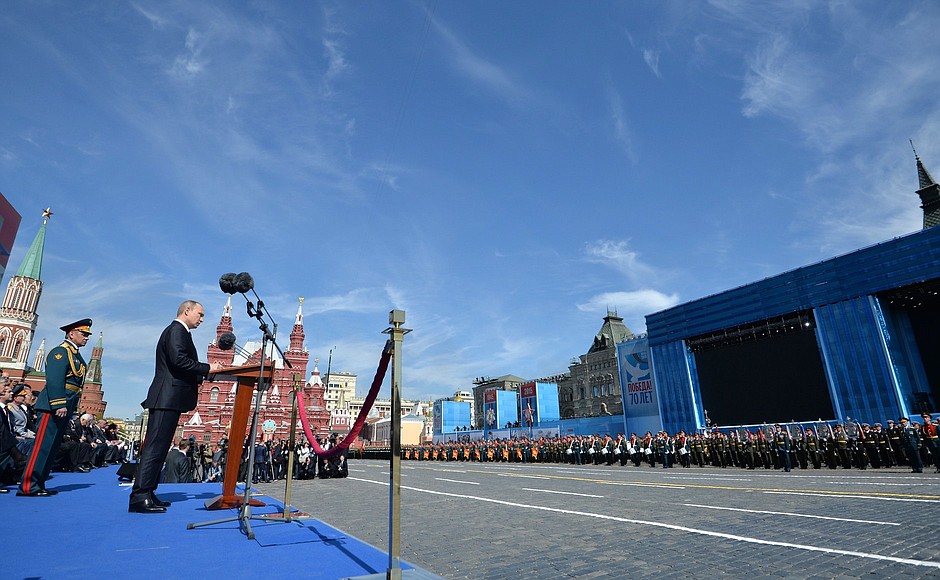
Fellow citizens of Russia,
Dear veterans, distinguished guests, comrade soldiers and seamen, sergeants and sergeant majors, midshipmen and warrant officers, comrade officers, generals and admirals.
I congratulate you all on the 70th Anniversary of Victory in the Great Patriotic War!
Today, when we mark this sacred anniversary, we once again appreciate the enormous scale of Victory over Nazism. We are proud that it was our fathers and grandfathers who succeeded in prevailing over, smashing and destroying that dark force.
Hitler’s reckless adventure became a tough lesson for the entire world community. At that time, in the 1930s, the enlightened Europe failed to see the deadly threat in the Nazi ideology.
Today, seventy years later, the history calls again to our wisdom and vigilance. We must not forget that the ideas of racial supremacy and exclusiveness had provoked the bloodiest war ever. The war affected almost 80 percent of the world population. Many European nations were enslaved and occupied.
The Soviet Union bore the brunt of the enemy’s attacks. The elite Nazi forces were brought to bear on it. All their military power was concentrated against it. And all major decisive battles of World War II, in terms of military power and equipment involved, had been waged there.
And it is no surprise that it was the Red Army that, by taking Berlin in a crushing attack, hit the final blow to Hitler’s Germany finishing the war.
Our entire multi-ethnic nation rose to fight for our Motherland’s freedom. Everyone bore the severe burden of the war. Together, our people made an immortal exploit to save the country. They predetermined the outcome of World War II. They liberated European nations from the Nazis.
Veterans of the Great Patriotic War, wherever they live today, should know that here, in Russia, we highly value their fortitude, courage and dedication to frontline brotherhood.
Dear friends!
The Great Victory will always remain a heroic pinnacle in the history of our country. But we also pay tribute to our allies in the anti-Hitler coalition.
We are grateful to the peoples of Great Britain, France and the United States of America for their contribution to the Victory. We are thankful to the anti-fascists of various countries who selflessly fought the enemy as guerrillas and members of the underground resistance, including in Germany itself.
We remember the historical meeting on the Elbe, and the trust and unity that became our common legacy and an example of unification of peoples – for the sake of peace and stability.
It is precisely these values that became the foundation of the post-war world order. The United Nations came into existence. And the system of the modern international law has emerged.
These institutions have proved in practice their effectiveness in resolving disputes and conflicts.
However, in the last decades, the basic principles of international cooperation have come to be increasingly ignored. These are the principles that have been hard won by mankind as a result of the ordeal of the war.
We saw attempts to establish a unipolar world. We see the strong-arm block thinking gaining momentum. All that undermines sustainable global development.
The creation of a system of equal security for all states should become our common task. Such system should be an adequate match to modern threats, and it should rest on a regional and global non-block basis. Only then will we be able to ensure peace and tranquillity on the planet.
Dear friends!
We welcome today all our foreign guests while expressing a particular gratitude to the representatives of the countries that fought against Nazism and Japanese militarism.
Besides the Russian servicemen, parade units of ten other states will march through the Red Square as well. These include soldiers from Armenia, Azerbaijan, Belarus, Kazakhstan, Kyrgyzstan and Tajikistan. Their forefathers fought shoulder to shoulder both at the front and in the rear.
These also include servicemen from China, which, just like the Soviet Union, lost many millions of people in this war. China was also the main front in the fight against militarism in Asia.
Indian soldiers fought courageously against the Nazis as well.
Serbian troops also offered strong and relentless resistance to the fascists.
Throughout the war our country received strong support from Mongolia.
These parade ranks include grandsons and great-grandsons of the war generation. The Victory Day is our common holiday. The Great Patriotic War was in fact the battle for the future of the entire humanity.
Our fathers and grandfathers lived through unbearable sufferings, hardships and losses. They worked till exhaustion, at the limit of human capacity. They fought even unto death. They proved the example of honour and true patriotism.
We pay tribute to all those who fought to the bitter for every street, every house and every frontier of our Motherland. We bow to those who perished in severe battles near Moscow and Stalingrad, at the Kursk Bulge and on the Dnieper.
We bow to those who died from famine and cold in the unconquered Leningrad, to those who were tortured to death in concentration camps, in captivity and under occupation.
We bow in loving memory of sons, daughters, fathers, mothers, grandfathers, husbands, wives, brothers, sisters, comrades-in-arms, relatives and friends – all those who never came back from war, all those who are no longer with us.
A minute of silence is announced and observed.
Dear veterans,
You are the main heroes of the Great Victory Day. Your feat predestined peace and decent life for many generations. It made it possible for them to create and move forward fearlessly.
And today your children, grandchildren and great-grandchildren live up to the highest standards that you set. They work for the sake of their country’s present and future. They serve their Fatherland with devotion. They respond to complex challenges of the time with honour. They guarantee the successful development, might and prosperity of our Motherland, our Russia!
Long live the victorious people!
Happy holiday!
Congratulations on the Victory Day!
Source:
http://en.kremlin.ru/events/president/transcripts/49438









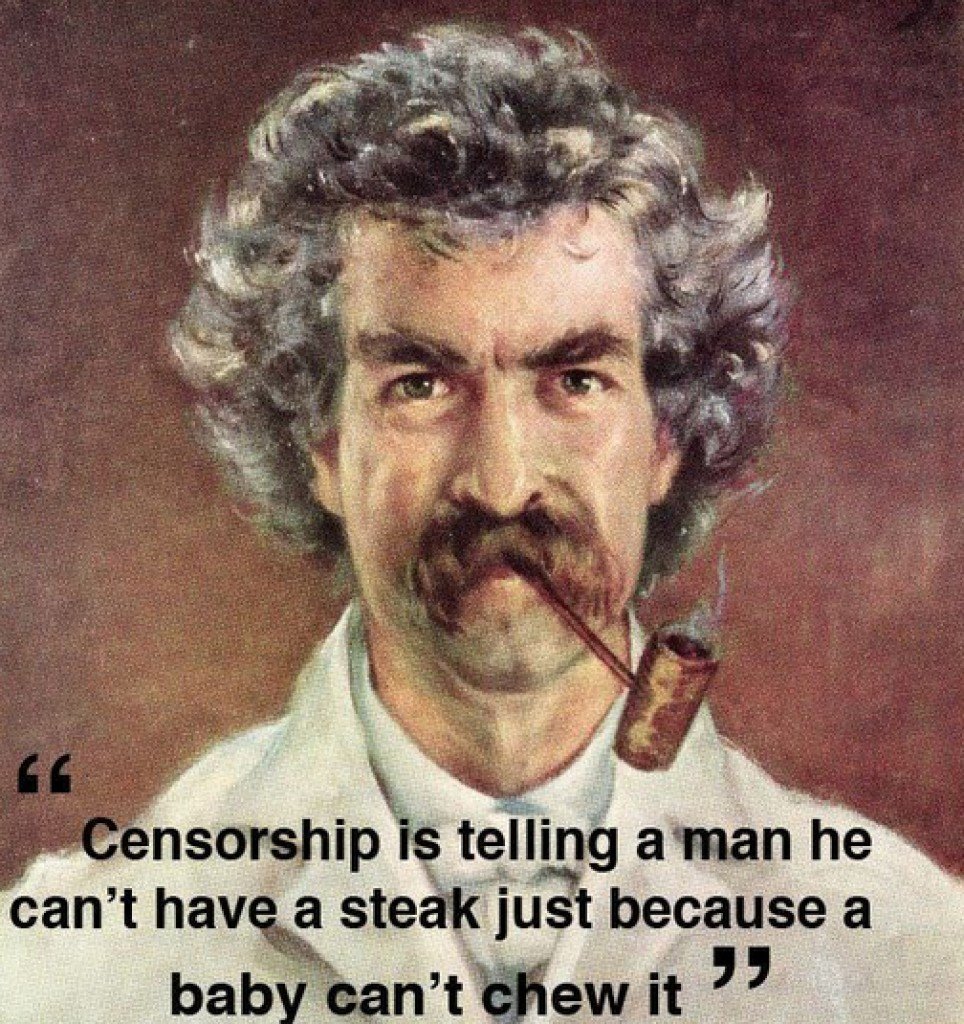
925069
924988
922113
921526
921524
919244
916783
915526
915524
915354
915129
914037
909862
908811
908810
908500
908465
908464
908300
907963
907895
907477
902002
901301
901106
901105
901104
901024
901017
900393
900392
900391
900390
899038
898980
896844
896798
896797
895983
895850
895848
893740
893036
891671
891670
891336
891017
890865
889894
889741
889058
888157
887960
887768
886321
886306
885519
884948
883951
881340
881339
880491
878671
878351
877678