This topic contains 8 replies, has 5 voices, and was last updated by  Y_ 2 years, 8 months ago.
- AuthorPosts
Washington Turn Puerto Rico into the next Venezuela or Greece
This is an update on the ongoing financial crash of Puerto Rico that was discussed in my post here.
Preamble – A New Reality for the Colonists
On 3rd May 2017 the American colony of Puerto Rico (or the United States commonwealth) officially became the largest bankruptcy case in the history of the American public bond market. A fiscal control board imposed on the island’s government by Washington announced that Puerto Rico’s economic crisis had “reached a breaking point.”
Everywhere in the United States commonwealth, private-sector jobs are being lost. Total employment in Puerto Rico has fallen from 1.25 million in the last quarter of the 2007 fiscal year workers to less than a million almost a decade later.
Without employment, large numbers of Puerto Ricans (who are US citizens) have emigrated. But, despite this flight, the unemployment rate is now 12.4%. Without job prospects, the labor participation rate has plummeted to 40%, two-thirds of the level on the US mainland. About 60% of Puerto Rico’s children live in poverty.
The commonwealth’s debt position is clearly unsustainable, and its economy will be able to recover only if it gets a fresh start. But, unlike US municipalities, Puerto Rico is not protected by the US bankruptcy code. It is well known that decentralized bargaining processes for debt restructuring often lead to disastrous outcomes, with the relief obtained being insufficient to restore debt sustainability.
Aware of this reality, Puerto Rico enacted its own bankruptcy law, but the US Supreme Court struck it down, because the island is de facto an American colony, and the federal bankruptcy code permits only the US Congress to enact bankruptcy legislation over its territory.
Eventually, Congress took action and enacted PROMESA, a law ostensibly designed to facilitate debt restructuring and economic recovery. Reflecting the standard colonialist view that a colony cannot be trusted to make independent decisions, a bipartisan Financial Oversight and Management Board was created to make fiscal decisions for Puerto Rico.

What is being done? I mean – really?
Congress asked for the immediate appointment of a Federal judge to decide how to deal with a staggering $123 billion debt the Commonwealth government and its public corporations owe to both bondholders and public employee pension systems. Detroit’s bankruptcy, by comparison, involved just $18 billion — one-ninth the size of Puerto Rico’s.
Supreme Court Chief Justice John Roberts, acting under a provision of the Puerto Rico Oversight, Management, and Economic Stability Act (known as PROMESA) appointed federal Judge Laura Taylor Swain from the Southern District of New York to take over the Puerto Rico case.
Few press reports on Puerto Rico’s troubles, however, have bothered to examine the deeper issues behind this crisis.
First, the colonial relationship that has prevailed between the U.S. and Puerto Rico since 1898 is no longer viable.
Puerto Rico is the largest overseas territory still under the sovereign control of the United States, and it is the most important colonial possession in this nation’s history.
That relationship produced uncommon profits for American subsidiaries on the island for more than a century, even as the federal government kept claiming that the Commonwealth of Puerto Rico, created in 1952, was a self-governing territory. But now, with a Washington-appointed board directly overseeing the island’s economy, and with a pivotal Supreme Court decision last year affirming that Congress continues to exercise sovereign power over Puerto Rico, the mask of self-governance has been removed.
There will be no huge infusion of U.S. public dollars to prop up its collapsing economy, a scenario that is nearly impossible with a Trump White House and a Republican-controlled Congress.
Political leaders in both Washington and San Juan, whether they like it or not, are being propelled to fashion a new political and economic status for the territory. They will have to finally decide whether to completely annex Puerto Rico as the 51st state or acknowledge that it still remains a distinct nation, with the right to its own sovereignty and independence. This means Puerto Rico will have to source bailout funds and adopt austerity and will be the American Greece – beholden to the Federal Reserve.
Second, the impact of Puerto Rico’s bankruptcy will continue to reverberate throughout the U.S. bond market, far more than most Wall Street analysts have so far acknowledged.
The PROMESA control board has warned that even with massive cuts to government services and new projected revenues from higher taxes and fees, Puerto Rico will still generate slightly less than $8 billion in budget surpluses over the next 10 years, when some $35 billion in debt service comes due. In other words, three-quarters of the outstanding debt cannot be repaid.
That is not just a haircut for American bondholders; it is a head-shaving, one that will send shock waves throughout the municipal bond market. After all, bonds backed by the full faith-and-credit of local government entities have long been considered among the safest of investments.
It is worthy to note that a significant amount of the debt has been bought by US pension funds. At a time when the baby boomers have tarted to retire this may put US pension and mutual funds in financial straits.
Years of court battles between Puerto Rico and contending groups of creditors are now certain. “The economy of Puerto Rico will be put on hold for years,” Andrew Rosenberg, adviser to the Ad Hoc Group of Puerto Rico General Obligation Bondholders, told the Associated Press. “Make no mistake: The board has chosen to turn Puerto Rico into the next Argentina.”
The Case for Excess (or Greed is Good)
Civil society groups contend that the plunder of the Puerto Rican people through predatory and even illegal bond deals that island politicians concocted together with top Wall Street firms will now be exposed.
Amazingly, the 23-page petition that the federal government’s own financial control board filed in U.S. District Court in San Juan reached the exact same conclusion that Puerto Rico’s former Gov. Alejandro García Padilla reached back in June 2015 — that the island’s debt is “not payable.”
In the nearly two years since García Padilla sounded the alarm, however, Washington has done almost nothing to alleviate the economic catastrophe afflicting 3.4 million U.S. citizens in Puerto Rico, except to establish the control board by enacting PROMESA.
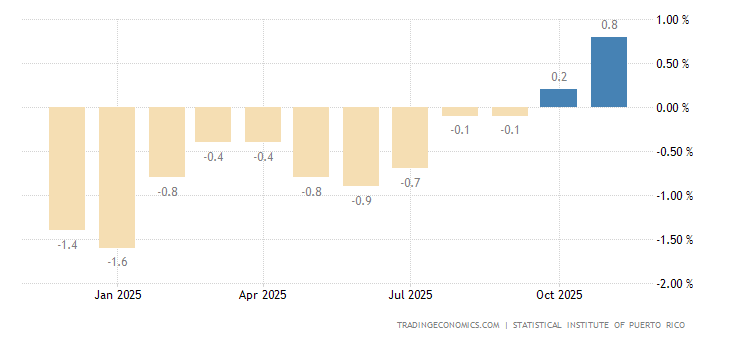
On an island that has lost 10 percent of its population in the last 10 years, where 46 percent of the population lives below the U.S. poverty level, where the unemployment rate is more than 11 percent, and where the labor force participation hovers around 40 percent, lawmakers in Congress have kept insisting on greater austerity from Puerto Rico’s population.
The reality is such dire conditions would never be tolerated among U.S. citizens in any other jurisdiction, yet they are allowed to persist in Puerto Rico.
Under the control board’s pressure, Gov. Ricardo Rosselló, who took office in January, is eyeing the privatization of the government-owned electric company, the water and sewer authority, even the public transit system. But even massive cuts and selling off public assets can’t solve the problem that there aren’t enough jobs on the island, that young people keep fleeing to the United States, and that Puerto Rico’s government is powerless to fashion its own economic and trade policy independently from the U.S.
The use of the US dollar means the currency is not within their control and therefore independent fiscal policies (such as currency devaluation or interest rate drops) are possible. To be a independent nation Puerto Rico needs a Central Bank, a Treasury, a government bond market, open capital flows and an independent currency. It has none of these.
For decades, Puerto Rico was important to the American economy as a center of sugar cane growing, then as a tax haven for manufacturing and pharmaceutical companies, and as a military stronghold and bulwark against the spread of communism in Latin America. But now it is no longer needed for any of these things.
Most of the U.S. military bases have closed, and Congress began in 1996 to phase out the island’s tax haven status. As soon as the last of the federal tax breaks — known as Section 936 — ended in 2006, corporations started leaving and the island plunged into a recession from which it has yet to recover.
For the past 20 years, a succession of island governments has been closing structural operating deficits with borrowed funds supplied by Wall Street firms eager to market its triple tax-exempt bonds to wealthy and middle-class Americans and Puerto Ricans.
Investors were especially drawn to a provision of the Puerto Rico constitution that required the government to pay general obligation debt service ahead of any other expenses, and by the fact that Puerto Rico and its public corporations were legally prevented from resorting to Chapter 9 bankruptcy, the portion of the bankruptcy code that applies to most local governments and municipalities.
Until 1978, Congress had included all the territories and possessions of the United States under Chapter 9, so Puerto Rico had bankruptcy protection until then. But between ’78 and the early ’80s, there were several changes to U.S. bankruptcy law. In 1984, an amendment was inserted into the law by South Carolina Sen. Strom Thurmond that specifically excluded Puerto Rico from Chapter 9.
No reason was given. No federal policy or interest in the change was spelled out in the amendment process. By a few simple phrases in an amendment that few people noticed, Congress laid the basis for the unique situation Puerto Rico confronted last year. It was not only broke, there was no established legal recourse for it to get a court to decide how its many creditors would get paid or how much.
What next (or is it who cares)?
The PROMESA bill Congress enacted at least created a new type of Chapter 9-like process for the island. The bill stipulates that if the Puerto Rican government and the control board cannot reach voluntary settlements with bondholders, a judge can be appointed and creditors forced to accept a settlement, known as a “cram-down.”
But PROMESA is bringing more problems than solutions. Recently, the Board—seemingly lacking both any understanding of basic economics and democratic accountability to provide checks against its incompetence – published its demands for the next fiscal year. The Board actually predicted that its proposals would turn Puerto Rico’s recession into a depression of a magnitude seldom seen anywhere: a 16.2% decline in GNP in the next fiscal year (and a further decline the year after), which is comparable to the experience of countries undergoing civil wars, or that of crisis-ridden Venezuela – or of Greece before the bailouts.
That is because the Board’s plan gives priority to the island’s creditors. It arbitrarily defines a minimum that must be paid to them in the short run, and forces the government to do whatever it takes to reach that goal, even if it means devastating the local economy. Indeed, the plan all but guarantees a social as well as an economic catastrophe, owing to substantial cuts in pensions, education, and health spending.
With so much money at stake the various groups of bondholders are determined to wage a titanic legal battle against it.
Hedge funds Aurelius Capital Management and Monarch Alternative Capital, insist that Puerto Rico’s Constitution requires them to be paid first from all available revenues. Ambac has insured billions of dollars in sales tax revenue bonds, known as COFINA bonds, that Puerto Rico has issued since 2006, and the company, along with other bond insures, faces enormous losses
While the contending bondholder groups battle in the courts, the PROMESA board has now sided with the Puerto Rico government that bondholders will have to accept major reductions in payments.
Remarkably, the Board’s plan is sketchy when it comes to its central obligation: crafting a plan for debt restructuring. This is shortsighted, because depressing the economy further will fuel a debt spiral. US taxpayers will lose, too: they will pay for the costs entailed by higher emigration. In the long run, even the creditors will lose. The proposed course is not only unfair, but also inefficient and ultimately self-defeating.
Those who advocate servicing part of the outstanding debt payments now claim that this would show that Puerto Rico is willing to pay, which in turn would inspire confidence on the part of creditors and investors. But Puerto Rico’s problem is a lack of capacity to pay, not a lack of willingness. The only way the commonwealth can stimulate confidence is by restoring economic growth.
The plan does include sensible calls for improving tax collection and the efficiency of government spending. But, though necessary, such measures will not resolve the crisis.
The Board is confusing efficiency with austerity. And while it would be nice if one could magically bring about productivity increases, the island’s real problems call not so much for supply-side reforms as for increased demand. Puerto Rico is in a demand-constrained regime, demonstrated by the significant subutilization of its factors of production. The Board’s plan markedly exacerbates this problem, without showing any awareness that it is doing so.
In a demand-constrained regime, recent measures to increase labor-market flexibility – and thus facilitate the lowering of wages by employers – will not result in faster growth. On the contrary, lower wages will lead to decreased spending, aggravating the depression, and further increase the likelihood of immigration to the US, where salaries are substantially higher.
In closing, Federal lawmakers will either have to provide massive assistance to Puerto Rico, or they will have to move rapidly to change the island’s political and economic status. After a century of colonial rule by Washington and decades of predatory debt from Wall Street, the bill has come due.
The PROMESA Board was supposed to chart a path to recovery; its plan makes a recovery a virtual impossibility. If the Board’s plan is adopted, Puerto Rico’s people will experience untold suffering. And to what end? The crisis will not be resolved. On the contrary, the debt position will become even more unsustainable

Citations
https://theintercept.com/2017/05/09/puerto-ricos-123-billion-bankruptcy-is-the-cost-of-u-s-colonialism/
https://www.project-syndicate.org/commentary/puerto-rico-debt-plan-deep-depression-by-joseph-e–stiglitz-and-martin-guzman-2017-02Taking down a country at a time and rounding us up
THE PLANTATION HAS NOW TURNED INTO THE KILLING FIELDS . WOMAN ARE NOW ROLLING CAMBODIAN STYLE .
Let us see. Venezuela is having an open revolt with some of the military starting to side with the Venezuelan people.
An army marches on its stomach. A soldier will not fight on an empty stomach.
Maduro may have bought the loyalty of the upper level military officers, but he uses fear to keep the rank and file soldiers in like. Much like he had used fear to keep the Venezuelan people in line.
Fear is turning into hate for both the Venezuelan people and the rank and file soldiers against the Venezuelan government. And they are starting to join forces.
Greece has become a s~~~-show like none other. The Greece government is has become a colonial power solely controlled by the globalists whom run the European Union. The Greece people have been driven into the ground.
The EU had their lackeys in the Greek government declare it a crime for the Greek people to no declare any value family heirlooms to the Greek government for later confiscation by the Greek government.
In addition, selling off Greek property to globalists for pennies on the dollar.
Also, millions of muslims invaders are flooding through Greece and into Europe.
A few years ago, before the muslim invasion, the Greek people were on the verge of rebellion.
Right now the Greek people are biding their time. They know this muslim invasion may tear down both the treasonous Greek government and the European Union whom have hurt them. When that happens the Greek people will take action.
D.C. needs to be careful about Puerto Rico. Puerto Rico population have been dispossessed of wealth the deal with the hypocrisy of the government, and they have little left to lose.
Puerto Rico has all the ingredients for foreign agents to turn that island into a proxy war against D.C.
D.C. needs to be careful about Puerto Rico. Puerto Rico population have been dispossessed of wealth the deal with the hypocrisy of the government, and they have little left to lose.
Puerto Rico has all the ingredients for foreign agents to turn that island into a proxy war against D.C.
Agreed. This is something Trump cannot walk away from. I’m sure the neocons are already on it.
A person from PR said the crime is terrible everywhere, except the tourist areas.
Love is just alimony waiting to happen. Visit mgtow.com.
A person from PR said the crime is terrible everywhere, except the tourist areas.
The larger cities and some towns have no sanitation, water or health care especially for the kids. This is getting more insane by the minute.
D.C. needs to be careful about Puerto Rico. Puerto Rico population have been dispossessed of wealth the deal with the hypocrisy of the government, and they have little left to lose.
I meant:
“D.C. needs to be careful about Puerto Rico. Puerto Rico population have been dispossessed of wealth, they have to deal with the hypocrisy of the government, and they have little left to lose.”
Thanks for the reply, Yumbo.
There is more to this: http://www.zerohedge.com/news/2017-05-14/puerto-rico-could-be-forced-under-sec-jurisdiction
A lot of tax shelters in Puerto Rico.
If you want to fix Puerto Rico, the tax shelters have to be abolished. Those whom use the tax shelters will make sure the island is a hellhole for the locals to keep the money they are hiding protected from everyone.
Anonymous14Everything that FIAT money touches will come to an end, it is just a matter of time.
Thanks for the reply, Yumbo.
Cheers mate
There is more to this: http://www.zerohedge.com/news/2017-05-14/puerto-rico-could-be-forced-under-sec-jurisdiction%5B/quote%5D
New development – thanks.
.- AuthorPosts



You must be logged in to reply to this topic.
921526
921524
919244
916783
915526
915524
915354
915129
914037
909862
908811
908810
908500
908465
908464
908300
907963
907895
907477
902002
901301
901106
901105
901104
901024
901017
900393
900392
900391
900390
899038
898980
896844
896798
896797
895983
895850
895848
893740
893036
891671
891670
891336
891017
890865
889894
889741
889058
888157
887960
887768
886321
886306
885519
884948
883951
881340
881339
880491
878671
878351
877678