- Search Results
A Travesty of Protectionism : America’s Economic World War [1]
Michael Hudson
The Unz Review
March 9, 2018
Prof. Michael Hudson is a veteran of Wall Street and Distinguished Research Professor of Economics at the University of Missouri at Kansas City (UMKC). He counsels governments on finance and tax policy, and gives presentations all over the world to groups reflecting diverse academic, economic and political constituencies.[Y: This article by Professor Michael Hudson is a companion article to a prior article by Charles Hugh Smith – Citation #2 – which discussed the trade concept of Global Equity or Capital.
The basis of 21st century market dynamics, this concept is explained with reference to protectionism and why the idea of 18th century border tariffs are not relevant in a global economy.
Thanks again for reading. -Y]

Trump’s series of threats was a one-two punch. First, he threatened to impose national security tariffs on steel and aluminum, primarily against Canada and Mexico (along with Korea and Japan).
Then, he suggested an alternative: He would exempt these countries IF they agree to certain U.S. demands.
But these demands make so little economic sense that they should be viewed as an exercise in what academia used to call power politics.
Or in Trump’s world, Us versus Them, a zero-sum game in which he has to show that America wins, they lose.
It won’t work.
Trump’s diplomatic ploy with Mexico is to say that he’ll be willing to exempt them from the steel and aluminum tariffs if they agree to (1) build the wall that he promised to make them build, and (2) give other special favors to the United States. He can then go to American voters and say, “See, we won; Mexico lost.”
This is unlikely to elicit a Mexican surrender. Its president already has said that building a wall makes no sense, and cancelled the planned diplomatic visit to Washington last week. Giving in to Trump’s election promise to American voters (or more to the point, indulging in his own ego trip about the wall) would be political suicide. Trump would crow that he made Mexico bow to his bidding.
Matters aren’t much better in Canada. While some Pennsylvania and Ohio steel companies probably will try to make Trump look good by hiring back a few hundred workers if and when the tariffs are announced, Canada and other suppliers employees would have to be laid off.
Canadian resentment already has been building up for decades, ever since the auto agreement of the 1960s and ‘70s that favored U.S. suppliers.
But the real economic problem comes from within the United States itself. If new steel workers are hired, they may be laid off in a few months. Most important is the bigger economy-wide picture:
The Chamber of Commerce and other groups have calculated that the loss of jobs in steel- and aluminum-using industries will far outnumber the new hiring of steel and aluminum workers.
NPR had a maker of beer kegs explain that if the cost of steel goes up, he can’t afford to match the prices of foreign keg manufacturers who buy their raw materials cheaper – and do NOT have tariffs raised on higher manufactures.

There are many good arguments for protectionism. These arguments are in fact much better than the free-trade patter talk used to indoctrinate college economics students.
Of all the branches of today’s mainstream economics, free-trade theory is the most unrealistic. If it were realistic, Britain, the United States and Germany never would have risen to world industrial power. (I review the fallacies of free-trade theory in Trade, Development and Foreign Debt. [3])
Economic history provides a long and successful pedigree of good arguments for protective tariffs.
Britain created its empire by protectionism, stifling manufactures in the United States as long as it pursued free trade.
After the Civil War ended, America built up its industry and agriculture by protectionism, as did Germany and France. (I discuss the strategy in America’s Protectionist Takeoff: 1815-1914.)
But as each of these nations became world leaders, they sought to pull up the ladder and prevent other countries from protecting their own industry and agriculture. So they changed to “free trade imperialism.”
The aim of industrial leaders is to convince other countries not to regulate or plan their own markets, but to let the United States engineer an asymmetrical trade policy whose aim is to make other countries dependent on its food exports and monopoly exports, while opening their markets to U.S. companiesSince the 1920s the protectionist economies that came to support free trade have rewritten history to white out how they got rich. The strategy of protectionism has been forgotten.
Trump’s so-called protective tariffs against steel and aluminum are the antithesis to every principle of protectionism. That is why they are so self-destructive.
A really nationalistic trade strategy is to buy raw materials cheaply, and sell finished manufactured goods at a high value-added price.
The idea of industrial protectionism, from British free trade in the 19th century to U.S. trade strategy in the 20th century, was to obtain raw materials in the cheapest places – by making other countries compete to supply them – and protect your high-technology manufactures where the major capital investment, profits and monopoly rents are.
Trump is doing the reverse: He’s increasing the cost of steel and aluminum raw materials inputs. This will squeeze the profits of industrial companies using steel and aluminum – without protecting their markets.
In fact, other countries are now able to legally raise their tariffs to protect their highest-technology sectors that might be most threatened by U.S. exports. Harley Davidson motorcycles have been singled out. They also can block U.S. monopoly exports, such as bourbon and Levi’s blue jeans, or pharmaceuticals. Or, China can block whatever U.S. technology it decides it wants to compete with.

Trump’s tariff threats caused short-term aluminum prices to jump by 40 percent, and steel prices by about 33 percent. This raises the price of these materials to U.S. manufacturers, squeezing their profits.
Foreign manufacturers will not have their material prices increased, and so can out-compete with U.S. steel- or aluminum-using rivals. The global oversupply in fact may make the price of steel and aluminum decline in foreign markets. So foreign industry will gain a cost advantage.
On top of that, foreign countries can legally raise tariffs in their own markets – for whatever industries they deem will best gain from this advantage.
A. Trump’s tariffs will not induce new capital investment in steel or aluminumAmerica’s logic behind protective tariffs after the Civil War ended the Southern free-trade policies was that tariff protection would create a price umbrella enabling U.S. manufacturers to invest in plant and equipment. Britain already had made these sunk costs, so the United States had to include the cost of capital in its revenue.
That’s how America built up its steel industry, chemical industry and other manufacturing industries.
But no steel or aluminum company is likely to invest more or hire more U.S. labor as a result of higher tariff revenues. These companies may raise their prices, but neither investment nor trickle-down effects are likely.
For one thing, aluminum is made out of electricity, and America is a high-cost producer. Alcan – America’s largest supplier – has a rip-off deal with Iceland, getting electricity almost for nothing.
For steel, it takes a long time to build a modern steel mill. No company will do this without an assured market. Trump’s tariff increases do not guarantee that.
B. America’s policy of breaking international agreements (we’re the “indispensable nation”)
Few companies, labor groups or banks in New York City have been willing to trust Mr. Trump in recent years. He should have called his book “The Art of BREAKING THE deal.”
That’s how he made his money. He would sign an agreement with suppliers to his hotels or other buildings, and then offer only 80 cents (or less) on the dollar.
He’d tell them, in effect: “You want to sue? That will cost you $50,000 to get into court, and then wait three or four years, by which time we’ll have made enough money to pay you on the cheap.”
Bank lenders had as much trouble getting paid as did Trump’s hapless suppliers.
He made his fortune this way – so successfully that he seems to believe that he can use the same strategy in international diplomacy, just as he’s threatening to break the Iran agreement.
Will this work? Or are foreign economies coming to view the United States as “not agreement-capable”? In fact, will U.S. companies themselves believe that agreements signed today will still be honored tomorrow?
C. Trump’s national security ploy to bypass Congressional authority over trade policy.
This is not the first time the United States has raised tariffs unilaterally. George W. Bush did it. And my 1979 book, Global Fracture [4], describes U.S. protectionism in the 1970s against other countries. America did it again and again.
But Trump has introduced some new twists. First of all, former U.S. protectionism had Congressional backing. But Trump has bypassed Congress, no doubt aware that steel-using and aluminum-using industries can mobilize Congressional support against Trump.
So Trump has used the one play available to the Executive Branch: the National Security umbrella.
In a great mind-expansion exercise, he claims that it would be a loss of national security to depend on neighboring Canada, Mexico, or allies such as South Korea and Japan for steel and aluminum. If he can convince a kangaroo trade court, this loophole is indeed allowed under WTO rules (GATT Article XXI). The idea was to apply to times of war or other great crisis.
But U.S. steel and aluminum production has been steady for over a decade, and there seems to be no military or economic crisis affecting national security.
Suppose Trump gets away with it. Other countries can play this “national security” game. Any economic activity can be deemed national security, because every economy is an overall system, with every given part affecting all the others. So Trump has opened the door for overall asymmetrical jockeying for position. The most likely arena may be high-technology and military-related sectors.
Back in the 1980s this was called “Uncle Sucker” patter talk – acting as if the United States was the exploited party, not the exploiting actor in international trade and investment.
Ultimately at issue is how much policy asymmetry the rest of the world is willing to tolerate. Can the United States still push other countries around as it has done for so many years? How far can America push its one-sided agreements before other countries break away?
Each foreign country threatened with loss of steel or aluminum exports has a more high-tech industry that it would like to protect against U.S. competition. The response is likely to be asymmetrical.
And here at home, how long will higher manufacturing industries back Mr. Trump and his policy that makes a travesty of “smart” protectionism?
Michael Hudson
The Unz Review[ Y: This is a video of Michael Hudson discussing the trade policies of Washington. – Y]
Trump’s Tariffs Will Not Re-Industrialise the United States. {12:29 mins} [5]
Citations
[1] http://www.unz.com/mhudson/a-travesty-of-protectionism/
[2] /forums/topic/there-is-no-free-trade-only-the-darwinian-game-of-trade-charles-hugh-smith/
[3] http://michael-hudson.com/books/trade-development-and-foreign-debt-a-history-of-theories-of-polarisation-and-convergence-in-the-international-economy/
[4] http://michael-hudson.com/books/global-fracture-the-new-international-economic-order/
[5] http://www.unz.com/mhudson/trumps-tariff-travesty-will-not-re-industrialize-the-us/
Japan’s Ambitions and Washington’s ‘Asian Pivot’ Policies [1][2][3]
The World Socialist Web Site
21st April 2018
US President Trump and Japanese Prime Minister Shinzo Abe are holding their two-day summit this week at the Mar-a-Lago Club in Florida in the aftermath of the US-led airstrikes on Syria and amid sharpening geo-political tensions globally, including throughout Asia.
While both men have touted their good personal rapport, cracks in the relationship have been emerging over key issues, especially trade and North Korea.
Abe and Trump head deeply right-wing regimes that are seeking to overcome their mounting economic and political crises by whipping up nationalism and militarism. The two longstanding military allies are united in their determination to contain and confront China, but are increasingly at odds over the means for doing so.
Superficially, Trump and Abe had a warm and friendly exchange during their two-day summit that ended on Thursday. However, nothing could disguise the underlying tensions that emerged on two key issues—North Korea and trade.
Trump’s escalating threats of trade war against Beijing pose economic dangers for Japan which relies heavily on China as its number one trading partner and cheap labour platform. Moreover, Trump is targeting not only China for trade war measures, but also Japan and other countries that have surpluses with the US.
The importance of the talks, for Abe in particular, is underscored by the fact that both leaders are mired in political crisis at home. The Japanese prime minister arrived in the US as his poll ratings plunged and large protests in Tokyo and other cities called on him to resign. Trump is also under siege amid intense infighting in the US political establishment over the direction of foreign policy.
As the Trump administration has ratcheted up its confrontation with North Korea, Abe has been the staunchest of allies backing the president’s bellicose threats to “totally destroy” the Pyongyang regime and echoing his declaration that talks were a waste of time.

Abe has exploited the so-called “North Korean threat” to advance his own ambitions to remilitarise Japan and remove all legal and constitutional constraints on the use of the military to prosecute the strategic and economic interests of Japanese imperialism
Publicly Trump and Abe expressed agreement on the US president’s decision to meet with North Korean leader Kim Jong-un.
However, Abe and his government were kept in the dark over the summit. Trump announced it out of the blue in March without consultation within his own administration, let alone with Tokyo. Trump effectively rubbed salt in the wound, choosing his meeting with Abe to reveal that CIA Director Mike Pompeo had made a secret trip to Pyongyang to meet Kim.
The abrupt about-face does not express any fundamental change of heart on the part of Trump, who has just unleashed illegal missile strikes on Syria. Rather the Trump administration senses the possibility of advancing US imperialism’s interests and strengthening its position in North East Asia against its chief rivals, Russia and China, and potential competitors such as Japan.
Trump’s overtures to the Pyongyang regime parallel the sudden turn by the right-wing US President Richard Nixon toward China. Nixon’s national security adviser Henry Kissinger conducted a series of secret trips to Beijing in 1971 to establish the basis for Nixon to meet with Chinese Communist Party Chairman Mao Zedong in February 1972.
Nixon’s rapprochement with China, which was aimed against the Soviet Union, laid the basis for capitalist restoration in China and its transformation into the world’s premier cheap labour platform.
Nearly 50 years after the Nixon-Mao meeting, the US regards China as the chief obstacle to global hegemony. Under President Barack Obama and now Trump, the US has mounted a comprehensive diplomatic and economic offensive against China across the Indo-Pacific, calculated to undermine Chinese influence and prepare for war. In the past several months, there has been a rapid deterioration in relations with Beijing, featuring threats of trade war, and also with Russia over Syria, where the US is seeking to oust Moscow’s ally, Syrian President Bashir al-Assad.
Since the dissolution of the Soviet Union in 1991, the US has systematically isolated North Korea diplomatically and imposed crippling sanctions on its economy. The overriding aim of this strategy was not to end the supposed threat posed by the country’s tiny nuclear arsenal, but rather, by one means or another, to bring it into the US sphere of influence. Moreover, the US is certainly not preoccupied with the human rights abuses of the oppressive military/police-state regime in Pyongyang.
Since Kim Jong-un came to power in 2012, North Korea’s relations with China have worsened markedly. Kim’s visit to Beijing last month to meet with Chinese President Xi Jinping was his first, and was no doubt aimed at shoring up his options ahead of the summit with Trump.
The paramount aim of the North Korean regime in two decades of failed negotiations and deals has been self-preservation—a peace treaty to formally end the Korean War and security guarantees from Washington. In comments on Tuesday, Trump declared that he had given his “blessing” to South Korea to discuss a peace treaty in talks between Kim and South Korean President Moon Jae-in later this month.
As Abe arrived in the US, the media reported that direct talks with North Korea were proceeding at “extremely high levels.”
Sharp differences have already emerged over the purpose of any negotiations, with Trump’s nominee as the new US secretary of state, CIA chief Mike Pompeo, suggesting in confirmation hearings that the US might accept a nuclear-armed North Korea without long-range missiles. Such a deal would leave Japan vulnerable to North Korea’s medium-range missiles.
Amid acute geo-political tensions in Asia and globally, it is not possible to predict the outcome of a Trump-Kim summit, or even if it takes place. Trump senses the possibility that crippling sanctions and the threat of military strikes can be exploited to force North Korea not just to denuclearise, but to align itself more closely with Washington. If Kim refuses to bow to Trump’s demands, the summit could be used to stage a provocation that becomes the pretext for war.
There are deep concerns in Tokyo that Japan is being sidelined by the United States and its interests will be ignored if a deal is struck with Pyongyang. Abe, who has been in power since 2012, has exploited the supposed threat posed by North Korea to advance his agenda of remilitarisation, including his push to refashion the country’s constitution to end its restrictions on the aggressive use of the Japanese military. A deal to denuclearise would undermine this campaign, which faces widespread opposition.
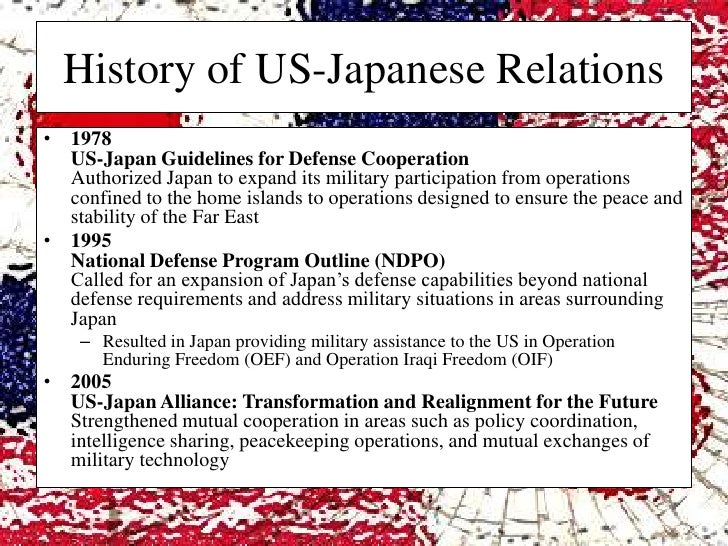
At the same time, Tokyo is worried that Trump might reach an agreement with Kim that stops short of complete denuclearisation—stopping the development of a nuclear missile that could reach the United States, but leaving North Korea with shorter-range missiles that could hit South Korea and Japan. In his congressional confirmation hearing last week, Pompeo hinted at such a possibility.
Trump made minor concessions to Abe, including offering to talk to Kim about returning Japanese citizens abducted by North Korea—a favourite issue of Abe’s ultra-nationalist constituency. In a nod toward Japanese concerns, Trump, standing alongside Abe, also declared he would not attend the summit, “if I think that it’s a meeting that is not going to be fruitful.” Given Trump’s unpredictability, such assurances mean little.
The potential for sharp disagreements at the Abe-Trump summit is compounded by the fact that both leaders are battling for their political lives.
Trump is embroiled in bitter feuding with sections of the US political establishment and military-intelligence apparatus for his supposed failure to take an aggressive stance towards Russia, especially through a more forceful military intervention in Syria. He is also facing a rising tide of opposition from workers and youth, exemplified by spreading strikes by teachers
Abe is no less under siege over two scandals involving, in the first instance, government favours to ultra-nationalist associates involved in establishing a kindergarten, and a veterinary medicine faculty in the second. Last Saturday, 30,000 to 40,000 people gathered in central Tokyo, with smaller protests in other cities, to demand Abe’s resignation. Abe’s poll ratings are plunging. Former Prime Minister Junichiro Koizumi, regarded by Abe as his mentor, declared this week that “the situation is getting dangerous” and suggested that Abe would have to quit in late June.
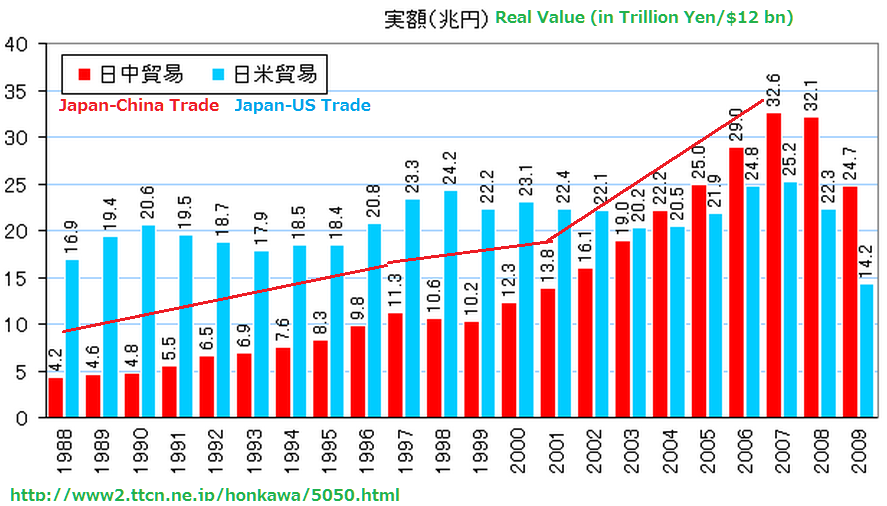
Regardless of the immediate outcome of the Abe-Trump summit, the fissures in US-Japanese relations will continue to fester, with the potential to lead to confrontation and conflict. The aggressive nationalism of both leaders is not simply a product of these individuals, but rather an expression of the deepening crisis of global
Confronted with its historic decline, US imperialism, having failed to secure its global hegemony through a quarter-century of wars in the Middle East and Central Asia, is preparing for conflict with any rival power that stands in its way.The Trump administration’s National Defence Strategy of January 2018 spelled out the strategic shift, declaring that “inter-state strategic competition,” not the “war on terror,” was now the primary concern.
While specifically naming China and Russia as the main “strategic competitors,” by implication longstanding allies such as Japan could also be targeted.
Japan is confronted with a similar historic dilemma. Having been a technological powerhouse and the world’s second largest economy for decades, Japan was shoved into third place by China in 2010.
Its diplomatic, economic and military standing has continued to slide, triggering intense discussion in ruling circles over how best to prevent Japan’s further decline.
Abe’s aggressive remilitarisation is the response of the ultra-nationalist wing of the ruling class that never accepted the country’s defeat in World War II or responsibility for its war crimes, and has resented playing second fiddle to Washington in Asia.
When it came to trade, Trump made clear that his threats of trade war were not just directed against China, but all economic rivals, including Japan.
He refused to provide the exemption that Abe sought on hefty US tariffs on steel and aluminium. Instead, Trump called for a bilateral trade deal with Japan, and insisted that the US would return to the Trans Pacific Partnership (TPP) only if it were offered major concessions.
Abe is certain to press Trump for exemption from the latest US aluminium and steel tariffs that shocked Japan and other allies, particularly as they were imposed on the grounds of “national security.” Trump, however, was openly menacing towards Japan, declaring that Abe has “a little smile.” “And the smile is, ‘I can’t believe we’ve been able to take advantage of the United States for so long.’ So those days are over,” he said
Trump cut across Abe’s economic agenda from day one of his administration by repudiating the Trans Pacific Partnership (TPP), in which the Japanese prime minister had invested a great deal of political capital.
The White House no doubt expected the TPP to collapse, but instead Japan refashioned the agreement into a bloc in which, it, as the world’s third largest economy, would play the central role. Now Trump has upset Abe’s plans again by announcing that the US could re-enter the TPP.
Abe told reporters: “I am aware that the US is interested in a bilateral deal. But we want to approach the discussions from the point of view that the TPP is best for both countries.” Trump, however, flatly ruled out any return to the TPP unless Japan and other members offered “a deal we could not refuse.
The failure to gain any concessions from Trump is a significant, possibly fatal, political blow for Abe. He came to the US in the hope that the two-day meeting could revive his political standing in Japan and ward off challenges from his rivals. Having made close relations with Washington, especially Trump, central to his diplomacy, Abe is now facing further criticism in ruling circles.
An editorial in Asahi Shimbun declared that the Abe-Trump summit “underscored the grim reality of diplomacy between the two countries… [as] Trump clearly remains willing to try to pressure even America’s loyal friends into accepting his demands under his ‘America First’.”
By focussing on Trump, the newspaper continued, Abe had failed to establish working relations with Chinese, South Korean and other regional leaders, and “undermined Japan’s diplomatic clout in the region.”
Just before Abe’s departure for the US, former Japanese Prime Minister Junichiro Koizumi, regarded by Abe as his mentor, suggested that Abe would have to resign in June and not seek re-election in September as leader of the ruling Liberal Democratic Party (LDP).
Abe is already embroiled in two scandals over allegations that he provided government financial favours to close associates in setting up a veterinary faculty and an ultra-nationalist kindergarten.
Another scandal erupted this week with allegations of sexual harassment emerging against a senior finance ministry official—Administrative Vice Finance Minister Junichiri Fukuda.
In a parallel to the scurrilous #MeToo campaign in the US and elsewhere, Fukuda was confronted with unsubstantiated accusations that he asked to touch the breasts of an unnamed female reporter. The allegations are not only aimed against Fukuda, but Finance Minister Taro Aso for failing to investigate the claims.
Abe’s poll ratings hit record lows this week. A survey released last Sunday by the broadcaster Nippon TV showed his support was just 26.7 percent—the lowest figure since Abe took office in December 2012. An Asahi Shimbun poll on Monday put his support at 30 percent. On Saturday, protests in Tokyo and other cities, involving an estimated 30,000 to 40,000 people, branded Abe “a liar” and called for him to step down.
There is widespread public hostility to Abe and his government, not simply over the corruption scandals, but more fundamentally his program of re-militarisation and responsibility for deteriorating living standards and growing social inequality. However, factions of the ruling elite, including within the LDP, are exploiting the scandals in an attempt to effect a change of leader.
A number of LDP figures, including Koizumi’s son Shinjuro Koizumi, are being touted as possible contenders. The most likely replacement, however, is the militaristic ex-Defence Minister Shigeru Ishiba, who has criticised Abe for not going far enough in pushing for constitutional amendments.
Ishiba has advocated for Japan to have the “right to belligerence,” that is to advance the interests of Japanese imperialism through military aggression, and also suggested that it might need to develop its own nuclear weapons.
The main focus of both the US and Japan, which will undoubtedly be reflected in the outcome of the Abe-Trump summit, is to contain and eventually subordinate China to their imperialist interests
Citations
[1] https://www.wsws.org/en/articles/2018/04/21/usja-a21.html
[2] http://www.wsws.org/en/articles/2018/04/18/pers-a18.html
[3] http://www.wsws.org/en/articles/2018/04/19/pers-a19.htmlThe CIA Takeover of the Democratic Party : Part 4 of 4 [1]
by Patrick Martin
March 9, 2018[Y – I am posting this series because the Congressional mid-terms this year will change the balance of power if Republicans do not come out in force to vote in their candidates.
The main reason for the CIA takeover is obvious – a majority to stonewall whatever is left of the Trump administration. I believe a real and present danger is also to be directed at the Second Amendment of the Constitution. The battle lines have been set and with continued false flags for gun ownership repeal – the end result is evident if Congress changes hands. Moreover a direct push for outright war in the Middle East with Russia if things currently do not go to plan
Patrick Martin researched and wrote an important series of articles on the crop of Democratic candidates for House races this year that I am reposting here ad-verbatim as Parts 2 to 4 of this series. His findings reveal a major shift “from being the party for the Pentagon and CIA to become the party of the Pentagon and CIA”.
Read on and come to your own conclusions. Again thanks for reading.
– Y]
Candidates from a military-intelligence background are seeking the Democratic Party nomination in 40 percent of the congressional districts targeted by the Democratic Congressional Campaign Committee in the 2018 elections. They make up the largest single occupational group running in the Democratic primaries.
If the Democratic military-intelligence candidates won all 44 of the districts in which they are running—which is theoretically possible, if very unlikely—they would constitute, as a bloc, ten percent of the membership of the House of Representatives.
From The State Department To Capitol Hill
The final category of military-intelligence candidates consists of veterans of the US State Department during the Obama years, most of them former aides to Hillary Clinton.
These are among the best financed and most publicized of the likely Democratic nominees. In the event of a Democratic “wave” in November, most would find themselves with seats in Congress.
Tom Malinowski, a former congressional aide and Clinton administration official, headed the Washington office of Human Rights Watch for 13 years before joining the Obama administration under Secretary of State John Kerry as assistant secretary of state for democracy, human rights, and labor. He is seeking the Democratic nomination in New Jersey’s 7th Congressional District against incumbent Republican Leonard Lance.
Lauren Baer was a legal adviser to both Secretaries Clinton and Kerry, as well as US Ambassador to the United Nations Samantha Power. She is now seeking the Democratic nomination in the 18th District of Florida, where her principal opponent is Pam Keith, a former judge advocate general in the US Navy and now legal counsel to Florida Power & Light. Both women push additional buttons for identity politics, as Baer is openly gay and Keith is African-American.
Nancy Soderberg is a longtime US foreign policy figure going back to the Clinton administration, first at the National Security Council, then as deputy assistant to the president for national security affairs, then as an alternate US representative at the UN Security Council with the rank of ambassador.
She has spent much of her time since then heading private overseas operations like the International Crisis Group, while playing a prominent role in the Florida Democratic Party. She is effectively unchallenged for the Democratic nomination in Florida’s 6th Congressional District (Daytona Beach), where the incumbent Republican Ron DeSantis is running for governor.
Edward Meier was a senior adviser to the State Department. According to his campaign website, he “was responsible for coordinating the military-to-civilian transition in Iraq—ensuring our diplomats and aid workers would be safe and secure after the withdrawal of US troops. In this role, he traveled to Iraq on multiple official trips working closely with the US military and the Iraqi government. …”
He went on to be director of policy outreach for Hillary Clinton’s presidential campaign. Meier fell short Tuesday in his bid for the Democratic nomination in the 32nd District of Texas, finishing fourth out of five Democrats running against incumbent Republican Pete Sessions in a suburban Dallas district Clinton carried over Donald Trump, even though he spent the most money.
Sara Jacobs is another State Department official turned Clinton campaign aide, working on “conflict zones in East and West Africa,” particularly the campaign against Boko Haram in Nigeria, and helping to “spearhead President Obama’s efforts to improve governance in the security sector of our counterterrorism partners,” according to her campaign website. She was a foreign policy adviser to the Clinton campaign and is now seeking the Democratic nomination in California’s 49th District, where incumbent Darrell Issa is retiring.
Jacobs is the best-financed Democrat in the race, as befits the granddaughter of Qualcomm founder Irwin Jacobs, but at age 29 she would be the youngest congresswoman ever, and she has been snubbed in favor of several more experienced rivals by recent Democratic Party caucuses. One of her opponents is Douglas Applegate, a career Marine Corps judge advocate general with combat tours in Fallujah, Baghdad and Ramadi, who narrowly lost the 2016 race to Issa.
Talley Sergent, yet another State Department official turned Clinton campaign aide, is running in West Virginia’s 2nd Congressional District, which includes Charleston, against two-term incumbent Republican Alex Mooney. A former aide to Senator Jay Rockefeller, Sergent worked on slavery and sex trafficking at the State Department, then managed Clinton’s disastrous campaign in West Virginia before becoming a public relations executive for The Coca-Cola Co.
Challenging her for the Democratic nomination is Aaron Scheinberg, West Point graduate and Iraq War veteran, deployed first as a platoon leader in the 4th Infantry Division, then as a civil affairs officer in Haswah, Iraq. Scheinberg is now executive director of The Mission Continues, a nonprofit promoting the employment of veterans, whose board of directors includes such figures as Michele Flournoy, Pentagon undersecretary in the Obama administration; Meghan O’Sullivan, Iraq director for the National Security Council under George W. Bush; and retired General Ray S. Odierno, former commander of US forces in Iraq.
Jessica Morse was Iraq country coordinator for the State Department in the course of “over a decade as a national security strategist,” according to her website. She worked for the US Agency for International Development, a longtime CIA front, then as adviser to the US Pacific Command, where she “strengthened the US-India defense relationship … and worked to counter terrorist threats in South Asia.” Her opponent for the Democratic nomination in the 4th District of California, to face Republican incumbent Tom McClintock, is another former State Department officer, Regina Bateson, who was a vice-consul in Guatemala and “studied terrorist travel and border security,” according to her campaign website.
A Stealth Candidate – and some Celebrities.
The American corporate media has been slow to comment on the extraordinary influx of military and intelligence officers into the Democratic Party’s 2018 congressional campaign. The media prefers to cover the campaign from the standpoint of secondary characteristics, focusing on the great number of women running for office, mainly as Democrats, supposedly in response to Trump’s misogyny.
An exception to this pattern was the article February 8 by the Capitol Hill publication Roll Call, under the headline, “Active-Duty Candidates Can Run—But Can They Campaign?” The article profiled a Tennessee Democratic congressional candidate, Matt Reel, who was called up from his reserve status for a five-month deployment with the 20th Special Forces Group (Green Berets). According to the article, “Even Matt Reel’s staff doesn’t know where he’s deployed.”
>Reel announced his campaign for the <strong7th District seat shortly after incumbent Republican Marsha Blackburn announced that she was leaving the House of Representatives to run for the US Senate seat from Tennessee currently held by Bob Corker, who is retiring. Because of the late announcements, the Democratic Congressional Campaign Committee (DCCC) has not yet targeted the district and Reel is not included in the figures cited earlier in this article.
The unusual situation for Reel is that, under Pentagon rules, he cannot direct his own campaign while he is on active duty. His aides and supporters can continue to campaign, but he is barred from communicating with them in any way. Reel is not even allowed to tell them where he is, since the military deployment is covert. This truly “dark horse” candidate left his campaign having shot a few commercials and other video material, and will return a month or so before the August 2 primary.
Reel is one more example of a candidate from the “black ops” section of the military running as a Democrat. In his case, the two cannot be separated: he has been a Democratic Party functionary and a Green Beret since completing college. A former chief of staff to Alabama Representative Terri Sewell, his most recent position was deputy staff director for the Democrats on the House Veterans Affairs Committee.
While Reel is considered an extreme long-shot as a candidate, running in a district won by the Republicans in 2016 by a 3-1 margin, the DCCC is heavily promoting a number of career military candidates, most of them women, as star recruits for the most competitive districts in 2018, those where a switch from Republican to Democratic control is most likely.
These candidates have access to funding far beyond what would be expected for first-time candidates without huge personal resources.
Running in the 31st District of Texas is Mary Jennings Hegar, a helicopter pilot and certified military celebrity—Angelina Jolie is cast to play her in a biographical film based on her memoir, Shoot Like a Girl: One Woman’s Dramatic Fight in Afghanistan and on the Home Front. Hegar came to prominence through a lawsuit against the Pentagon policy of barring women from combat. Opposing her for the nomination to face incumbent Republican John Carter is Kent Lester, a West Point graduate and career military officer who retired as a lieutenant colonel after deployments to Panama and Bosnia, among other locations.
In Virginia’s 2nd District, which encompasses the Norfolk-Hampton Roads area with its complex of naval bases and shipyards, the DCCC has promoted Elaine Luria, one of the first Navy women to serve as an officer on a nuclear-powered ship, as its favored candidate under the “Red-to-Blue” program. Luria has “deployed six times to the Middle East and Western Pacific as a nuclear-trained surface warfare officer.” She was second-in-command of a guided missile cruiser and commanded assault craft supporting a Marine Corps deployment.
Other military candidates who had already raked in more than one million dollars in campaign funds in 2017, the year before the election, and have been widely publicized in local media in their districts, include:
Mikie Sherrill, a career Navy helicopter pilot, with ten years’ active service in Europe and the Middle East, now a federal prosecutor. She reported raising $1,230,000 by December 31, 2017 for her campaign for the Democratic nomination in New Jersey’s 11th Congressional District, where incumbent Republican Rodney Freylingheusen is retiring.
Chrissy Houlahan, a former US Air Force captain, has raised $1,228,000 for her campaign in Pennsylvania’s 6th Congressional District, against incumbent Republican Ryan Costello.
Amy McGrath, a career Marine fighter pilot with 89 missions in Iraq and Afghanistan, has raised $1,133,000 for her campaign in Kentucky’s 6th Congressional District against incumbent Republican Andy Barr.
Some Political Conclusions
There is growing popular hostility to the Trump administration, but within the political straitjacket of the two-party system, it is trapped without any genuine outlet.
In November 2016, faced with the choice of equally repugnant ruling class figures—Hillary Clinton, the longtime stooge of Wall Street and the Pentagon, and Donald Trump, the corrupt billionaire from the financial underworld of real estate swindling and casino gambling—millions refused to vote.
But disappointment and anger over the bankrupt, right-wing policies of the Obama administration led a sufficient number of working people to vote for Trump, particularly in devastated industrial states like Wisconsin, Michigan, Ohio, Pennsylvania and West Virginia, that he could eke out an Electoral College victory despite losing the popular vote.
The 2018 elections could well see a similar process, but in reverse.
Angered by the tax cuts for the wealthy and big business, the gutting of social programs like Medicaid and food stamps, the attacks on immigrants and democratic rights more generally, and Trump’s threats of military violence and even nuclear war, millions of working people, however reluctantly, will go to the polls to cast their ballots for the official “opposition,” the Democratic Party, which does not actually oppose Trump at all.
It is by no means certain that the Democrats will win control of the House of Representatives in the 2018 midterm election on November 6. But the details presented in this report demonstrate that a Democratic victory would in no sense represent a shift to the left in capitalist politics.
In a sense, the Democratic Party’s promotion of a large number of military-intelligence candidates for competitive districts represents an insurance policy for the US ruling elite. In the event of a major swing to the Democrats, the House of Representatives will receive an influx of new members drawn primarily from the national security apparatus, trusted servants of American imperialism.
Parenthetically, it should be noted that there would be no comparable influx of Bernie Sanders supporters or other “left”-talking candidates in the event of a Democratic landslide. .
Only five of the 221 candidates reviewed in this study had links to Sanders or billed themselves as “progressive.” None is likely to win the primary, let alone the general election
When the dust clears after November 6, 2018, there will almost certainly be more former CIA agents in the Democratic caucus in the House of Representatives than former Sanders activists. It is the military-intelligence operatives who constitute the spine of the Democratic Party, not the Sanders “Our Revolution” group.
This is a devastating verdict on the claims of the Vermont senator, backed by various pseudo-left groups, that it is possible to reform the Democratic Party and push it to the left.
The preponderance of national security operatives in the Democratic primaries sheds additional light on the nature of the Obama administration. Far from representing a resurgence of liberal reformism, as apologists for the Democrats like the International Socialist Organization claimed at the time of his election, Obama’s eight years in office marked the further ascendancy of the military-intelligence apparatus within the Democratic Party.
This is demonstrated by the subsequent role of his top personnel. Among the former Obama civilian officials who are running in the Democratic primaries for seats in the House of Representatives, 16 served in the State Department, Pentagon, Department of Homeland Security or National Security Council, while only five served in domestic agencies.
One of those, Haley Stevens, was chief of staff for the Obama auto industry task force, which imposed 50 percent wage cuts on newly hired auto workers. Among the five, only Stevens is considered a likely winner in the primary.
The Democratic Party has always been a party of the American capitalist class, and that means, from the dawn of the 20th century on, it has been a party of imperialism and imperialist war, whatever the occasional “peace” noises made by its candidates for the purpose of diverting and derailing mass antiwar sentiment among the American people.
The struggle against the Democratic Party, as well as the Republicans, remains the main focus of the effort to establish the political independence of the working class.
But the 2018 campaign represents something qualitatively different. Neither party offers any credible prospect of significant social reform. Both offer right-wing nostrums, laced with militarism, while seeking to split the working class along the lines of race, gender and national origin.
The campaign takes place in the wake of more than a year of unrelenting focus by the Democrats on the anti-Russian campaign, a narrative claiming that Trump’s victory in the presidential election was the result of Russian interference and that Trump is, for all practical purposes, a Russian stooge in the White House.
Not a shred of evidence has been provided either of Russian interference or of collusion with Russia on the part of the Trump campaign. Nor is there any suggestion that there was any significant element of fraud in either the vote or its tabulation by local and state governments.
But the Democratic Party has deliberately sought to whip up and appeal to the most right-wing, McCarthyite, chauvinist sentiments. It denounces Trump not for his right-wing policies, his immigrant baiting, his consorting with fascists and white supremacists, or his tax cut bonanza for the wealthy, but because he is allegedly insufficiently committed to confronting Russia militarily in the Middle East, Central Asia, Ukraine, Eastern Europe and the Baltic.
Clinton ran in 2016 as the favored candidate of the military-intelligence apparatus, amassing hundreds of endorsements by retired generals, admirals and spymasters, and criticizing Trump as unqualified to be the commander-in-chief.
This political orientation has developed and deepened in 2018. The Democratic Party is running in the congressional elections not only as the party that takes a tougher line on Russia, but as the party that enlists as its candidates and representatives those who have been directly responsible for waging war, both overt and covert, on behalf of American imperialism.
It is seeking to be not only the party for the Pentagon and CIA, but the party of the Pentagon and CIA.
This is not merely a result of the political psychology or even the career paths of those who make up the upper echelon of the Democratic Party. It has a social and class character. The Democratic Party has long abandoned even a limited role as a party pledging social reforms in the interests of working people as a whole, in favor of the promotion of privileges for sections of the upper-middle class, doled out on the basis of identity politics.
The Democratic Party proposes a certain redistribution of wealth and power within the most privileged layer of the population, while leaving the essential social structure unchanged, with society divided between the super-rich at the top, a privileged upper-middle class, perhaps ten percent or less, and below them, the vast majority of working people, whose conditions of life continue to deteriorate as the economic “recovery” from the 2008 Wall Street crash approaches its tenth year.
The upper-middle-class layer that provides the “mass” base of the Democratic Party has moved drastically to the right over the past four decades, enriched by the stock market boom, consciously hostile to the working class, and enthusiastically supportive of the military-intelligence apparatus which, in the final analysis, guarantees its own social position against potential threats, both foreign and domestic.
It is this social evolution that now finds expression on the surface of capitalist politics, in the rise of the military-intelligence “faction” to the leadership of the Democratic Party.
Citation
[1] https://www.wsws.org/en/articles/2018/03/09/dems-m09.htmlSYRIA: A false flag attack on a USN ship next?[1]
by Nick
The Saker Blog
21st April 2018
The USS Harry S. Truman Carrier Strike Group left the east coast Naval Station Norfolk, VA on 11th April 2018.The aircraft carrier is accompanied by the guided-missile cruiser USS Normandy, the guided-missile destroyers USS Burke, Bulkeley, Forest Sherman and Farragut, and the destroyers USS Jason and The Sullivans. The strike group carries 6,500 sailors and Carrier Air Wing One.
Recent announcements about Russia’s hypersonic Kinzhal (‘Dagger’) missile system having made these vessels effectively obsolete, this means that the ships and their crews are essentially being sailed into a bloody scrapyard.
Even without the recent upgrading of the Kinzhal system, the experience of the British fleet in the Falklands conflict illustrates the vulnerability of warships to low-flying missiles. In addition to the sinking of the HMS Sheffield and Sir Galahad, virtually every British ship was hit by at least one of Argentinian’s French-made Exocet missiles – a weapons system which was already 20 years old at the time.
Exocet missile sinks HMS Sheffield during Falklands War
Reportedly the only thing that saved the UK force from obliteration was that the Argentinians had got their missile altimeter settings wrong. The Russians will not make the same sort of error!
These facts are of course known to the US military planners and – one would assume and hope, for it is duty to know – by Donald Trump. And yet the US fleet is now nearing the coast of Syria, where it will met up with American and other NATO warships already in position. Together, they will make one big flock of sitting ducks.
If the people pushing Trump manage to get him launch a new strike on Syria (and we must expect a new false flag attack) and if the massive increase in NATO firepower means that enough missiles get through to enough targets to kill Russians, then Putin really has no choice but to sink the US fleet.
No choice because, whatever the danger of doing so, failure to respond would signal Russian defeat and retreat in Syria, which would of course lead to a rapid escalation of military pressure against Lebanon and Iran, and mean that when the Empire then rolls on to strike Russia, her most reliable allies will already have gone and her ‘soft underbelly’ will be seriously exposed.
So Putin orders the destruction of the US fleet, and an hour later all that is left is debris and mangled corpses in some oil slicks – and some ‘great’ photos and video clips to illustrate Trump’s declaration of war on account of “Russia’s deadly sneak attack on a US humanitarian force”.
Sounds familiar? It should do. Because we’re not just thinking here of the USS Maine, the Lusitania and the Gulf of Tonkin. The Washington habit of using sunken ships as the causus belli also of course included Pearl Harbor.
Just in case you need a reminder, here’s just one example of the many short videos out there on the truth about the Japanese attack on 7th December 1941 which explain how Roosevelt had advance intelligence of the planned attack, but decided not to pass it on to the anchored sitting duck fleet:
The more or less official excuse (the President’s guilt never having been formally acknowledged) is that to have alerted the fleet would also have tipped off the Japanese that their naval codes had already been broken.
But the truth is of course that he deliberately didn’t warn the fleet because he knew that the sacrifice would goad the American people into a war against Hitler to which he and those around and behind him were committed, but which the American people opposed.
The circumstances this time are of course somewhat different, not least that everyone with even a passing knowledge of the Russian missile capability already knows that 6,500 sailors are “on their way to Samara”.
Which makes Donald Trump either a criminally incompetent fool, a bad poker player or a wholly controlled puppet of the psychotic Anglo-Zionist elite. If he is one of the first two of these, then there is of course still a chance that he might respond to the disaster by blinking and retreating. In which case, the Beltway elite will use the human tragedy and his humiliation to remove him from office (not a bad consolation prize, from their point of view).
But if he is the third, then the ‘shock’ blitz on the US fleet will lead to the immediate declaration of World War Three.
Indeed, if things get that far (and we’re probably 48 hours and one White Helmets’ video away from it) then the only thing that realistically stands a chance of stopping the racist Anglo-Zionist psychopaths in their tracks is if the Russian attack and its result are such a devastating show of ‘shock and awe’ as to make it impossible for them to ignore a simultaneous public warning by Putin to Netanyahu that any further US hostile response will place Israel directly in the firing line as well.
That might JUST be enough to make the Neocons back off. If not, then World War Three it will be. It might not go nuclear straight away, but even while it is conventional EVERYTHING will change:
Dissident anti-war voices such as this will rapidly be silenced by blanket censorship and internment; your sons and daughters will be conscripted; your taxes will go through the roof – and you will have to live with the ever-present fear that, once China enters the war against Washington and its client states, the tide will run so fast against the ‘democratic allies’ that their ‘humanitarian missiles’ will end up with nuclear tips.
If that disturbs you (and it surely should) then all I ask is that you take the Pearl Harbor analogy and get busy spreading it on social media RIGHT NOW.
Because once those young sailors and airmen have been sacrificed, the demand for a war of ‘revenge’ will be unstoppable. But if the warmongers realize that plenty of people have already understood the plan, it might just spook them into backing off.
In which case the fleet can do a few face-saving manoeuvres and then sail home again and we can look forward to a summer which may be warm, but not as uncomfortably hot as it could otherwise become.
Nick
For TheSakerBlog[Y
The situation in Syria has not changed. The FUKUS coalition will stage another false flag sometime in the near future – this is a near certainty.Moscow or Damascus may nor may not see it coming – if they do they will make it public. If not there will be a huge MSM – Soros campaign asking for the FUKUS to strike.
Recall who is running FUKUS now – Mad Dog Bolton. He will have absolutely no qualms in creating such an incident.
The false flag may also be one of the following :
-shooting down of Israeli aircraft (military or civilian).
-attacks on Israeli military infrastructure on the Golan Heights or within Israel itself.
– an ‘uprising’ in a non-government controlled area brutally put down with full stories and pictures on social media.
– sinking of other commercial or military vessels of Israel or any other country within strike distance of Syrian military assets.There are other possibilities but these are ones that are most likely to succeed.
Y]Citation
[1] http://thesaker.is/sitrep-a-false-flag-attack-on-the-usn-ships-next/Topic: Price at the pump
Collapse of Russia-Saudi Oil Deal Could Push Prices Down
It’s rare the economics trumps geopolitics in the Middle East, but it may pay off at the pump.
As the market reaction to the strikes on Syria demonstrated, increased tensions in the Middle East often force oil prices higher. Until some easing of the markets Thursday, crude had been trading at the highest level in more than three years.
———Russia is in the middle of a massive military upgrade. Saudis have several wars going on directly or indirectly. Both of which would like to see the US production drop could dump crude ending a lot of US production and dropping the price at the pump.
mgtow is its own worst enemy- https://www.campusreform.org/
Here’s a Link to a WHOLE BUNCH of CRAP.
I Only Stumbled over these piles of Manure, but I have no desire to actually read them even for the folly which I’m sure they would provide, but if any of you Men are looking for some NONSENSE to peruse, here’s a list of artices under the “What we need to teach boys in this #MeToo movement” which can all be found at the below link.
ENJOY !!
“Aziz Ansari, Donald Trump, Quentin Tarantino: Are these men guilty of ‘toxic masculinity’?”
“Why men are gaslighting this celeb for suggesting ‘boys are broken’ in the wake of Florida shooting”
“How urban gay men are helping men from the heartland”
“James Comey vs. Donald Trump: What makes a good man?”
https://www.yahoo.com/author/michael-c-reichert/
In a World of Justin Beibers Be a Johnny Cash







925069
924988
922113
921526
921524
919244
916783
915526
915524
915354
915129
914037
909862
908811
908810
908500
908465
908464
908300
907963
907895
907477
902002
901301
901106
901105
901104
901024
901017
900393
900392
900391
900390
899038
898980
896844
896798
896797
895983
895850
895848
893740
893036
891671
891670
891336
891017
890865
889894
889741
889058
888157
887960
887768
886321
886306
885519
884948
883951
881340
881339
880491
878671
878351
877678