Home › Forums › Political Corner › Japan's Ambitions and Washington's 'Asian Pivot Policies
This topic contains 8 replies, has 5 voices, and was last updated by  Y_ 1 year, 9 months ago.
- AuthorPosts
Japan’s Ambitions and Washington’s ‘Asian Pivot’ Policies [1][2][3]
The World Socialist Web Site
21st April 2018
US President Trump and Japanese Prime Minister Shinzo Abe are holding their two-day summit this week at the Mar-a-Lago Club in Florida in the aftermath of the US-led airstrikes on Syria and amid sharpening geo-political tensions globally, including throughout Asia.
While both men have touted their good personal rapport, cracks in the relationship have been emerging over key issues, especially trade and North Korea.
Abe and Trump head deeply right-wing regimes that are seeking to overcome their mounting economic and political crises by whipping up nationalism and militarism. The two longstanding military allies are united in their determination to contain and confront China, but are increasingly at odds over the means for doing so.
Superficially, Trump and Abe had a warm and friendly exchange during their two-day summit that ended on Thursday. However, nothing could disguise the underlying tensions that emerged on two key issues—North Korea and trade.
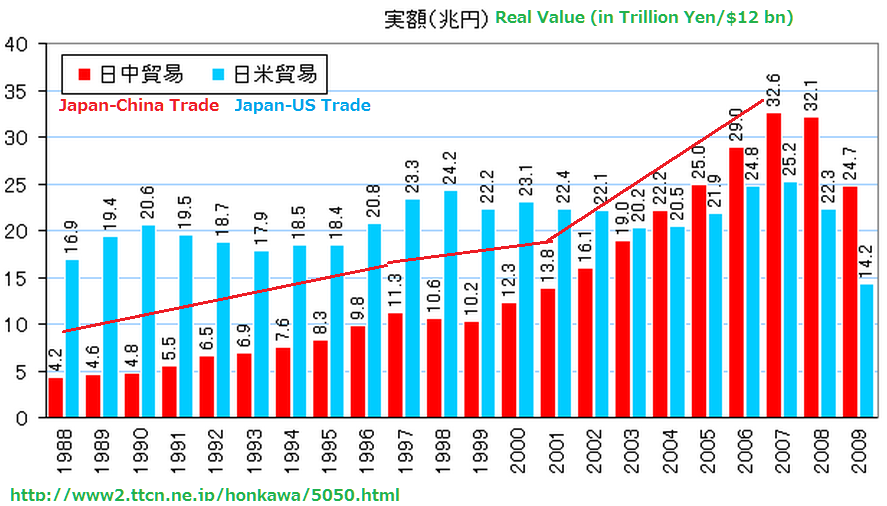
Trump’s escalating threats of trade war against Beijing pose economic dangers for Japan which relies heavily on China as its number one trading partner and cheap labour platform. Moreover, Trump is targeting not only China for trade war measures, but also Japan and other countries that have surpluses with the US.
The importance of the talks, for Abe in particular, is underscored by the fact that both leaders are mired in political crisis at home. The Japanese prime minister arrived in the US as his poll ratings plunged and large protests in Tokyo and other cities called on him to resign. Trump is also under siege amid intense infighting in the US political establishment over the direction of foreign policy.
As the Trump administration has ratcheted up its confrontation with North Korea, Abe has been the staunchest of allies backing the president’s bellicose threats to “totally destroy” the Pyongyang regime and echoing his declaration that talks were a waste of time.

Abe has exploited the so-called “North Korean threat” to advance his own ambitions to remilitarise Japan and remove all legal and constitutional constraints on the use of the military to prosecute the strategic and economic interests of Japanese imperialism
Publicly Trump and Abe expressed agreement on the US president’s decision to meet with North Korean leader Kim Jong-un.
However, Abe and his government were kept in the dark over the summit. Trump announced it out of the blue in March without consultation within his own administration, let alone with Tokyo. Trump effectively rubbed salt in the wound, choosing his meeting with Abe to reveal that CIA Director Mike Pompeo had made a secret trip to Pyongyang to meet Kim.
The abrupt about-face does not express any fundamental change of heart on the part of Trump, who has just unleashed illegal missile strikes on Syria. Rather the Trump administration senses the possibility of advancing US imperialism’s interests and strengthening its position in North East Asia against its chief rivals, Russia and China, and potential competitors such as Japan.
Trump’s overtures to the Pyongyang regime parallel the sudden turn by the right-wing US President Richard Nixon toward China. Nixon’s national security adviser Henry Kissinger conducted a series of secret trips to Beijing in 1971 to establish the basis for Nixon to meet with Chinese Communist Party Chairman Mao Zedong in February 1972.
Nixon’s rapprochement with China, which was aimed against the Soviet Union, laid the basis for capitalist restoration in China and its transformation into the world’s premier cheap labour platform.
Nearly 50 years after the Nixon-Mao meeting, the US regards China as the chief obstacle to global hegemony. Under President Barack Obama and now Trump, the US has mounted a comprehensive diplomatic and economic offensive against China across the Indo-Pacific, calculated to undermine Chinese influence and prepare for war. In the past several months, there has been a rapid deterioration in relations with Beijing, featuring threats of trade war, and also with Russia over Syria, where the US is seeking to oust Moscow’s ally, Syrian President Bashir al-Assad.
Since the dissolution of the Soviet Union in 1991, the US has systematically isolated North Korea diplomatically and imposed crippling sanctions on its economy. The overriding aim of this strategy was not to end the supposed threat posed by the country’s tiny nuclear arsenal, but rather, by one means or another, to bring it into the US sphere of influence. Moreover, the US is certainly not preoccupied with the human rights abuses of the oppressive military/police-state regime in Pyongyang.
Since Kim Jong-un came to power in 2012, North Korea’s relations with China have worsened markedly. Kim’s visit to Beijing last month to meet with Chinese President Xi Jinping was his first, and was no doubt aimed at shoring up his options ahead of the summit with Trump.
The paramount aim of the North Korean regime in two decades of failed negotiations and deals has been self-preservation—a peace treaty to formally end the Korean War and security guarantees from Washington. In comments on Tuesday, Trump declared that he had given his “blessing” to South Korea to discuss a peace treaty in talks between Kim and South Korean President Moon Jae-in later this month.
As Abe arrived in the US, the media reported that direct talks with North Korea were proceeding at “extremely high levels.”
Sharp differences have already emerged over the purpose of any negotiations, with Trump’s nominee as the new US secretary of state, CIA chief Mike Pompeo, suggesting in confirmation hearings that the US might accept a nuclear-armed North Korea without long-range missiles. Such a deal would leave Japan vulnerable to North Korea’s medium-range missiles.
Amid acute geo-political tensions in Asia and globally, it is not possible to predict the outcome of a Trump-Kim summit, or even if it takes place. Trump senses the possibility that crippling sanctions and the threat of military strikes can be exploited to force North Korea not just to denuclearise, but to align itself more closely with Washington. If Kim refuses to bow to Trump’s demands, the summit could be used to stage a provocation that becomes the pretext for war.
There are deep concerns in Tokyo that Japan is being sidelined by the United States and its interests will be ignored if a deal is struck with Pyongyang. Abe, who has been in power since 2012, has exploited the supposed threat posed by North Korea to advance his agenda of remilitarisation, including his push to refashion the country’s constitution to end its restrictions on the aggressive use of the Japanese military. A deal to denuclearise would undermine this campaign, which faces widespread opposition.
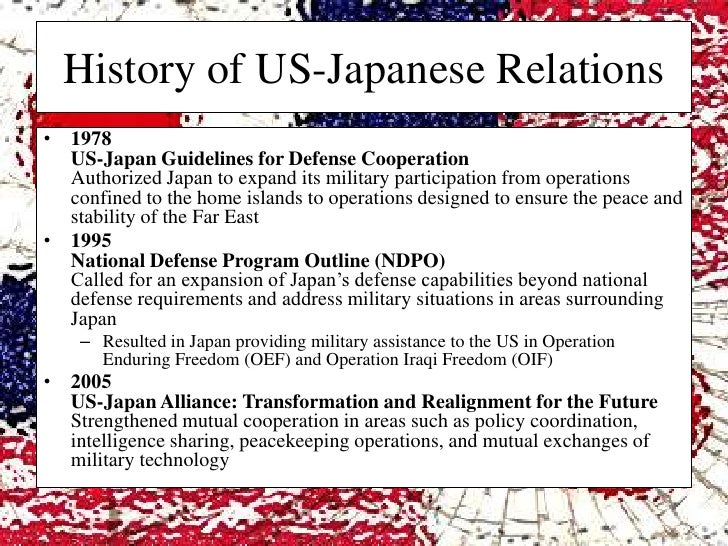
At the same time, Tokyo is worried that Trump might reach an agreement with Kim that stops short of complete denuclearisation—stopping the development of a nuclear missile that could reach the United States, but leaving North Korea with shorter-range missiles that could hit South Korea and Japan. In his congressional confirmation hearing last week, Pompeo hinted at such a possibility.
Trump made minor concessions to Abe, including offering to talk to Kim about returning Japanese citizens abducted by North Korea—a favourite issue of Abe’s ultra-nationalist constituency. In a nod toward Japanese concerns, Trump, standing alongside Abe, also declared he would not attend the summit, “if I think that it’s a meeting that is not going to be fruitful.” Given Trump’s unpredictability, such assurances mean little.
The potential for sharp disagreements at the Abe-Trump summit is compounded by the fact that both leaders are battling for their political lives.
Trump is embroiled in bitter feuding with sections of the US political establishment and military-intelligence apparatus for his supposed failure to take an aggressive stance towards Russia, especially through a more forceful military intervention in Syria. He is also facing a rising tide of opposition from workers and youth, exemplified by spreading strikes by teachers
Abe is no less under siege over two scandals involving, in the first instance, government favours to ultra-nationalist associates involved in establishing a kindergarten, and a veterinary medicine faculty in the second. Last Saturday, 30,000 to 40,000 people gathered in central Tokyo, with smaller protests in other cities, to demand Abe’s resignation. Abe’s poll ratings are plunging. Former Prime Minister Junichiro Koizumi, regarded by Abe as his mentor, declared this week that “the situation is getting dangerous” and suggested that Abe would have to quit in late June.
Regardless of the immediate outcome of the Abe-Trump summit, the fissures in US-Japanese relations will continue to fester, with the potential to lead to confrontation and conflict. The aggressive nationalism of both leaders is not simply a product of these individuals, but rather an expression of the deepening crisis of global
Confronted with its historic decline, US imperialism, having failed to secure its global hegemony through a quarter-century of wars in the Middle East and Central Asia, is preparing for conflict with any rival power that stands in its way.The Trump administration’s National Defence Strategy of January 2018 spelled out the strategic shift, declaring that “inter-state strategic competition,” not the “war on terror,” was now the primary concern.
While specifically naming China and Russia as the main “strategic competitors,” by implication longstanding allies such as Japan could also be targeted.
Japan is confronted with a similar historic dilemma. Having been a technological powerhouse and the world’s second largest economy for decades, Japan was shoved into third place by China in 2010.
Its diplomatic, economic and military standing has continued to slide, triggering intense discussion in ruling circles over how best to prevent Japan’s further decline.
Abe’s aggressive remilitarisation is the response of the ultra-nationalist wing of the ruling class that never accepted the country’s defeat in World War II or responsibility for its war crimes, and has resented playing second fiddle to Washington in Asia.
When it came to trade, Trump made clear that his threats of trade war were not just directed against China, but all economic rivals, including Japan.
He refused to provide the exemption that Abe sought on hefty US tariffs on steel and aluminium. Instead, Trump called for a bilateral trade deal with Japan, and insisted that the US would return to the Trans Pacific Partnership (TPP) only if it were offered major concessions.
Abe is certain to press Trump for exemption from the latest US aluminium and steel tariffs that shocked Japan and other allies, particularly as they were imposed on the grounds of “national security.” Trump, however, was openly menacing towards Japan, declaring that Abe has “a little smile.” “And the smile is, ‘I can’t believe we’ve been able to take advantage of the United States for so long.’ So those days are over,” he said
Trump cut across Abe’s economic agenda from day one of his administration by repudiating the Trans Pacific Partnership (TPP), in which the Japanese prime minister had invested a great deal of political capital.
The White House no doubt expected the TPP to collapse, but instead Japan refashioned the agreement into a bloc in which, it, as the world’s third largest economy, would play the central role. Now Trump has upset Abe’s plans again by announcing that the US could re-enter the TPP.
Abe told reporters: “I am aware that the US is interested in a bilateral deal. But we want to approach the discussions from the point of view that the TPP is best for both countries.” Trump, however, flatly ruled out any return to the TPP unless Japan and other members offered “a deal we could not refuse.
The failure to gain any concessions from Trump is a significant, possibly fatal, political blow for Abe. He came to the US in the hope that the two-day meeting could revive his political standing in Japan and ward off challenges from his rivals. Having made close relations with Washington, especially Trump, central to his diplomacy, Abe is now facing further criticism in ruling circles.
An editorial in Asahi Shimbun declared that the Abe-Trump summit “underscored the grim reality of diplomacy between the two countries… [as] Trump clearly remains willing to try to pressure even America’s loyal friends into accepting his demands under his ‘America First’.”
By focussing on Trump, the newspaper continued, Abe had failed to establish working relations with Chinese, South Korean and other regional leaders, and “undermined Japan’s diplomatic clout in the region.”
Just before Abe’s departure for the US, former Japanese Prime Minister Junichiro Koizumi, regarded by Abe as his mentor, suggested that Abe would have to resign in June and not seek re-election in September as leader of the ruling Liberal Democratic Party (LDP).
Abe is already embroiled in two scandals over allegations that he provided government financial favours to close associates in setting up a veterinary faculty and an ultra-nationalist kindergarten.
Another scandal erupted this week with allegations of sexual harassment emerging against a senior finance ministry official—Administrative Vice Finance Minister Junichiri Fukuda.
In a parallel to the scurrilous #MeToo campaign in the US and elsewhere, Fukuda was confronted with unsubstantiated accusations that he asked to touch the breasts of an unnamed female reporter. The allegations are not only aimed against Fukuda, but Finance Minister Taro Aso for failing to investigate the claims.
Abe’s poll ratings hit record lows this week. A survey released last Sunday by the broadcaster Nippon TV showed his support was just 26.7 percent—the lowest figure since Abe took office in December 2012. An Asahi Shimbun poll on Monday put his support at 30 percent. On Saturday, protests in Tokyo and other cities, involving an estimated 30,000 to 40,000 people, branded Abe “a liar” and called for him to step down.
There is widespread public hostility to Abe and his government, not simply over the corruption scandals, but more fundamentally his program of re-militarisation and responsibility for deteriorating living standards and growing social inequality. However, factions of the ruling elite, including within the LDP, are exploiting the scandals in an attempt to effect a change of leader.
A number of LDP figures, including Koizumi’s son Shinjuro Koizumi, are being touted as possible contenders. The most likely replacement, however, is the militaristic ex-Defence Minister Shigeru Ishiba, who has criticised Abe for not going far enough in pushing for constitutional amendments.
Ishiba has advocated for Japan to have the “right to belligerence,” that is to advance the interests of Japanese imperialism through military aggression, and also suggested that it might need to develop its own nuclear weapons.
The main focus of both the US and Japan, which will undoubtedly be reflected in the outcome of the Abe-Trump summit, is to contain and eventually subordinate China to their imperialist interests
Citations
[1] https://www.wsws.org/en/articles/2018/04/21/usja-a21.html
[2] http://www.wsws.org/en/articles/2018/04/18/pers-a18.html
[3] http://www.wsws.org/en/articles/2018/04/19/pers-a19.html
Anonymous12In short there will be a new form of “containment” happening. Containment was one of the strategies the US used against the USSR during the Cold War trying to contain Communism as much as possible. It will try and do the same with China, but Globalism is going to make that really hard.
The causes for WW1 all over again. Everyone in everyone else’s business never works.
Japan is dying anyway, 28% people over 65, lowest birth rate on the planet, 225% PIB debt, 20+ years economic depression.
They are royally f~~~ed either way, might as well go for broke and f~~~ it all.
To those following me, be careful, I just farted. Men those beans are killers.
I really need to get in the arms and security business.
You are all alone. If you have been falsely accused of RAPE, DV, PLEASE let all men know about the people who did this. http://register-her.net/web/guest/home
I really need to get in the arms and security business.
You know – that’s a REALLY good idea.
Anonymous1Japan has been bullied by the USA since the days of Commodore Perry. Sooner or later they are going to have to reconcile with China. They have much more in common with China than the USA. When that happens it will be a serious blow to the “American Empire,” but it will be mutually beneficial for Japan, China and even Korea. I think they are slowly realizing this.
A greater Asian power of China, Japan, and Korea would be the death knell of American Supremacy. Thats why the USA planted “Malware” in all the Japanese infrastructure. Snowden exposed this fact, the USA can hit a button and shut down Japan. This is an insurance policy in case Japan tries to ally with China instead of the USA. I think this plan will backfire on the USA though. Eventually, bullying doesn’t work. The Japanese will have had enough and big brother China will be waiting for their little brother to come home. That’s my two cents.
Japan has been bullied by the USA since the days of Commodore Perry. Sooner or later they are going to have to reconcile with China. They have much more in common with China than the USA. When that happens it will be a serious blow to the “American Empire,” but it will be mutually beneficial for Japan, China and even Korea. I think they are slowly realizing this.
Japan and China + Korea are deadly enemies since the Middle Ages. Asians have generational memories. There is real hatred on the Korean peninsula and China for the Japanese especially for WWII and this has not diminished – no matter what you hear from the MSM or a non-Asian.
Japan needs the United States on one hand to survive or China would have destroyed it or overrun it by now. On the other hand their society is in a mess due to following US policy for the last 60+ years. They need China for their economic survival as they can see the US economic collapse just as well as anyone else.
The Chinese are a practical people as well. They know to engage the Japanese is the only pragmatic way to get the US out of Asian affairs. That is why Japan is now a partner in OBOR.
This changes the dynamics of power in North Asia against the US. To all purposes it is an economic alliance. The other issues have yet to be resolved.
Anonymous1Japan and China + Korea are deadly enemies since the Middle Ages. Asians have generational memories. There is real hatred on the Korean peninsula and China for the Japanese especially for WWII and this has not diminished – no matter what you hear from the MSM or a non-Asian.
Yes, that is true. I had a Japanese in the family, you might say. I think they can reconcile with each other though. The USA is doing everything they can to prevent that. They would have to let go of the past and see themselves as some kind of greater Asian identity and unite against the “Round Eyed” foreigners. It would be a big step for them, but I think they would have to do it at some point. Otherwise, the West will dominate them forever.
Yes, that is true. I had a Japanese in the family, you might say. I think they can reconcile with each other though. The USA is doing everything they can to prevent that. They would have to let go of the past and see themselves as some kind of greater Asian identity and unite against the “Round Eyed” foreigners. It would be a big step for them, but I think they would have to do it at some point. Otherwise, the West will dominate them forever.
I agree. Thank you for the nice summaries. It will take a lot of time. I feel Russia will be a good mediator. However as you said the Empire will not give up so easily.
- AuthorPosts


You must be logged in to reply to this topic.

921526
921524
919244
916783
915526
915524
915354
915129
914037
909862
908811
908810
908500
908465
908464
908300
907963
907895
907477
902002
901301
901106
901105
901104
901024
901017
900393
900392
900391
900390
899038
898980
896844
896798
896797
895983
895850
895848
893740
893036
891671
891670
891336
891017
890865
889894
889741
889058
888157
887960
887768
886321
886306
885519
884948
883951
881340
881339
880491
878671
878351
877678