- Search Results
Unless you are expecting someone do not open the door.
If you don’t know the number do not answer the telephone.
If they give you a section 35 accept it and give your details-complain later as otherwise they will arrest you on a trumped up breach of the peace charge and give you kicking in the cells.
http://www.leavemeansleave.eu
The woman i am talking about is hispanic.
The woman i am talking about is an accountant.
Thanks to Trump and the prime minister from Canada for facilitating loans to women who want to start businesses, women have started doing one more scheme and these whores are even proud of it themselves.
They start the business thanks to the incentives and the low risk loans that are given to them, they get married then they pop a baby or two from some looser they’ve found out there.
The next step is quite obvious, let the business go down, bankrupt, hide whatever money you could from the money that was loaned to you on other accounts under other names, then get divorce, get the child and let the poor looser of a man you married deal with being chased for every penny he has got.
No risk involved for the female, but if this man wants to move on with hes life or try to move up the ladder he would be royally f~~~ed.
To put the cherry on top of the cake, they pop another 2 kids from 2 different guys and let that money start rolling in.
It has happened brothers, the Hispanic woman now is no different than the black hood rats you find in the ghettos.
Once i saw what was happening now i know why the sisterhood has been so passive & aggressive with this president, he gave them gifts and prizes so they would stop protesting him at hes house, while still throwing men under the bus.
I hope the next pathetic looser out there is NOT you, only time will tell.
OPEC – Russia Oil Price Controls – Why They Are Needed
[Y : Recently there has been much written by the MSM on an oil price increase due to the supply issues from Venezuela and the US sanctions on Iran. Oil crude price futures have raised to about $73 bbl last Thursday and was expected to go higher.
However last Friday a futures collapse started – the price is now about $66 bbl.
From ZeroHedge [1] the situation looks like this:
Saudi Arabia and Russia have formally started discussions on raising output as part of a deal between OPEC and its allies that took effect in January 2017 to maintain a price range for crude.
This is forward guidance to the markets to begin futures pricing to meet future supply increases in an expected range of between $50-$70. [1]
This fits with what Russian President Vladimir Putin said last week – that oil prices at $60 fully suit Russia and the country doesn’t want them to spiral higher.
Anything above that level “can lead to certain problems for consumers, which also isn’t good for producers,” he said. OPEC and Russia don’t plan to stick to existing output cuts, he said.
Why is this price range important to Saudi Arabia and Russia? Y]
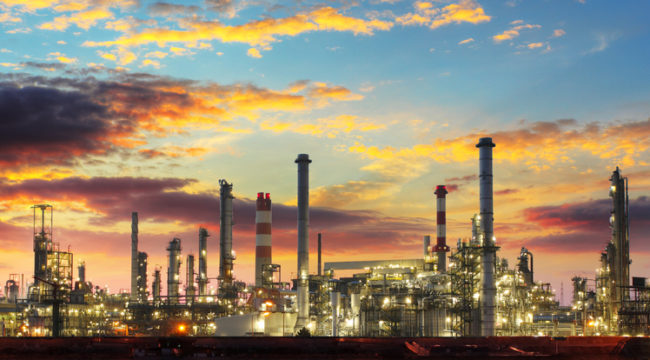
Will the Saudis Try to Drive Down Oil Prices? [2][3]
James G Rickards
The Daily Reckoning
- James G. Rickards is the editor of Strategic Intelligence. He is an American lawyer, economist, and investment banker with 35 years of experience working in capital markets on Wall Street. He was the principal negotiator of the rescue of Long-Term Capital Management L.P. (LTCM) by the U.S Federal Reserve in 1998.
- His clients include institutional investors and government directorates. He has contributed as an advisor on capital markets to the U.S. intelligence community, and at the Office of the Secretary of Defense in the Pentagon.
Remember $100 per barrel oil?
Oil prices peaked at $115 in June 2014. It seems like forever ago. What kind of behavior did this high price produce?
Many oil producers assumed the $100 per barrel level was a permanently high plateau. This is a good example of the anchoring bias. Because oil was expensive, people assumed it would remain expensive.
The fracking industry assumed oil would remain in a range of $70-130 per barrel. Over $5 trillion was spent on exploration and development, much of it in Canada and the U.S.
This led to a flood of new oil, which reduced the market share of OPEC producers. Saudi Arabia was losing ground both to OPEC competitors and the frackers.
But then oil prices crashed.
They fell all the way to the mid-$20s in early 2016. Then another human bias began to creep into Wall Street analysis.
The same prominent voices that earlier said oil would stay high were now saying it would keep dropping!
Some well-known analysts were calling for $15 per barrel oil. These low-ball figures were just as much off base as the earlier expectations of $130 per barrel oil.
Today oil is trading over $70, up from $46 at the beginning of the year. Oil surged 3% overnight after President Trump announced he’s abandoning the nuclear deal with Iran. The re-imposed sanctions will limit Iran’s oil exports, which will limit global supplies
A geopolitical shock in the Persian Gulf could send it back to $100. With Trump backing out of the Iranian nuclear deal, that possibility just became more likely. Rising dollar inflation could also take prices higher.
(I’ll have more to say about Trump’s decision in the days to come).
How did oil prices go from the $20s a couple years ago to today’s $70? Does this mean the Saudis will begin pumping more oil to bring prices back down to the $60 range?
Much of this gain reflects the determination of the world’s two largest oil exporters – Saudi Arabia and Russia – to limit output in order to firm up prices. The duopoly of Saudi Arabia and Russia has proved much more effective than OPEC at maintaining the discipline needed to control oil prices.
OPEC members such as Iran and Iraq are notorious for cheating on OPEC quotas. The duopoly is more disciplined.
Yet, this kind of manipulation is a two-edged sword. Saudi Arabia and Russia have as much interest in not letting prices get too high as they do in not letting them get too low.
Right now oil prices are at the high end of the range the duopoly consider acceptable. Oil prices have nowhere to go but down once Saudi Arabia and Russia do some cheating of their own.
Despite the ebbs and flows of oil supply and demand, and technical aspects of trading, the overriding dynamic in global energy markets is straightforward. In any market, there are price takers and price makers. The only price makers in global energy markets are Saudi Arabia and Russia, if they act together.
Saudi Arabia and Russia, (the “duopoly”) together produce 25% of the world’s oil exports. That’s more than the next six major oil exporters combined, and those others have nowhere near the degree of coordination as the duopoly.
Equally important is that Saudi Arabia has the lowest production costs of any major producer, about $4.00 per barrel. It’s certainly the case that Saudi Arabia likes higher oil prices, but oil could sink to $10 per barrel, and Saudi Arabia would still make money while most other exporters would lose money or cease production.
The duopoly face a familiar dilemma that could confront any business. On the one hand they like high prices and the revenue that goes with it.
On the other hand, high prices have two perils…
The first is that high prices encourage competition in the form of marginal output that can take market share. The second is that high prices can produce a recession in developed economies that reduces oil consumption across the board.
Obviously the duopoly would like higher prices, but this just encourages output from marginal producers especially those using hydraulic fracturing technology (“fracking”) in places like the Permian Basin in Texas.
The solution to this dilemma is an optimization plan using linear programming. The way to model this is to ask: “What is an optimal price that destroys competition and maximizes revenue at the same time?”
Let’s go back a few years…
In mid-2014, Saudi Arabia developed a plan to destroy the U.S. fracking industry and regain its lost market share.
The exact details of the plan have never been acknowledged publicly but were revealed to me privately by a trusted source operating at the pinnacle of the global energy industry.
The Saudi plan involved a linear optimization program designed to calculate a price at which frackers would be destroyed. But the Saudi fiscal situation would not be impaired more than necessary to get the job done.
What makes Saudi Arabia unique among energy producers is that they actually can dictate the market price to some extent.
Saudi Arabia has the world’s largest oil reserves and the world’s lowest average production costs. Saudi Arabia can make money on its oil production at prices as low as $10 per barrel.
This does not mean that the Saudis want a $10 per barrel price. It just means they have enormous flexibility when it comes to setting the price wherever they want.
If the Saudis want a higher price, they pump less. If they want a lower price, they pump more. It’s that simple. No other producer can do this without depleting reserves or going broke.
A $30 per barrel price would surely destroy frackers but would also destroy the Saudi budget. An $80 per barrel price would be comfortable from a Saudi budget perspective but would give too much breathing room to the frackers.
What was the optimal price to accomplish both goals?
It turned out that the optimal solution for the Saudi problem was $60 per barrel. A price in the range of $50-60 per barrel would suit the Saudis just fine. That was a price range that would eliminate frackers over time but would not unduly strain Saudi finances.
Of course, just because the computer says $60 does not mean you can stick the landing in the real world. There are many factors that go into oil pricing including geopolitics, central bank induced inflation or disinflation, and technical trading patterns.
In particular, once a price moves radically in a macro market there is a tendency to “overshoot;” something that is quite common in currency markets for example.
That said, Saudi Arabia set out in mid-2014 to crush the price of oil in order to destroy the fracking industry, which had emerged as a major competitive threat in 2011. The impact of the Saudi plan, and both the old and new trading ranges for oil are illustrated in the chart below:

- This chart shows NYMEX light sweet crude oil (WTI) prices from 2011 to 2017. The pre-2014 trading range was $80 to $115 per barrel. The post-2014 trading range is $25 to $60 per barrel. Saudi Arabia engineered the lower trading range in order to shut-in fracking capacity. Russia and Saudi Arabia work together today to keep an oil price ceiling of $60 per barrel. With oil near the high end of that range, signs of slowing growth in China, and disinflation in the U.S., a decline in oil prices is highly likely.
While the Saudi plan was effective, the fracking industry did not simply disappear. In fact, the initial response of the frackers was to pump more oil. This additional output plus overshooting accounts for the dip in oil prices to the $30 per barrel level in early 2016.
The reason frackers produced more oil at lower prices was because of their financial constraints. The frackers had loaded up on leases, equipment and labor during the good times of $100 per barrel oil prior to 2014.
This was done with high leverage, which burdened the frackers with fixed interest and principal payments. Frackers did this in the belief that oil prices would stay above $70 per barrel. Some fracker cost structures ran as high as $130 per barrel to achieve profitability.
Many of those costs were fixed, at least in the short run. Pumping oil at a loss was better than not pumping at all because it generated some cash flow to pay interest while the frackers waited for better times.
The better times never came. Oil prices did bounce off the early 2016 lows and have stabilized closer to $45.00 per barrel, but that’s still not high enough to support most of the frackers.
As the bankruptcies and debt restructurings piled up, a new wave of frackers entered the game. This new wave purchased assets from failing frackers at cents-on-the-dollar and continued exploration and drilling with improved cost structures.
Some of the “new wave” frackers were actually from the original wave in 2011, but had managed to hold on either because they had piles of cash from their first financings, or because they had cut costs sufficiently to stay in the game for a while.
Saudi Arabia perceived the threat from the new wave of frackers and decided to go for the kill.
To do this, they enlisted Russia and created the duopoly. Now the stage is set for a new round of oil price declines and another bloodbath in the fracking fields.
What are my predictive analytic models telling us about the prospects for oil prices in 2018?
Right now the action nodes are telling us that energy prices are heading for a fall.
The recent bilateral production agreement between Saudi Arabia and Russia combined with the multilateral production agreement in OPEC is designed to cap output and stabilize prices around the $60 level.
These new agreements basically reaffirm production limits that had been agreed earlier this year. Those agreements account for the run-up in the oil price since mid-2017.
Yet, the frackers have not gone away. Some are hanging by their fingernails with negative cash flow in the hope of higher prices. The duopoly are set to disappoint them.
Now that the duopoly and OPEC production quotas are set, the cheating can begin.
Perennial cheaters such as Iran and Iraq will be the first to overproduce. Venezuela’s economy is in free fall, and it will certainly take the opportunity to overproduce also. Once supply increases, the duopoly will tag along with their own increases in order not to lose market share.
The frackers talk a good game when it comes to profitability, but they can’t walk the walk. As the saying goes, “Fish gotta’ swim, birds gotta’ fly, and Texas wildcatters gotta’ pump oil.”
With the $60 per barrel cap firmly in place, and oil prices near that level, the price has nowhere to go but down. Prices near the top of the trading range will induce additional output.
This time the frackers won’t get a reprieve because their bankers, stockholders, and bondholders won’t allow it.
Losing money is not a sustainable business model.
Regards,
Jim Rickards
for The Daily ReckoningCitations
[1] https://www.zerohedge.com/news/2018-05-28/what-happens-oil-next-well-forgotten-answer
[2] https://dailyreckoning.com/oil-prices-soon-drop-50/
[3] https://dailyreckoning.com/will-saudis-try-drive-oil-prices/Here’s another reason to build a wall around the U.S. There are children who run away from their homes and migrate to the U.S. Then they are arrested and detained when they cross the U.S. border. But instead of investigating the whereabouts of their relatives, and deporting them back to their country of origin to be with those relatives, they are kept in the U.S. Sometimes they are allowed to stay with relatives in the U.S. Sometimes they end up in foster homes. Tax revenue is spent for them to be detained, but somehow the federal government cannot afford to give college grants to American students or fix potholes in the highways.
I notice some media bias about these children being separated from their parents by the Trump Administration or the U.S. immigration policy. The point I want to make is: Why don’t we complain about the real source of the problem,which is: the irresponsible parents of these children? I am not responsible for paying more taxes so I can correct the decisions of irresponsible parents! There is a lot of poverty, unemployment, and crime in many countries—particularly in Central American countries. But people are still having babies despite having a s~~~-storm of problems. Well guess what? Your children are YOUR problems! Take care of them, or stop having unprotected sex!
The United States government is not the blame if children run away from their parents and s~~~ty neighborhoods. These kids are willingly separating themselves from their families! They should be sent back to their families and their parents should be told to make better decisions with their lives! And if they have to sacrifice their lives in order to change their societies or overthrow their corrupt governments, then they should take that risk. How do you think the U.S. was created in the first place? Men risked their lives to fight for it!
If I had a child right now, I could not afford to pay for that child’s dental care. But when these kids run away from their countries, and cross the U.S. border, they will be detained by immigration officers and given FREE DENTAL CARE. That does not make any sense to me. Bring these kids into the country will give foreigners an excuse to continue making bad decisions. It many even encourage them to send their kids on a dangerous journey (alone!) to become U.S. citizens and “rescuing” them with wire transfers of money or possible U.S. visas.
If I had my way, I’d have what Spain has: a double fence with barbed wire. I would not let anyone in that does not have the proper paperwork. I won’t demand that my fellow citizens pay more taxes for people that don’t belong here when they can barely afford to feed their kids, take them to the dentist, and pay for college. Not letting people get in this country saves us money. And when it comes to immigration: the people who are at the top of the list are those that grew up in CIVILIZED nations! I want entrepreneurs, scientists, inventors, artists, professors, etc. I want people who can add something that’s meaningful and profitable to my nation instead of people who will end up getting government subsidies.
I can understand that children don’t ask to be born in these circumstances. However, it is the sole responsibility of their parents to provide them with food, water, and shelter. I we, as an American society, allow these parents to shirk their responsibilities, they will continue to make bad decisions that put their kids at risk. They need to learn the hard way, unfortunately. If they value the lives of their children, they will make whatever scarifies necessary to give them a better life. And if that means banding together to fight some disgusting gang members, so be it. Fight for a better life.
"I saw that there comes a point, in the defeat of any man of virtue, when his own consent is needed for evil to win-and that no manner of injury done to him by others can succeed if he chooses to withhold his consent. I saw that I could put an end to your outrages by pronouncing a single word in my mind. I pronounced it. The word was ‘No.’" (Atlas Shrugged)









925069
924988
922113
921526
921524
919244
916783
915526
915524
915354
915129
914037
909862
908811
908810
908500
908465
908464
908300
907963
907895
907477
902002
901301
901106
901105
901104
901024
901017
900393
900392
900391
900390
899038
898980
896844
896798
896797
895983
895850
895848
893740
893036
891671
891670
891336
891017
890865
889894
889741
889058
888157
887960
887768
886321
886306
885519
884948
883951
881340
881339
880491
878671
878351
877678