- Search Results

AnonymousPow accreditation.
proof of work. Think of it as a fun game. The top score is proof of your competence as a leader
or a worker.
video insert here.
Colleges and Universities, once trained people to a standard sufficient enough, the mere
certification, would result in a job…
Evidence 1,2,3. (video insert here.)
elon musk etc. and other vids.
POW accreditation is a new system tayloured & designed by yourself to start you off with a
project that will result in:
a) evidence of your competence
b) progression of your ability to produce
c) a spendable figure of your accomplishments.
projects start simple and fun. your progression is only relevant to your goals. final Pow sheets are available online as cv accreditation and have real time evidence of your performance shown as a sum total of your ability to make, produce and sell the final outcome of which shall be a monetary indication of your level of competence.
Rather than be taught what you are doing or where you are going wrong, the emphasis will be to self diagnosed based on evidence.A task impossible to fail.
Startup capital.
To begin, a simple task is given to register with our first point of income (fidor bank). Applicants are to register and earn money by applying for bonuses. This first step is the foundation of the pow accreditation. It is how the applicant begins and is able to show the ability to take a small opportunity and make it grow by making informed decisions.Task 2.
Either the applicant is able to go ahead and use their own experiences to make the money they have now generated grow or they will be offered a suitable list of opportunities as a guide to discover how, given even a small sum can be used to at least double the amount put in. Applicants have 5 days to make 5x. Success will be granted task 3 access. Unsuccessful applicants will achieve a task 2 limited accreditation but their accomplishments will show their competence and strengths as a real indication of employability to potential employers.Task 3.
With a successful task 2 the applicant will have shown the ability to self diagnose and adjust and create a substantial value from a modest basepoint. Task 3 applicants should be proud of their accomplishment to achieve elite task 3 status.Opportunity to work with others are available as well as funding opportunities within the group to take a project to a serious level. Achievements will be recorded. Applicants by only the second week of their program will be able to prove beyond doubt they hold the keys to their own financial stability but may even consider to take their projects on as their own independent source of income. This being the case the Pow accreditation has solved the requirement to seek external validation and has allowed the applicant to become fully self managed. The requirement for accreditation in the successful applicant has thus become null
while the unsuccessful applicant will still have an extremely interesting journal of development to follow and work with. A financial Pow sheet will be available in realtime. As the final figure will be in constant motion, should the amount alter, the applicant shall be notified and task status automatically amended.POW Accreditation
Has been developed and modified by participants. POW is a game and an opportunity. All participants are doing so on their own accord. All funds generated by POW are used to manage the game. All successful players of all stages are given a workout plan and a healthy cut of their own achievements after each stage.I just read a comment on a Tom Leykis video on YouTube that is extremely eye-opening yet extremely disturbing at the same time. This comment not only confirmed a lot of what I already knew about female nature, but also went much deeper and revealed that they are much worse than I already thought. This post affected me so deeply that I’ve reached another peak of my depression and anxiety. I’m having trouble typing this because I am shaking violently and feeling physically ill. This is the comment:
“Years ago I became friends with a very hot blonde in her early 30’s, who was dying of cancer. Due to her impending death, she decided that it was okay to relay a vast amount of inside information to me, regarding what women were really all about. She volunteered this information. I have never forgotten what she told me, and it has served me quite well over the years.
Here is a summary of the 10 critical things she told me about the true nature of women over the span of a couple of weeks, shortly before her passing:
Point 1) Women are exactly like little children. We are constantly poking, prodding and testing a man, in order to find out what his boundaries are. If he has no boundaries, we will destroy him, especially if he loves us (more on this in Point 8, below). A man has to have boundaries, and he has to outline them precisely, and he has to force us to adhere to them with the power of his conviction and the power of his action. If he doesn’t do that, we will beat him over the head with his weaknesses (his lack of boundaries) until he breaks.
Point 2) Women put up a false front about virtually everything. Our faces are fake (makeup), our hair is fake (dyed), our boobs are fake (some of us), everything about us is fake. Most especially when it comes to what is inside of us. We lie constantly, because we are far worse, characterwise, than even our closest friends or lovers will ever know, and we desperately fight to keep all of that hidden. We are looking for our true daddies, basically – the idealized daddies that we never had – somebody who can see through all of our false fronts and call us out on our bulls~~~ and put us in our place. The problem is, those type of men are very few and far between.
Point 3) If a woman ever tells you, “If we don’t have trust, we don’t have anything,” she is either cheating on you already, or she is planning to cheat on you. There are no exceptions to this rule. We use that as cover, to try and make the man feel guilty for questioning our fidelity. What we are really saying here, is, “I will f~~~ whomever I want and you’d better keep your nose out of it or I’ll cut you off from my pussy and I’ll ruin your freaking life if you keep pressing the issue.” If we really cared about you, and if we really weren’t cheating on you or planning to cheat on you, we would tell you something like, “I am not cheating on you, I love you, and I would never do that. I don’t care if we have to stay up all night, for the next week, and go over every single shred of doubt that’s currently troubling you about this. I have nothing to hide, I would never cheat on you, and I don’t want you thinking these things about me. Please tell me exactly why you think I am cheating, point by point, and I will do anything and everything that I have to do to prove to you that I’m not cheating, in order to ease your worried mind.”
Point 4) Women are much hornier than men. Vastly, exponentially, hornier than men. A woman will do just about anything, sexually speaking, so long as she is fairly certain she won’t get caught. For example, we will occasionally go out of town in order to rendezvous with a man we’ve been longing to f~~~, and/or to have multiple sex partners in the same evening, and/or at the same time. This is something that hot women do, most especially. In our minds, it is a natural desire, and a natural thing, and so long as nobody else finds out, it’s “game on”. Women are receptacles for c~~~, that’s how we have been biologically designed. Nothing feels better to us than being completely filled up with multiple penises, than being the center of sexual attention, than being the object of unbridled group lust. Since it’s something we can’t risk doing on our home turf (don’t s~~~ where you eat), we have to think outside the box, in order to get our boxes completely satisfied. And you might find this shocking, but many women – many, many women – have sex with dogs on a routine basis. This is just one example of how insatiable we truly are. I can see why you might not believe it, to which I say, look really hard at all of the women you know who have dogs. Look at women who have dogs whenever you see them out on the street, in the act of walking those dogs. Or at the park. You will notice that most of them have male dogs – the vast majority, in fact. This isn’t a coincidence. And look at all the female teachers who are exposed in the media for having sex with underage students. We have no self-control when it comes to sex – or anything else, for that matter. To our way of thinking, losing control is what makes sex great. Doing anything that is taboo is what makes sex great.
Point 5) Women do not have female friends. We have female competition. We lie to our so-called female friends and pretend we are loyal and faithful to them, just like we do with the men in our lives. Secretly, we are jealous of each other, and we want all of the desirable things that other women have – most especially when it comes to our female friends’ things. And we consider men to be things. If one of our friends has a hot man, we want him to want us. We will do everything we can to seduce him. Not because we really want him – we don’t really want anybody. We do it because we are rarely happy, and we don’t want our girlfriends to be happy, either, and we want to boost our own egos more than anything else. And after we get him to f~~~ us, when our girlfriends find out that he has had sex with us, that’s when we finally get what we wanted in the first place. If we break up the previously happy couple, that’s fine, too. It’s all about our pussy, not hers. It’s about winning.
Point 6) Women want what they can’t have. If a guy doesn’t want us, it doesn’t matter who he is – if we have expressed an interest in him, and he blows us off, or laughs at us, or sees us for the piece of crap that we really are, it will make us feel miserable inside, and we will pursue him to the ends of the earth.
Point 7) Women always lie about the number of sexual partners they have had. They also lie about not wanting men with large penises. If we told the actual truth about the number of different men and women we’ve slept with, and if we told the actual truth about our fervent desire for big dicks, our pool of potential suitors would shrink drastically, to the point where it would completely dry up. So we lie. Most often, we will claim that we’ve had between three and eight sexual partners in our lifetime. And, to our way of thinking, it isn’t a lie, because if we had five sexual partners last Saturday evening, and our man asks us how many sexual partners we have had, and we answer, “Five”, well, technically we aren’t lying.
Point 8) All women hate themselves. And because we hate ourselves, we hate any man who doesn’t see through our bulls~~~. The more a man loves us, the more we hate him. The more he overlooks our sins, and the more he fails to see how corrupt we are, and the more he gives us the benefit of every single doubt – the more we despise him. We will escalate our bad behavior until we finally break him and he wakes up and realizes how worthless we are and what a fool he has been for believing in us.
Point 9) Women don’t want a man who wants us. We want a man whom we can’t have. We want a man who honestly doesn’t give a f~~~ about us, who doesn’t care if we come or go. That’s the kind of man we will pursue. Call them bad boys or call them whatever you want, that’s the kind of man we want – period. The kind of guy who will make us orgasm, crudely, and give us a huge sexual thrill in the bedroom, and then discard us like used toilet paper, and f~~~ our female friends afterwards, just because he can. (Just like we would do with his male friends.)
Point 10) All women are masochists. And all hot women are narcissistic masochists. We hate it when things are going well, especially if they continue to go well for long periods of time. We know down deep that we are f~~~ed-up and not worthy of anything that is truly good. So when things are going well in a relationship, we eventually sabotage it. We just can’t help ourselves in this regard. We could have the greatest, most handsome, most well-hung husband in the world – a one-of-a-kind man who makes all of our girlfriends jealous; we could have the greatest children in the world, who are beautiful, well-behaved and ambitious; we could have the most enviable career imaginable; we could have all of the money and prestige and the truly good things in life, and we could repeatedly tell ourselves over and over, and believe, on the surface, that we would never cheat on our husbands. But down deep we know that it’s a lie. Because one day, we could walk into a grocery store, and some bad boy could whisper just the right combination of words in our ear, and the next thing you know, we’re at the Motel 6 getting it in the ass. That’s just how we are, and any woman – especially a hot woman – who says otherwise, is a liar.
————
Over the years, my deceased friend’s words have proven to be spot-on, in the vast majority of cases. And if they ring true from your own personal experience as well, then I am more than happy that I shared them with you here today. I know that my deceased friend would be thrilled to know that I have shared this information with the manosphere. After all, she used to be a conniving hottie, and she’s now dead, and by giving me the inside scoop on her female competition, she continues to beat them – she continues to “win” – even from beyond the grave… ”
Knowing that half of the human race is THAT depraved, THAT psychotic, THAT manipulative, THAT destructive toward both others and themselves has pushed me to the edge of my sanity. I’m resentful and angry at myself for all of the lies I believed and suffering I chose to endure before I found the red pill. I’m even more resentful and angry toward myself for having slipped once after finding the red pill. For thinking that I found one that was different. One that was slightly capable of caring. I went into detail about that in my last post in Relations~~~s. I’m feeling extremely nihilistic due to knowing that our entire gender is seen as even more worthless and expendable than I already knew. Who would have thought… the one time that one of these creatures WAS honest was the one thing that would f~~~ with me the most. This is unraveling me much more than any lie or act of betrayal any c~~~ in my life has ever committed. For the first time in over a year I’m having the urges to grab the nearest blade and self-mutilate or worse.
The information I had before this was enough. I already knew to never get involved with them again. I already knew they couldn’t be trusted. I already knew they were f~~~ed up in the head. What I already knew was plenty enough for me to never allow one of those harpies to ever f~~~ up my life again. I did not need to know this much. How can I live my day-to-day life? How can I function normally when I know so much disturbing information? I was ALREADY suspicious of every female. How can I not focus so much on hating these vile monsters when I know so much about them? I don’t know if I can go back to my normal life. Every female that comes into my field of vision will become an object of extreme hatred and resentment. Before, I’ve been able to keep thoughts like that under control because spending so much energy on that isn’t productive or healthy. But I don’t know how I can keep much focus on anything else now. This may be a knee jerk reaction and it may subside with a little time. But right now I’m on the edge. There’s truth that’s hard to handle, but this is on a completely different level.
I've had to learn lessons the hard way more times than I should. I've been very fortunate to find MGTOW when I did. Swallowing the Red Pill saved my future.
Source: Tessa Cunningham, Daily Mail “Women who believe they’re angels sent to earth …”. 09/05/2018.
http://www.dailymail.co.uk/femail/article-5710457/Women-believe-theyre-angels-sent-earth.htmlFrom the article: “ … one of thousands of British women convinced that the only explanation for their uncanny powers of spiritual intuition is that they are actually angels, sent from heaven to make the earthly world a better place”.
The final stage of madness.
President of China Xi Jinping : To Remember History, To Open The Future [1][2]
Anatoly Karlin
The Unz Review
May 9, 2015[Y Although this article is exactly three years old – it nicely sums up the position of the Chinese people in relation to Russia through Xi Jinpeng on his trip to Moscow to celebrate Russia’s V Day 2015. Thank you for reading. Y]
President Xi Jinping penned an op-ed in a Russian newspaper on May 6th 2015 in which, in stark contrast to the typical Western bile and hostility, he acknowledges the role of the Soviet Union in defeating Nazism and warns off against attempts to revise that outcome, be it on paper or in real life.
I am translating it in full for two reasons.
First, it constitutes a first-hand glance at official relations between China and Russia, which – much to the consternation of neocons, Russophobes, Sinophobes, and Western imperialists – are instead of fighting each other for make benefit of the US are instead building strong relations and continuing to ink dozens of deals whose total value now probably stands at close to a trillion dollars.
Second, to explicitly give the lie to Western propaganda that Russia is somehow “isolated” by the fact that none of Washington’s European stooges turned up at the Victory Day parade in Moscow this May 9th. Who cares? Not many Russians, at any rate. China, India, and dozens of other countries did turn up. That’s the world’s second superpower and the representatives of half of humanity.
As for Obama, Merkel, Hollande, and Dave – quite frankly, the air is cleaner for their absence.
Anatoly Karlin
May 9, 2015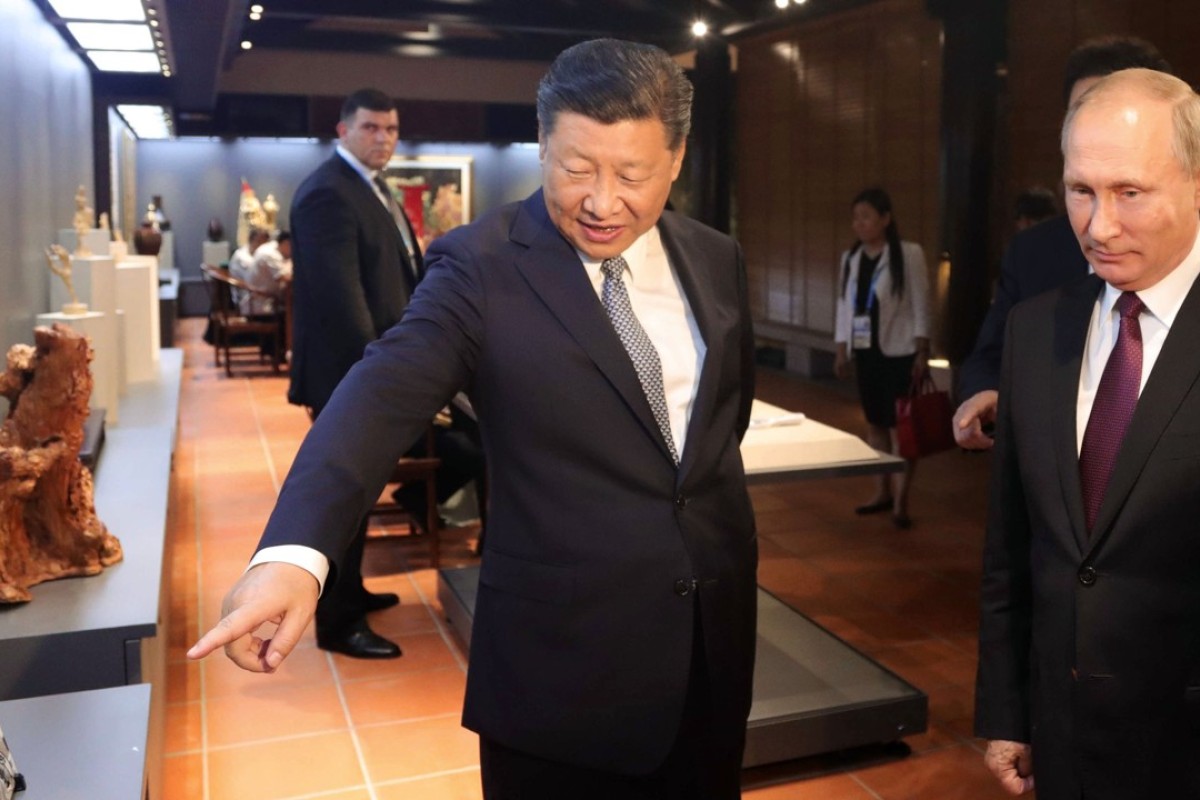
Российская Газета 06.05.2015
On May 9th, Victory Day in the world war against fascism, at the invitation of Russia’s President Vladimir Putin, I will visit Russia and take part in the celebrations in Moscow devoted to the 70th anniversary of Victory in the Great Patriotic War. This sacred day I will celebrate together with the Russian people and the entire world.
Everyone remembers that the aggressive wars begun by the fascists and militarists inflicted unprecedented damage and suffering on the peoples of China, Russia, and the countries of Europe, Asia, and other parts of the world.
The relentless struggle between justice and evil, light and darkness, freedom and slavery, was joined by the peoples of China, Russia, and more than 50 other countries, as well as by all the other peace-loving peoples of the world, who stood up as one and formed a broad international anti-fascist and anti-militarist front.
All these nations fought in bloody battles against the enemy, and in so doing defeated the most evil and brutal aggressors, bringing peace to the world.
I remember, in March 2013, when I first visited Russia on a state visit, I laid a wreath at the Tomb of the Unknown Soldier near the Kremlin walls. There was a depiction of a soldier’s helmet and a red banner on the tomb, and there burned an eternal fire, symbolizing the unbroken life and unwavering fearlessness of our fallen heroes. “Your name is unknown, your deeds are immortal.” They will never be forgotten by the Russian people, the Chinese people, or anyone else.
China was the main theater of military operations in Asia during the Second World War. The Chinese people stood up before anyone else in the struggle against the Japanese militarists, waged the longest war, fought in the hardest conditions, and, like Russia, suffered the most enormous losses.
The Chinese army and people fought stoically and persistently, locking down and destroying numerous contingents of the Japanese aggressors. At the cost of a huge national sacrifice – the lives of more than 35 million people – a great victory was finally won and an enormous contribution was made to victory in the world struggle against fascism.
The exploits of the Chinese people in the war against the militarists, just like the exploits of the Russian people, will be immortalized forever in history and will never die.
The Chinese and Russian peoples supported each other, helped each other, they were comrades in arms in the war against fascism and militarism, and built a friendship with each other forged with blood and life. In the most difficult times of the Great Patriotic War, many of the best sons and daughters of the Chinese people decisively joined in the battle against German fascism.
Mao Anying – the eldest son of Chairman Mao Zedong – fought on many battles as a political officer of a tank company of the 1st Belorussian Front, up to the storming of Berlin. The Chinese fighter pilot Tang Duo, as deputy commander of a fighter company of the Soviet Army, distinguished himself in air battles against the fascist forces.
Children of the leaders of the Chinese Communist Party and descendants of the fallen heroes of the Chinese Revolution, when studying at the Ivanovo international boarding school, despite that they were still only children, nonetheless went off to dig trenches, prepared Molotov c~~~tails, prepared food and clothes for the fighters, chopped trees, dug out potatoes, and looked after the wounded in hospitals. Apart from that, many of them regularly donated blood – 430 millilitres once per month for the soldiers at the front.
The Chinese female journalist Hu Jibang, small and weak, underwent the entire war from the first day to the last, through bullets and fire, writing about the resilience and courage of the Soviet people, the barbarous cruelty of the fascist hordes, and the joy of the Russian soldiers and people in their times of triumph.
It emboldened the armies and peoples of both countries, raising their will to fight to the end, to the final victory. Alongside the above heroes there are many other representatives of the Chinese people who contributed to the Great Patriotic War while remaining unknown soldiers.
The Russian people gave the Chinese people valuable political and moral support in their war against Japanese invaders. This included large convoys of arms and war material. More than 2,000 Soviet fighter pilots joined the Chinese air force and helped in the air battles over China. More than 200 of them died in battles over Chinese soil.
In the closing phase of the war, Red Army soldiers of the Soviet Union were sent to north-east China. Together with the Chinese army and people they fought against the Japanese militarists, which helped China tremendously in achieving final victory.
The Chinese people will always remember the Russians, both soldiers and civilians, who gave their lives for the independence and liberation of the Chinese nation.

The famous Russian historian Vasily Klyuchevsky said, that, having forgotten history, our soul can get lost in the darkness. To forget history is to commit treason. The Chinese and Russian peoples stand ready, together with all peace-loving countries and peoples, and with the automost determination and decisiveness, to oppose any actions or attempts to deny, distort, and rewrite the history of the Second World War.
This year, China and Russia will hold a series of events to mark the 70th anniversary of Victory in the Second World War. There will also be many other events conducted by the UN and other international and regional organizations.
The purpose of these events and celebrations is to demonstrate our determination to defend the results of the Second World War, to protect international equality and justice, and to remind out contemporaries that it is necessary to preserve and guard the peace that was won for humanity at too high a price.
The hard lessons of the Second World War tell people, that humanity’s coexistence is not subject to the laws of the jungle; that world politics is diametrically contradictory to belligerent and hegemonic power politics; and that the path of human development is not founded on the principle of “winner takes all” or in games with zero-sum outcomes.
Peace – yes, war – no, cooperation – yes, confrontation – no, mutual gains are honored, while zero-sum results – are not: This is what constitutes the unchanging core and essence of peace, progress, and the development of human society.
Today, mankind has unprecedentedly good opportunities for the realization of our goal – peace, development, and the formation of a system of international relations that is ever more strongly based on the spirit of cooperation and mutual benefits. “Unity – is strength, while self-isolation – is weakness.” Cooperation and the win-win principle should be adopted as the basic orientation of all countries in international affairs.
We have to unite our own interests with the common interests of all countries, find and expand on the common points of interests of different parties, develop and establish a new conception of multilateral win-win, to always be ready to extend a helping hand to each other at difficult times, to partake together of rights, interests, and responsibilities, and to collectively collaborate to solve growing global problems such as climate change, energy security, cybersecurity, national disasters, and so on. In short, we are in it together on our planet Earth – the homeland of all humanity.
The Chinese people and the Russian people – they are both great peoples. In the years of grief and misery, our indestructible camaraderie was cemented in place with blood. Today the peoples of China and Russian will hand in hand and shoulder to shoulder defend peace, promote development, and make their contributions to lasting world peace and human progress.
Xi Jinpeng
Peoples’ Republic of ChinaCitation
[1] http://www.unz.com/akarlin/translation-xi-jinping-remember-history/
[2] https://rg.ru/2015/05/06/knr-site.htmlInterview with Syrian President Bashir El-Assad by Athens Daily Kathimerini – 10th May 2018 [1]
RT Synopsis
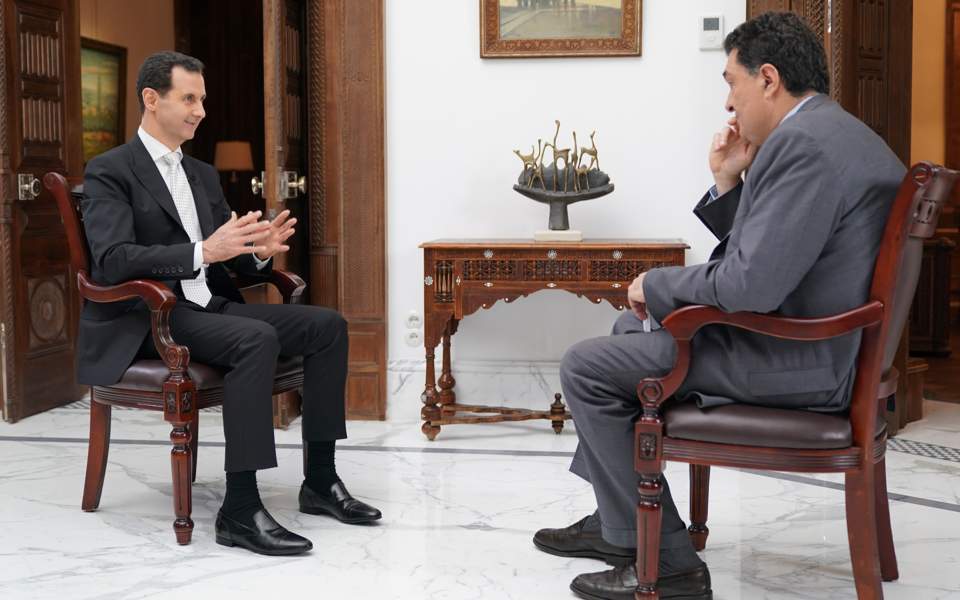
In an exclusive interview with Athens daily Kathimerini, Assad said there was no reason to meet face-to-face with Trump, since the US president “says something today, and does the opposite tomorrow,” and is likely not even being in control of policy decisions.
[W]e don’t think the president of that regime is in control,” Assad told the paper, referring to Trump. “We all believe that the deep state, the real state, is in control, or is in control of every president, and that is nothing new. It has always been so in the United States, at least during the last 40 years, at least since Nixon, maybe before, but it’s becoming starker and starker, and the starkest case is Trump.”
Assad also dismissed the possibility of a third world war breaking out in Syria, telling the Greek newspaper that Moscow’s levelheadedness has so far prevented a catastrophic escalation – even as the US aims to expand the conflict.
Asked directly if he was concerned about the possibility of a third world war, Assad replied: “No, for one reason: Because fortunately, you have a wise leadership in Russia, and they know that the agenda of the deep state in the United States is to create a conflict. Since Trump’s campaign, the main agenda was against Russia, create a conflict with Russia, humiliate Russia, undermine Russia, and so on,” the Syrian president said.
Assad ended the interview by vowing to reunify Syria and restore its sovereignty, adding that the US, France, UK, Saudi Arabia, Qatar and Turkey are ultimately responsible for the seven-year war and must be held accountable for supporting “terrorists” fighting in Syria.
Interview Transcript
There have been accusations from the US and the Europeans about the use of chemical weapons, and there was an attack after that. What is your response to that? Was there a chemical attack? Were you responsible for it?
First of all, we don’t have a chemical arsenal since we gave it up in 2013, and the international agency for chemical weapons conducted investigations about this, and it’s clear or documented that we don’t have any.
Second, even if we did have, we wouldn’t use them, for many different reasons. But let’s put these two points aside, let’s presume that this army has chemical weapons and it’s in the middle of the war; where should it be used? At the end of the battle?
They should use it somewhere in the middle, or where the terrorists made an advancement, not where the army finished the battle and the terrorists gave up and said, “We are ready to leave the area,” and the army is fully in control of that area. So the Western narrative started after the victory of the Syrian Army, not before. When we finished the war, they said, “They used chemical weapons.”
Second, the use of weapons of mass destruction (WMD) in a crammed area with a population like Douma – the supposed area, it’s called Douma and they talk about 45 victims – when you use WMD in such an area, you should have hundreds or maybe thousands of victims.
Third, why do all the chemical weapons – the presumed or supposed chemical weapons – only kill children and women? They don’t kill militants. If you look at the videos, it’s completely fake. I mean, when you have chemical weapons, how could the doctors and nurses be safe, dealing with the chemical atmosphere without any protective clothes, without anything, just throwing water at the victims, and the victims become OK just because you washed them with water.
So, it’s a farce, it’s a play, it’s a very primitive play, just to attack the Syrian Army, because… Why? That’s the most important part: When the terrorists lost, the US, France, the UK and their other allies who want to destabilize Syria lost one of their main cards, and that’s why they had to attack the Syrian Army, just to raise the morale of the terrorists and to prevent the Syrian Army from liberating more areas in Syria.
Are you saying that there was a chemical attack and someone else is responsible, or that there was nothing there?
That’s the question, because the side who said – allegedly – that there was a chemical attack, had to prove that there was an attack. We have two scenarios: Either the terrorists had chemical weapons and they used them intentionally, or maybe there were explosions or something, or there was no attack at all, because in all the investigations in Douma, people said, “We didn’t have any chemical attack, we didn’t see any chemical gas or smell any,” and so on.
So, we don’t have any indications about what happened. The Western narrative is about that, so that question should be directed at the Western officials who said there was an attack. We should ask them: Where is your concrete evidence about what happened? They only talk about reports. Reports could be allegations. Videos by the White Helmets – the White Helmets are funded by the British Foreign Office – and so on.
In a tweet, US President Donald Trump described you as “animal Assad.” What is your response?
Actually, when you are president of a country, you have first of all to represent the morals of your people before representing your own morals. You are representing your country. Does this language represent the American culture?
That is the question. This is very bad, and I don’t think so. I don’t think there’s a community in the world that has such language. Second, the good thing about Trump is that he expresses himself in a very transparent way, which is very good in that regard.
Personally, I don’t care, because I deal with the situation as a politician, as a president. It doesn’t matter for me personally; what matters is whether something would affect me, would affect my country, our war, the terrorists, and the atmosphere that we are living in.
He said “mission accomplished in Syria.” How do you feel about that?
I think maybe the only mission accomplished was when they helped ISIS escape from Raqqa, when they helped them, and it was proven by video, and under their cover. The leaders of ISIS escaped Raqqa, going toward Deir ez-Zor just to fight the Syrian Army.
The other mission accomplished was when they attacked the Syrian Army at the end of 2016 in the area of Deir ez-Zor when ISIS was surrounding Deir ez-Zor, and the only force was the Syrian Army. The only force to defend that city from ISIS was the Syrian Army, and because of the Americans’ – and of course their allies’ – attack, Deir ez-Zor was on the brink of falling into the hands of ISIS.
So, this is the only mission that was accomplished. If he’s talking about destroying Syria, of course that’s another mission accomplished. While if you talk about fighting terrorism, we all know very clearly that the only mission the United States has been carrying out in Syria is supporting the terrorists, regardless of their names, or the names of their factions.
He also used such language with the North Korean leader, and now they’re going to meet. Could you potentially see yourself meeting with Trump? What would you tell him if you saw him face to face?
The first question you should ask is: What can you achieve? The other: What can we achieve with someone who says something before the campaign, and does the opposite after the campaign, who says something today, and does the opposite tomorrow, or maybe in the same day?
So, it’s about consistency. Do they have the same frequency every day, or the same algorithm? So, I don’t think that in the meantime we can achieve anything with such an administration. A further reason is that we don’t think the president of that regime is in control.
We all believe that the deep state, the real state, is in control, or is in control of every president, and that is nothing new. It has always been so in the United States, at least during the last 40 years, at least since Nixon, maybe before, but it’s becoming starker and starker, and the starkest case is Trump.
When will you accomplish your mission, given the situation here in Syria now?
I have always said, without any interference, it will take less than a year to regain stability in Syria; I have no doubt about that. The other factor is how much support the terrorists receive, which is something I cannot tell you, because I cannot predict the future. But as long as it continues, time is not the main factor.
The main factor is that someday, we’re going to end this conflict and we’re going to reunify Syria under the control of the government. When? I cannot say. I hope it’s going to be soon.
There has been some criticism lately, because you apparently have a law that says that anybody who doesn’t claim their property within a month cannot come back. Is that a way to exclude some of the people who disagree with you?No, we cannot dispossess anyone of their property by any law, because the constitution is very clear about the ownership of any Syrian citizen. This could be about the procedure. It’s not the first time we have had such a law just to replan the destroyed and the illegal areas, because you’re dealing with a mixture of destroyed and illegal suburbs in different parts of Syria.
So, this law is not about dispossessing anyone. You cannot, I mean even if he’s a terrorist. Let’s say, if you want to dispossess someone, you need a verdict by the judicial system – you cannot make it happen by law. So, there’s either misinterpretation of that law, or an intention, let’s say, to create a new narrative about the Syrian government in order to rekindle the fire of public opinion in the West against the Syrian government.
But about the law, even if you want a procedure, it’s about the local administration, it’s about the elected body in different areas, to implement that law, not the government.
It is clear that your biggest allies in this fight are Russia and Iran. Are you worried they might play too important a role in the future of the country after this war is over?
If you talk about my allies as a president, they are the Syrian people. If you talk about Syria’s allies, of course they’re the Iranians and the Russians. They are our strongest allies, and of course China that supported us politically in the Security Council.
As for them playing an important role in the future of the country, these countries respect Syria’s sovereignty and national decision making and provide support to insure them. Iran and Russia are the countries which respect Syria’s sovereignty the most.
It’s been a few years since you visited Greece. Your father had a very close relation with some of the Greek political leaders. How have the relations been between Greece and Syria these days, and what kind of message would you like to send to the Greek people?
At the moment, there are no formal relations between Syria and Greece; the embassies are closed, so there are no relations. At the same time, Greece wasn’t aggressive towards what happened in Syria. It always supported a political solution, it never supported war or attacks against Syria. You didn’t play any role to support the terrorists, but at the same time, as a member – and an important member – of the EU, you couldn’t play any role, let’s say, in refraining the other countries from supporting the terrorists, violating the international law by attacking and besieging a sovereign country without any reason, without any mandate by the Security Council.
So, we appreciate that Greece wasn’t aggressive, but at the same time, I think Greece has to play that role, because it’s part of our region. It is part of the EU geographically, but it’s a bridge between our region and the rest of Europe, and it’s going to be affected, and it has been affected by the refugee situation, and terrorism now has been affecting Europe for the last few years, and Greece is part of that continent.
So, I think it’s normal for Greece to start to play its role in the EU in order to solve the problem in Syria and protect the international law.
How about Turkey? Turkey invaded part of your country. You used to have a pretty good relationship with President Recep Tayyip Erdogan. How is that relationship now after the Turkish invasion?
First of all, this is an aggression, this is an occupation. Any single Turkish soldier on Syrian soil represents occupation. That doesn’t mean the Turkish people are our enemies. Only a few days ago, a political delegation visited from Turkey.
We have to distinguish between the Turks in general and Erdogan. Erdogan is affiliated with the Muslim Brotherhood. Maybe he’s not organized, but his affiliation is toward that ideology, I call it this dark ideology. And for him, because, like the West, when the terrorists lost control of different areas, and actually they couldn’t implement the agenda of Turkey or the West or Qatar or Saudi Arabia, somebody had to interfere.
This is where the West interfered through the recent attacks on Syria, and this is where Erdogan was assigned by the West, mainly the United States, to interfere, to make the situation complicated, again because without this interference, the situation would have been resolved much faster. So, it’s not about personal relations.
The core issue of the Muslim Brotherhood anywhere in the world is to use Islam in order to take control of the government in your country, and to create multiple governments with this kind of relationship, like a network of Muslim Brotherhoods, around the world.
At an election campaign rally this week, he said that he’s going to order another incursion into Syria. How are you going to respond to that if it happens?
Actually, Erdogan has supported the terrorists since the very beginning of the war, but at that time, he could hide behind words like “protecting the Syrian people,” “supporting the Syrian people,” “supporting the refugees,” “we are against the killing,” and so on. He was able to appear as a humanitarian president, let’s say.
Now, because of these circumstances, he has to take off the mask and show himself as the aggressor, and this is the good thing. So, there is no big difference between the head of the Turkish regime sending his troops to Syria and supporting the terrorists; this is his proxy. So, we’ve been fighting his army for seven years.
The difference between now and then is the appearance; the core is the same. At that time, we couldn’t talk about occupation – we could talk about supporting terrorists – but this time we can talk about occupation, which is the announcement of Erdogan that he’s now violating the international law, and this could be the good part of him announcing this.
But how can you respond to that?
First of all, we are fighting the terrorists, and as I said, the terrorists for us are his army, they are the American army, the Saudi army. Forget about the different factions and who is going to finance those factions; at the end of the day, they work for one agenda, and those different players obey one master: the American master.
Erdogan is not implementing his own agenda; he’s only implementing the American agenda, and the same goes for the other countries in this war. So, first of all, you have to fight the terrorists.
Second, when you take control of more areas, you have to fight any aggressor, any army. The Turkish, French, whoever, they are all enemies; as long as they came to Syria illegally, they are our enemies.
Are you worried about a third world war starting here in Syria? I mean, you have the Israelis hitting the Iranians here in your own country. You have the Russians, you have the Americans. Are you concerned about that possibility?
No, for one reason: Because fortunately, you have a wise leadership in Russia, and they know that the agenda of the deep state in the United States is to create a conflict. Since Trump’s campaign, the main agenda was against Russia, create a conflict with Russia, humiliate Russia, undermine Russia, and so on.
And we’re still in the same process under different titles or by different means. Because of the wisdom of the Russians, we can avoid this. Maybe it’s not a full-blown third world war, but it is a world war, maybe in a different way, not like the second and the first, maybe it’s not nuclear, but it’s definitely not a cold war; it’s something more than a cold war, less than a full-blown war.
And I hope we don’t see any direct conflict between these superpowers, because that is where things are going to get out of control for the rest of the world.
Now, there’s a very important question about whether Syria can be a unified, fully sovereign country again. Is that really possible after all that has happened?
It depends on what the criteria of being unified or not is. The main factor to have a unified country is to have unification in the minds of the people, and vice versa. When those people look at each other as foreigners, they cannot live with each other, and that is where you’re going to have division.
Now, let’s talk about facts and reality – not my opinion, I can tell you no, it’s not going to be divided, and of course we’re not going to accept that, but it’s not about my will or about my rhetoric, to say we’re going to be unified; it’s about the reality.
The reality, now, if you look at Syria during the crisis, not only today, since the very beginning, you see all the different spectrums of the Syrian society living with each other, and better than before. These relationships are better than before, maybe because of the effect of the war. If you look at the areas under the control of the terrorists, this is where you can see one color of the Syrian society, which is a very, very, very narrow color.
If you want to talk about division, you have to see the line, the separation line between either ethnicities or sects or religions, something you don’t see. So, in reality, there’s no division till this moment; you only have areas under the control of the terrorists.
But what led to that speculation? Because the United States is doing its utmost to give that control, especially now in the eastern part of Syria, to those terrorists in order to give the impression that Syria cannot be unified again. But it’s going to be unified; I don’t have any doubt about that.
But why would the US do that if you’re fighting the same enemy: Islamic terrorism?
Because the US usually has an agenda and it has goals. If it cannot achieve its goals, it resorts to something different, which is to create chaos. Create chaos until the whole atmosphere changes, maybe because the different parties will give up, and they will give in to their goals, and this is where they can implement their goals again, or maybe they change their goals, but if they cannot achieve it, it’s better to weaken every party and create conflict, and this is not unique to Syria. This has been their policy for decades now in every area of this world.
Looking back, do you feel you’ve made any mistakes in dealing with this crisis and the civil war, when it started?
If I don’t make mistakes, I’m not human; maybe on a daily basis sometimes. The more you work, the more complicate the situation, the more mistakes you are likely to make. But how do you protect yourself as much as possible from committing mistakes?
First of all, you consult the largest proportion of the people, not only the institutions, including the parliament, syndicates, and so on, but also the largest number of people, or the largest part of society, to participate in every decision.
While if you talk about the way I behaved toward, or the way I led, let’s say, the government or the state during the war, the main pillars of the state’s policy were to fight terrorism – and I don’t think that fighting terrorism was wrong, to respond to the political initiatives from different parties externally and internally regardless of their intentions, to make a dialogue with everyone – including the militants, and finally to make reconciliation. So, about the pillars of our policy, I think the reality has proven that we were right. As for the details, of course, you always have mistakes.
How much is it going to cost to reconstruct this country, and who is going to pay for that?
Hundreds of billions, the minimum is 200 billion, and according to some estimates it’s about 400 billion dollars. Why is it not precise? Because some areas are still under the control of the terrorists, so we couldn’t estimate precisely what the figure is. So, this is plus or minus, let’s say.
There has been a lot of speculation. For example, people say in order for a political solution to be viable, you might have to sacrifice yourself for the good of the country. Is that something that has crossed your mind?
The main part of my future, as a politician, is two things: my will and the will of the Syrian people. Of course, the will of the Syrian people is more important than my will, my desire to be in that position or to help my country or to play a political role, because if I have that desire and will and I don’t have the public support, I can do nothing.
After seven years of me being in that position, if I don’t have the majority of the Syrian people’s support, how could I hold it for more than seven years now, with all this animosity from the strongest and the richest countries? Who supports me? If the Syrian people are against me, how can I stay? So, when I feel that the Syrian people do not want me to stay anymore, of course I have to leave without any hesitation.
A lot of blood has been spilt. Can you see yourself sitting across from the opposition and sharing power in some way
When you talk about blood, you have to talk about who spilt that blood. I was president before the war for 10 years. Had I been killing the Syrian people for 10 years? No, definitely not. So, the conflict started because somebody, first of all part of the West, supported those terrorists, and they bear the responsibility for this war.
So first of all the West, who provided military and financial support and political cover, and who stood against the Syrian people, who impoverished the Syrian people and created a better atmosphere for the terrorists to kill more Syrian people. So, part of the West, mainly France, UK, and US, and also Saudi Arabia and Qatar and Turkey are responsible for this part.
Of course blood has been spilt – it’s a war – but who’s responsible? Those who are responsible should be held accountable.
Plus I will also throw in a video of President Assad earlier this year. (6:18 min ).
The Winners-Take-All Regime of Emmanuel Macron [1][2]
Diana Johnstone
The Unz Review
Diana Johnstone is an American political writer based in Paris, France. She focuses primarily on European politics and Western foreign policy.
Johnstone gained a BA in Russian Area Studies and a Ph.D. in French Literature from the University of Minnesota. She was active in the movement against the Vietnam War, organizing the first international contacts between American citizens and Vietnamese representatives. Most of Johnstone’s adult life has been spent in France, Germany, and Italy.
Johnstone was European editor of the U.S. weekly In These Times from 1979 to 1990. From 1992 to 2000, she was associated editor of the Paris quarterly Dialogue concerned with Balkan geopolitics.[citation needed] Johnstone also regularly contributes to the online magazine CounterPunch.
[Y In a prior post [3] we looked at the French Presidential Elections and the Fifth Republic. Emperor Macron of Goldman Sachs’ international standing as Washington’s closest (and dumbest) ally is unmatched. It is time now to revisit how he is changing the face of France on the domestic front. Y]

A ghost of the past was the real winner of the French presidential election [4][5]. Emmanuel Macron won only because a majority felt they had to vote against the ghost of “fascism” allegedly embodied by his opponent, Marine Le Pen. Whether out of panic or out of the need to feel respectable, the French voted two to one in favor of a man whose program most of them either ignored or disliked. Now they are stuck with him for five years.
If people had voted on the issues, the majority would never have elected a man representing the trans-Atlantic elite totally committed to “globalization”, using whatever is left of the power of national governments to weaken them still further, turning over decision-making to “the markets” – that is, to international capital, managed by the major banks and financial institutions, notably those located in the United States, such as Goldman-Sachs.
The significance of this election is so widely misrepresented that clarification requires a fairly thorough explanation, not only of the Macron project, but also of what the (impossible) election of Marine Le Pen would have meant.
From a Two Party to a Single Party System
Despite the multiparty nature of French elections, for the past generation France has been essentially ruled by a two-party system, with government power alternating between the Socialist Party, roughly the equivalent of the U.S. Democratic Party, and a party inherited from the Gaullist tradition which has gone through various name changes before recently settling on calling itself Les Républicains (LR), in obvious imitation of the United States .
For decades, there has been nothing “socialist” about the Socialist Party and nothing Gaullist about The Republicans. In reality, both have adopted neoliberal economic policies, or more precisely, they have followed European Union directives requiring member states to adopt neoliberal economic policies. Especially since the adoption of the common currency, the euro, a little over fifteen years ago, those economic policies have become tangibly harmful to France, hastening its deindustrialization, the ruin of its farmers and the growing indebtedness of the State to private banks.
This has had inevitable political repercussions. The simplest reaction has been widespread reaction against both parties for continuing to pursue the same unpopular policies. The most thoughtful reaction has been to start realizing that it is the European Union itself that imposes this unpopular economic conformism.
To quell growing criticism of the European Union, the well-oiled Macron machine, labeled “En Marche!” has exploited the popular reaction against both governing parties. It has broken and absorbed large parts of both, in an obvious move to turn En Marche! into a single catch-all party loyal to Macron.
The destruction of the Socialist Party was easy. Since the “Socialist” government was so unpopular that it could not hope to win, it was easy to lure prominent members of that party to jump the sinking ship and rally to Macron, who had been economics minister in that unpopular government, but who was advertised by all the media as “new” and “anti-system”.
Weakening the Republicans was trickier. Thanks to the deep unpopularity of the outgoing Socialist government, the Republican candidate, François Fillon, looked like a shoo-in. But despite his pro-business economic policies, Fillon still cared about preserving France, and favored an independent foreign policy including good relations with Russia.
It is unknown who dug into old records to come up with information about the allegedly fake jobs Fillon gave to his wife and children in past years, and how they were passed on the weekly Canard Enchainé to be revealed at a critical moment in the campaign. The uproar drowned out the issues. To an electorate already wary of “establishment politicians”, these revelations were fatal.
The impression that “politicians are all corrupt” played into the hands of Emmanuel Macron, too young to have done anything worse than make a few quick millions during his passage through the Rothschild Bank, and there’s nothing illegal about that.
In France, the presidential election is followed by parliamentary elections [6], which normally give a majority to the party of the newly elected president. But Macron had no party, so he is creating one for the occasion, made up of defectors from the major defeated parties as well as his own innovation, candidates from “civil society”, with no political experience, but loyal to him personally.
These “civil society” newcomers tend to be successful individuals, winners in the game of globalized competition, who will have no trouble voting for anti-labor measures. Macron is thus confirming Marine Le Pen’s longstanding assertion that the two main parties were really one big single party, whose rhetorical differences masked their political convergence.
The Macron victory demoralized Republicans. Weakening them further, Macron named a Republican, Edouard Philippe, as his Prime Minister, in a government with four Socialist and two Republican, alongside his own selections from “civil society”.
Transforming France
Macron won in part because older voters in particular were frightened by his opponents’ hints at leaving the European Union, which they have been indoctrinated to consider necessary to prevent renewal of Europe’s old wars.
But only the hysterical anti-fascist scare can explain why self-styled leftist “revolutionaries” such as François Ruffin, known for his successful anti-capitalist movie “Merci Patron”, could join the stampede to vote for Macron – promising to “oppose him later”. But how?
Later, after five years of Macron, opposition may be harder than ever. In recent decades, as manufacturing moves to low wage countries, including EU members such as Poland and Rumania, France has lost 40% of its industry. Loss of industry means loss of jobs and fewer workers. When industry is no longer essential, workers have lost their key power: striking to shut down industry.
Currently the desperate workers in a failing auto-works factory in central France are threatening to blow it up unless the government takes measures to save their jobs. But violence is powerless when it has no price tag.
Emmanuel Macron has said that he wants to spend only a short time in political life, before getting back to business. He has a mission, and he is in a hurry. He means to use this period not to “reform” the country, as his predecessors put it, but to “transform” France into a different sort of country. If he has his way, in five years France will no longer be a sovereign nation, but a reliable region in a federalized European Union, following a rigorous economic policy made in Germany by bankers and a bellicose foreign policy made in Washington by neocons.
As usual, the newly elected French president’s first move was to rush to Berlin to assert loyalty to the increasingly lopsided “Franco-German partnership”. He was most warmly welcomed by Chancellor Angela Merkel, thanks to his clear determination to force through the austerity measures demanded by the Frankfurt budget masters.
Macron hopes that his fiscal obedience will be rewarded by German consent to a European investment fund for stimulating economic growth, but this implies a degree of federalism that the pfennig-pinching Germans show little sign of accepting.
First of all, he has promised to complete the dismantling of the French labor code, which offers various protections to workers. This should save money for employers and the government. For Macron, the ruin of French industry and French farming seem to be welcome steps toward an economy of individual initiative, symbolized by startups.
The Macron program amounts to a profound ideological transformation of the French ideal of égalité, equality, from a horizontal concept, meaning equal benefits for all, to the vertical ideal of “equality of opportunity”, meaning the theoretical chance of every individual to rise above the others. This is an ideal easily accepted in the United States with its longstanding myth of the self-made man. The French have traditionally been logical enough to understand that everyone can’t rise above the others.
Horizontal equality in France has primarily meant institutional redistribution of wealth via universal access to benefits such as health care, pensions, communications and transportation facilities, allocations for families raising children, unemployment insurance, free education at all levels. These are the benefits that are under threat from the European Union in various ways.
One way is the imposition of “competition” rules that impose privatization and favor foreign takeovers that transform public services into profit-seekers. Another is the imposition of public budget restrictions, along with the obligation of the State to seek private loans, increasing its debt, and the loss of tax revenue that all end up up making the State too poor to continue providing such services.
Very few French people would want to give up such horizontal equality for the privilege of hoping to become a billionaire.
Macron is sufficiently Americanized, or, to be more precise, globalized, to have declared that “there is no such thing as French culture”. From this viewpoint, France is just a place open to diverse cultures, as well as to immigrants and of course foreign capital. He has clearly signaled his rejection of French independence in the foreign policy field. Unlike his leading rivals, who all called for improved relations with Russia, Macron echoes the Russophobic line of the neocons. He broke tradition on his inauguration by riding down the Champs-Elysées in a military vehicle.
A change of tone is indicated by his cabinet nominations. The title of the new foreign minister, Jean-Yves Le Drian, who served as defense minister in the Hollande government, is “Minister of Europe and of Foreign Affairs”, clearly giving Europe preference in the matter.
Sylvie Goulard, an ardent Europeist who has remarked that “she does not feel French”, has been named Minister of Armies and Minister of Defense. Clearly national defense is an afterthought, when the main idea is to deploy the armed forces in various joint Western interventions.

The Tragedy of the Cheminots
The current series of railroad strikes in France are portrayed in the media as “labor unrest”, a conflict between the government and trade union leaders, or as a temporary nuisance to travelers caused by the self-interest of a privileged category of workers. In Anglo-American media, there is the usual self-satisfied tongue-clicking over “those cheese-eaters, always on strike”.
In reality, the strike by train conductors and other employees of the SNCF (Société Nationale des Chemins de Fer) is a deeply significant chapter in a social tragedy that is destroying France as we have known it.
What has made France a most comfortable country to live in for over half a century is not only the food and the scenery. Above all, it has been the public services – the best in the world. The postal service, public education, health coverage, public utilities, railroad service – all were excellent, exemplary.
True, the French telephone system for a long time lagged far behind other developed countries before catching up, and there have always been complaints of over-the-counter rudeness in governmental offices, but that can happen anywhere. The important point is that thanks to its public services, France ran smoothly, providing favorable conditions for business and daily life. When people take good things for granted too long, they begin not to notice as they are gradually taken away.
President Emmanuel Macron’s program for destroying the SNCF is a wakeup call. But there is reason to fear that much of the public has already been plunged into a slumber too deep to be awakened.
It takes a long history to produce something as good as French public services. It goes back to the centralization of the French state in the seventeenth century, associated with the finance minister of Louis XIV, Jean-Baptiste Colbert. The SNCF was formed in 1938 by merging France’s various railroad companies as a state monopoly as part of the progressive social reforms of the Popular Front.
At the end of World War II, public services received a decisive boost from the paradoxical alliance between the opposite wings of the French Resistance, the Communists and the Gaullists. General Charles de Gaulle, although anti-communist, was the sort of conservative (look back at Bismarck) who understands that a nation’s strength and unity depend on a modicum of social justice.
Despite open opposition on many issues, the Gaullists and the communists joined in a unified National Council of the Resistance, which in March, 1944, adopted a program calling for a mixed economy combining free enterprise with strategic nationalizations, along with social security programs and trade union rights.
This program of social justice laid the groundwork for an extraordinary increase in economic development, called Les Trente Glorieuses – the glorious thirty years of peace and prosperity. The French mixed economy functioned better than either the bureaucratic communism or profit-centered capitalism in terms of freedom, equality and human well-being.
It is harder to build things up than to tear them down.
The Thatcher neoliberal putsch signaled the death sentence of the glorious thirty and the start of the forty inglorious: the persistent campaign, ideological and institutional, to destroy the social state, lower wages and benefits, and eventually transfer all decision-making power to the movements of finance capital. This is variously called neoliberalism or globalization.
The counter-revolution struck France in the early years of the presidency of Socialist President François Mitterrand, causing his government to change its policies and break its “common program” alliance with the Communists. To hide its anti-social shift, the Socialist Party changed its line to “anti-racism” and “the construction of Europe” (meaning the European Union), presented as the new horizon of “progress”.
The concern of workers to maintain the standard of living they had achieved in recent decades was derided as “reactionary”, in opposition to the new concept of borderless, global competition, the new “progress”.
In reality, “European construction” has meant the systematic deconstruction of member states’ sovereignty, bringing about the destruction of social welfare systems bolstered by sentiments of national solidarity for which there is no substitute in the vague abstraction called “Europe”.
Step by step, Europe is being deprived of its social protections and opened up to the whims of the likes of Goldman Sachs, industrial takeovers and shutdowns, and Qatar.
The cheminots – France’s railroad workers – are not just fighting for themselves. They constitute the front lines of the final battle to save France from the ravages of neoliberal globalization.
Emmanuel Macron presents his “reform” of the railways as a measure of “equality”, by depriving railroad workers of their “privileged status”.
Privileges?
Train conductors lead a hard life, long hours and few weekends to spend with their families. The lives of millions of passengers depend on their concentration and devotion. In consideration of all this, their “privileged” status included job security and relatively early retirement (privileges that the rich can give themselves, and which are standard in military careers).
The striking rail workers protest that they do not want to be “privileged” but rather wish to see such “privileges” extended to others. In any case, much more is at stake here than wages and hours.
Public services in France were more than conveniences. For millions, they were an ethic, a way of life. In many countries, public services are totally undermined by corruption and neglect. This does not happen when people believe in what they are doing. Such belief is not automatic: it is historically acquired. The French cheminots have been like an extended family, held together by belief that they are carrying out an essential social duty. In fact, many are literally “family”, as the job of train conductor often passed from father to son, as a matter of pride.
This devotion to social duty is more than a personal attitude: it is a spiritual value that a nation should treasure and preserve. Instead, it is being sacrificed to the demands of finance capital.
How is that?
There is now an excess of capital sloshing around the world on the lookout for profitable places to invest. That is what “neoliberalism” is all about. Ordinary businesses may go broke, or at least fail to turn a profit to stockholders. That is why the public sector must be privatized. The great thing about investing in public services, is that if they don’t make money, the government will step in and subsidize them – at taxpayers’ expense!
That is the attraction of the arms industry. It can also apply to education, health care, transportation, communications. But the official pretext is that these services must be privatized because that will make them “more efficient”.
That is the big lie.It has already been exposed in the United Kingdom, where the privatization of the railroads has produced not only worse service but fatal accidents, especially since there is no immediate profit in rail maintenance.
Pride in the job well done was a much-neglected aspect of the rise of socialism. Artisans who were obliged by the rise of capitalism to abandon their independent activities in order to become slaves of industry were often the vanguard of the socialist movement in the nineteenth century. Such pride is a far more stable element of social cohesion than increasingly childish anarchist calls to “destroy the system” – with no alternative in sight.
Macron is only a pawn. It is not Macron who decided to destroy France’s rail system. It was decided and decreed by the European Union, and Macron is merely carrying out orders. The orders are to open the rail system up to free international competition. Soon, German, Italian, Spanish trains may be sharing with French trains the same rails – rails whose upkeep is turned over to another company, also in it for the profit.
The stress of the rail workers will be increased by their insecurity. To fill the profit margin, passengers will inevitably have to pay more. As for residents of small rural communities, they will simply lose their railroad service altogether, because it is not profitable.
Run as a public service, the national railroad used its benefits from lines with heavy traffic to finance those in more sparsely inhabited rural areas, this providing equal benefits to people wherever they live. That is on the way out.
The destruction of public services hastens the desertification of the countryside and the growth of mega-cities. Hospitals in rural areas are being shut down, post offices closed. France’s charming villages will die out with the last elderly inhabitants still clinging to them.
That is the “modernization” program underway.
Overlooked in the multitude of foreign misunderstanding of France is the hallucinatory power of terms such as “modern” and “progress”. The champions of privatization attempt to mesmerize the public with these magical words, while meanwhile slyly cutting back service in order to prepare the public to accept the planned changes as possible improvements.
Two things should be mentioned to complete this sad story. One is that in the wake of its privatization, France Télecom underwent a wave of employee suicides – 39 in two years – certainly in part due to stress and demoralization, as methods were introduced to reduce the quality of service and increase profits. When pride in work is destroyed, the path is short to indifference, negligence and even corruption.
Another point to recall is the propaganda campaign mounted about twenty years ago to smear the SNCF for its role in “deporting Jewish children” to Nazi concentration camps. This was unjustifiable, considering that the Nazi occupiers confiscated the French railroads, which had no choice in the matter.
Moreover, railroad employees (many of them communists) played an important role in the Resistance by sabotaging military trains – until the United States Air Force pounded the hell out of most major French railroad stations (and the surrounding neighborhoods) to prepare for the Normandy invasion. This slander of the SNCF was naturally used by U.S. rivals to exclude French fast-speed trains from the U.S. market.
As Macron raises taxes to build up his military industrial complex, the only public employees who will soon be left to enjoy social benefits and early retirement will be the military – whose task will not be to serve France but to act as auxiliary in United States foreign wars.
Until soldiers are replaced by robots.
Dana Johnstone
The Unz ReviewCitations
[1] http://www.unz.com/article/all-power-to-the-banks/
[2] http://www.unz.com/article/the-tragedy-of-the-cheminots/
[3] /forums/topic/french-presidential-elections-marine-le-pen-vs-emmanuel-marion/
[4] https://www.euractiv.com/section/politics/news/europes-populist-wave-crashes-as-macron-soars-into-french-runoff/
[5] https://www.theatlantic.com/international/archive/2017/05/macron-wins-french-election-2017/525390/
[6] https://www.reuters.com/article/us-france-election/macron-wins-strong-parliamentary-majority-estimates-show-idUSKBN1980TXHow China Became The World’s Number One International Financial Donor [1]
Valetin Katasonov
The Strategic Culture Foundation
May 5. 2018Professor Valentin Katasonov is a PhD. of Economic Sciences, Department of Moscow State Institute of International Finance and a member of the Russian Academy of Economics and Commerce. He was consultant of the United Nations (1991-1993), member of the Advisory Council to the President of the European Bank for Reconstruction and Development (EBRD) (1993-1996), head of the Department of International Monetary Relations of the Ministry of Foreign Affairs, Russia (2001-11).

At the spring meeting of the International Monetary Fund (IMF) and the World Bank (WB), the head of the US Treasury Department, Steven Mnuchin, touched upon a delicate subject: the financing of IMF and WB members by China and several other developing countries. He called these countries “non-transparent creditors” that do not coordinate their operations with the IMF, thereby destabilising the international loan market. Mnuchin noted that this practice creates problems for the debtor countries when it comes to the debt restructuring process.
These arguments are a cover for the US official’s barely disguised irritation at the fact that China is going against Washington’s usual way of doing things on the international loan market, where it has reigned supreme for many years and directed the market using the US-controlled International Monetary Fund. Steven Mnuchin then implied that Washington expected Beijing to coordinate its loan decisions for certain countries with the IMF.
Here are a few figures to give you some idea of just how worried Washington is by Beijing’s active involvement in the international arena as a financial donor.
The information is taken from a study by the AidData research lab at the College of William & Mary in America in conjunction with experts from Harvard University in the US and Heidelberg University in Germany.
Data was gathered and analysed from a total of 4300 projects that received Chinese funding in 140 countries around the world. The time frame of the study is 2000–2014 (fifteen years). The total amount of funding these projects received from China during this time period was $350 billion, and the scale of the funding increased steadily over the fifteen years, from $2.6 billion in 2000 to $37.3 billion in 2014. The largest amount was $69.6 billion in 2009.
The amount of funding given to foreign countries under various arrangements by the United States during the same period equalled $394.6 billion. This figure is slightly higher than that of China, but one should keep in mind that the volume of US funding did not increase as sharply as China’s. In 2000, the US provided $13.4 billion in overseas loans, which increased to $29.4 billion by 2014. In the final four years (2011-2014), China was already consistently exceeding the US in terms of the amount of overseas funding.
There are qualitative differences between the international financing policies of China and the US. First of all, China focuses on credits and loans (repayable funding), with financial aid (non-repayable or partially repayable funding) playing a lesser role. For America, however, financial aid dominates.
The authors of the study categorise as financial aid those agreements and projects in which the share of the grant exceeds 25%, while repayable funding includes those agreements and projects in which the share of the grant is less than 25%. The researchers have categorised the agreements and projects involving China where it has not been possible to determine the share of the grant as vague finance.
The distribution of China’s international financing across the three categories for the entire period was (billions of USD):
financial aid – 81.1; repayable funding – 216.3; vague finance – 57.0.The structure of America’s international financing was (billions of USD):
financial aid – 366.4; repayable funding – 28.1.Thus financial aid accounted for 92.5% of America’s total international financing, but just 21% of China’s.

So how is it that China has managed to focus on repayable funding, i.e. loans? At the beginning of the 21st century, the country discovered a huge niche that wasn’t being filled by the loans of America, other Western countries, the IMF or the WB. Many developing countries of Asia, Africa and Latin America were in dire need of overseas funding, but were unable or did not want to meet the stringent conditions of the “Washington Consensus”. Washington’s approach was politically motivated, while Beijing’s was commercial.
Beijing declared a principle of non-intervention in the domestic affairs of the recipient countries, and it turned out to be more appealing than America’s so-called financial assistance that was like free cheese in a mousetrap. What’s more, in the 2000s China was issuing loans at 2.5 percent per annum (far more favourable terms than were being offered by the West).
In its external financing policy, China focuses on those industries and economic sectors of the recipient countries that directly or indirectly boost the Chinese economy.
So the distribution of China’s external financing according to industry and sector between 2000 and 2014 looks like this (billions of USD): energy – 134.1; transport and logistics – 88.8; mining and manufacturing, construction – 30.3; agriculture and forestry – 10.0; and other industries – 74.3.
The geography of China’s external financing is also interesting. The following countries were the main beneficiaries of financial aid (in billions of USD):
Cuba – 6.7; Côte d’Ivoire – 4.0; Ethiopia – 3.7; Zimbabwe – 3.6;
Cameroon – 3.4; Nigeria – 3.1; Tanzania – 3.0; Cambodia – 3.0; Sri Lanka – 2.8; and Ghana – 2.5. And here is the geographical distribution of China’s repayable funding (billions of dollars): Russia – 36.6; Pakistan – 16.3; Angola – 13.4; Laos – 11.0; Venezuela – 10.8; Turkmenistan – 10.1; Ecuador – 9.7; Brazil – 8.5; Sri Lanka – 8.2; and Kazakhstan – 6.7.As can be seen, Russia is the biggest recipient of Chinese money in the form of repayable loans (almost 17% of China’s total repayable funding).
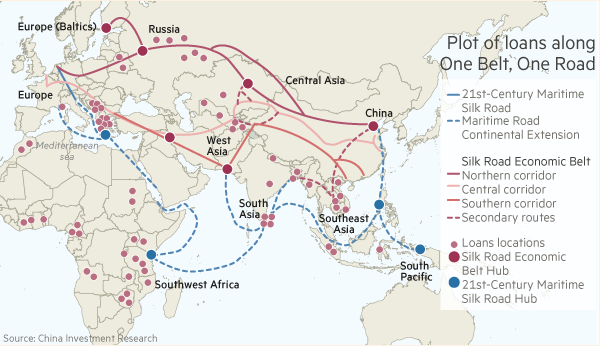
The main recipients of Chinese money include countries that Beijing is planning to make (or has already made) key players in the transcontinental “One Belt, One Road” project. China is too heavily dependent on its eastern seacoast and the narrow Strait of Malacca near Singapore through which most of its imports and exports pass. As an example, more than 80 percent of the oil purchased by China passes through this strait.

he construction of trade routes through Pakistan and Central Asia increases China’s resilience to political and military pressure from Washington. The “Belt and Road” project will also allow Beijing to start using its enormous currency reserves (more than $3 trillion), provide Chinese businesses with orders, and support employment in the country.
According to some estimates, more than $300 billion has already been spent on the project. And in the coming decades, China plans to spend a further $1 trillion on the “Belt and Road” project, creating an extensive transport and logistics infrastructure in Eurasia within the next decade.
In recent years, the West has surrendered its position as a lender in many Asian, African and Latin American countries, which has weakened its political influence significantly. But most striking is the speed with which China has come to the forefront. At present, China is issuing more loans to developing countries than the World Bank, and yet in the 1980s and 1990s, China itself was the biggest recipient of loans from the World Bank and the Asian Development Bank.
China is investing large amounts of money in countries that, by Western standards, are considered to be, if not “pariahs”, then “despotic”, “corrupt” and so on, countries like Zimbabwe, North Korea, Niger, Angola, and Burma.
Ugandan President Yoweri Museveni has said he likes Chinese money because “the Chinese don’t ask too many questions and they come with big money, not small money”.
In North Korea, meanwhile, only 17 Chinese projects were discovered over the entire period, for which the total amount of funding was just $210 million. This picture may be incomplete, however, since information is highly classified.
In some countries there is intense competition for influence between the US and China.
Pakistan is a prime example. In 2014, Pakistan was the third largest recipient of US money (after Iraq and Afghanistan). In the same year, Pakistan was the second largest recipient of Chinese money after Russia.
In 2015, Beijing began to have an additional influence by way of the Asian Infrastructure Investment Bank (AIIB). The authorised capital of AIIB is $100 billion. China, India and Russia are the three biggest shareholders with 26.06, 7.5 and 5.92 percent of the voting power respectively.

As can be seen, China’s position is much stronger than, say, America’s position in the IMF and the organisations that make up the World Bank Group (the International Bank for Reconstruction and Development, the International Finance Corporation, and the International Development Association). America’s stake in these is around the 16-17% mark.
Beijing’s international finance activities should not be regarded as “anti-imperialist”, of course. In the countries that Beijing is starting to befriend, what is left of their local industry is crumbling under the pressure of cheap Chinese imports. The projects to develop deposits or build roads and other infrastructure facilities involve predominantly Chinese contractors and suppliers. As often as not, construction and other onsite work uses Chinese labour.
Finally, China is slowly introducing tougher conditions for lending money to other countries. The interest rate has risen from 2.5% to 5% per annum and there is already a sense that many countries will not only be unable to repay, but also to service their Chinese loans.
Beijing is not worried, however: the deposits, real estate, infrastructure facilities built using Chinese money, and businesses serve as collateral. So it will all belong to China in the end. Then the competitive struggle between Washington and Beijing will become fiercer than ever.
Valentin Katasonov
The Strategic Culture Foundation







925069
924988
922113
921526
921524
919244
916783
915526
915524
915354
915129
914037
909862
908811
908810
908500
908465
908464
908300
907963
907895
907477
902002
901301
901106
901105
901104
901024
901017
900393
900392
900391
900390
899038
898980
896844
896798
896797
895983
895850
895848
893740
893036
891671
891670
891336
891017
890865
889894
889741
889058
888157
887960
887768
886321
886306
885519
884948
883951
881340
881339
880491
878671
878351
877678