Home › Forums › Political Corner › Lebanon – General Election Results And Political Change
This topic contains 2 replies, has 3 voices, and was last updated by  MoreSky 1 year, 8 months ago.
- AuthorPosts
Lebanon – General Election Results And Political Change
[Y There was an general election in Lebanon – which was almost completely ignored by the western MSM. The situation is complex, as are many events in the Middle East. These are a few of the views associated within Lebanon, both pre and post elections and some political views of the country and the transition of power that is expected.
Again – thanks for reading Y]
Lebanon, after 30-odd years of continual civil strife, refugee crises and wars – has had its first real legitimate General Election with international observers. However the reasons for the silence of the western MSM regarding this event lies in the expected outcome.
In what can only be considered a staggering loss for western influence in Lebanon, Prime Minister Saad Hariri’s Future Movement lost seats in several districts where it was previously unchallenged since 2011. His party shed a third of its previous share of parliament – down to 29 MPs as a result of the first election in nine years – and its far too obvious attempt to influence the result. In Tripoli alone, the Future Movement lost five of the district’s 11 seats to Sunni rivals.
Hezbollah and Amal – dubbed the “Shia duo” by local news media – are predicted to have won 29 seats in Lebanon’s 128-seat parliament during Sunday’s vote, according to unofficial tallies cited by politicians and local media reports. More than 11 seats are predicted to have been won by other political parties aligned with the duo.
The right-wing Christian group, the Lebanese Forces (LF), is expected to expand its presence in the parliament from 8 to 15 MP’s, making it a major force in Christian politics.
In Lebanon, the president must be a Maronite Christian, the prime minister a Sunni Muslim, and the speaker of parliament a Shia Muslim.
Hezbollah, Amal and their allies appear to have secured more than the “obstructionist third” needed to block the most important actions of parliament, Kemal Feghali, a veteran Lebanese pollster, told Al Jazeera
Explaining that a two-thirds quorum vote is required in crucial matters, such as amending the constitution or electing a president, Feghali said: “Because they have more than a third [of parliament], they can block the quorum.”
In typical legislative sessions, only a simple majority of 65 members is required to vote, something Hezbollah, Amal and allies can obtain by renewing their alliance with President Michel Aoun’s Free Patriotic Movement (FPM).
Hezbollah and FPM signed a memorandum of understanding in 2006, after Aoun returned from exile, and have been close allies since. It is the first such alliance between a major Maronite Christian and Shia political parties in Lebanon’s history.
Hezbollah and Amal further allied with prominent yet controversial figures: one, who emerged victorious at the unofficial polls, was Jamil al-Sayyed, a Shia former intelligence chief with strong ties to Syrian President Bashar al-Assad.
Independent candidates across Lebanon tried to challenge established political parties on Sunday, but they were almost completely unsuccessful which was a huge disappointment for the growing youth movement across Lebanon that detests sectarianism, patronage and corruption and largely due to the vote-buying scandal stayed home instead of vote.
Nadia Shaarawi, the manager of the polling station, said that young people had largely stayed away.“The young people don’t want to vote,” she said. “I know from my nieces and nephews, they are not happy with any politicians.”
In a political blunder of geopolitical importance, during the days leading up to this past Sunday’s Parliamentary election this supposedly secret vote buying (for as much as $2000 per vote) was anything but a secret in the minds of Lebanese voters as they went to the polls.
The disgust of voters for this attempt to thwart their first move towards democracy after almost a decade served up a defeat that could see Hariri relegated to the dustbin of politics since many of the candidates he counted on were thrashed, losing more than a third of their existing seats, while Hezbullah doubled their seats to twenty-four and many of their coalition partners also made strong gains.
This means that, as predicted, the Hezbullah coalition will not only be a block to remaining western influence in the Parliament, this coalition will also now set the agenda and with their new majority have the ability to strongly influence the election of the three most important leaders: the President, Speaker of Parliament and Prime Minister- who will not likely be Hariri.
After the election had closed and the final tally was in, on Monday the Interior Minister Machnouk has hailed the election a “democratic festival”. At a press conference, Machnouk said all problems were swiftly addressed when brought to the attention of the ministry, which was substantially accurate.
The long-awaited elections were marked by a voter turnout of just under 50 percent, down from 54 percent in the last legislative election in 2009, Lebanon’s interior minister, said on Monday.
Hezbullah leader, Hassan Nasrallah also dubbed the election an “accomplishment,” praising the government and President Aoun for its success.
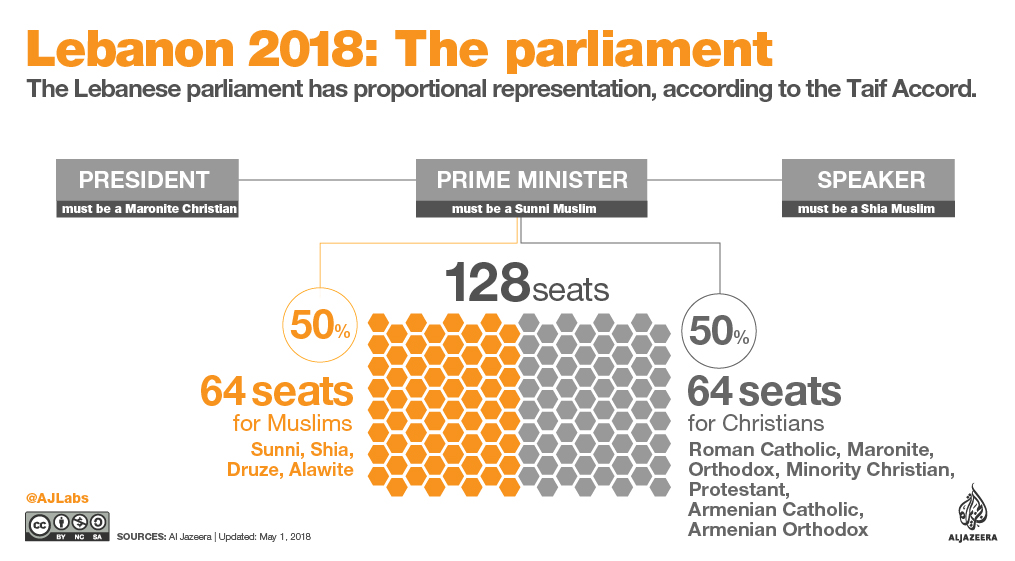
What this means for Lebanon and Hezbullah
Lebanon has long been stuck in the middle of a regional power struggle between Iran and Saudi Arabia. To complicate matters, tensions have been rising between Israel and Saudi Arabia on one hand and Iran and Hezbullah on the other hand.
Iran’s influence in Lebanon, through the powerful party, had been a point of growing tension for Israel and Saudi Arabia, both of which view Beirut as a pivotal cog of Tehran’s regional projection.
Hariri finds himself caught between the region’s feuding powers, raising questions about the fate of the dynasty that has been the face of politics for decades in Lebanon. While he was always critical of Hezbullah and Iran, he has found a way to work with them.
In 2009, a Saudi and Syrian rapprochement after years of tension from the elder Hariri’s assassination made it possible for the son to form a unity government.
In December 2016, another tacit agreement between Saudi Arabia and Iran made Hariri prime minister again in a coalition government that included Hezbollah. It was yet another uneasy partnership that seemed to teeter on the edge of collapse, particularly as Hezbullah became more assertive in the region.
Indeed, even before the release of the official election results, Israeli ministers weighed in on the prospects of a stronger position for Hezbullah in Lebanon’s politics.
“The state of Israel will not differentiate between the sovereign state of Lebanon and Hezbullah, and will view Lebanon as responsible for any action from within its territory,” an Israeli security cabinet minister was quoted by Reuters news agency as saying.
Separately, commenting on Twitter, Naftali Bennett, a hawkish member of the Israeli cabinet, said: “Hezbullah = Lebanon.”
Hezbullah has gained political ground in Lebanon and consolidated Iran’s influence on the fragile state’s affairs after winning, along with its allies.
Hassan Nasrallah said the party’s goals had been achieved by the ballot, which has put it in a strong position for post-election negotiations that apportion ministries and control over state institutions
The western media would have those reading about today’s Lebanon from a distance believe that Hezbullah is only a fighting force and therefore easily identifiable in a uniform such as with their invited presence in Syria.
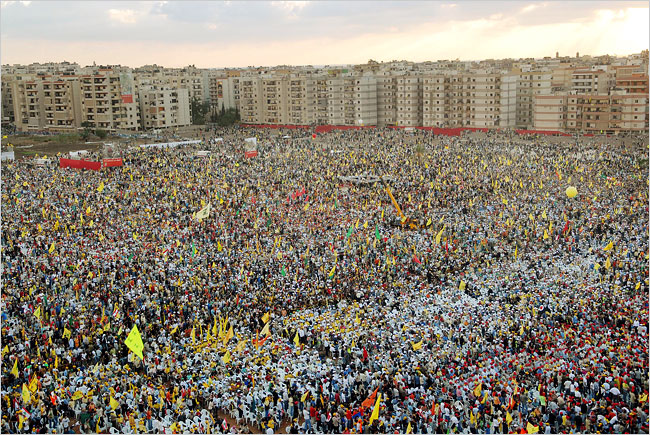
A Hezbullah Picnic GatheringAlmost exclusively western media minimizes the complete reality by reporting only on Hezbullah’s military wing, Al Moqawama al Islamia (The Islamic Resistance). Hezbollah is proscribed as a terrorist group by the United States and its hold on Lebanese affairs has been problematic for a succession of US and European leaders.
The reality is that today within Lebanon, Hezbullah is an army of the people,. These people are doctors, teachers, accountants, taxi drivers, shopkeepers, manual labourers and all other professions.
Hezbullah was born of a need for a defence against invasions, its roots steeped in the social uprising of the Lebanese Shia community in the late 1960′s and early 70′s.
Since the 2006 war at its southern border, much about the rise of this deliberately managed organization, now firmly entrenched in Lebanese society, has changed dramatically.
Indeed the military wing is now far more organized and prepared for defence than before the 2006 war, however, Hezbullah’s persona under the direction of their spiritual and political leader, Sheikh Sa’id Hassan Nasrallah has also dramatically changed. There is a moral, disciplined side to the militia that comes from the overlying Shia religious doctrine espoused by Nasrallah, that now accepts all religions, but with a firm grasp on professional, ethical performance of its military duties…only when necessary.
Information that belies the usual narrative about this Lebanese nationalist political, social and military group is as hard to obtain as is an interview with one of their soldiers.
The western press, of course, routinely demonizes this organization’s defensive and socially important new political philosophy- one that in a post-war decade has increasingly provided much-needed benefits- beyond defence- to most of Lebanon and its people.
I get to know the man who has asked me here to his company. He introduces himself as Hadi. He has many points that he wants to make clear. I am listening … and scribbling furiously.
Hadi fought in the 2006 war and has the scars to prove it. Like many involved with modern Hezbullah, Hadi is a businessman who is daily in the tourism business. He has a family. He wants peace. He wanted peace in 2006. He wants peace now. But, he is emphatic that war has been brought to Lebanon despite the peaceful desire of the nation.
He feels that a new generation of Israelis will reject new war and that Israel is slowly changing away from a focus on Lebanon. However, he is just as adamant that Lebanon and Hezbullah are ready to defend Lebanon once again.
Lebanon remains deeply indebted to international donors. It has one of the lowest rankings on the global transparency index and one of the highest debt-to-GDP ratios in the world.
Its leaders, including Hezbullah, have been anxious to avoid the perception that the state is subservient to the party. However, the election results coupled with hardening external views about the economic and political state of Lebanon could pose new variables in a country that can ill afford them.
Despite these tangible concerns, the Lebanese spoken with were taking it all in stride. As one woman put it, draining here c~~~tail glass and cheerfully chiming in, “ They bomb…we rebuild. They bomb…we rebuild. That’s Lebanon.”
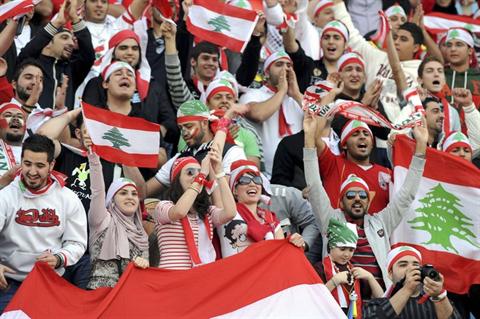
Citations
[1] http://www.unz.com/article/hizbullah-today/
[2] http://www.unz.com/article/staggering-election-loss-for-the-west-huge-win-for-lebanon/
[3] https://www.aljazeera.com/news/2018/05/hezbollah-amal-allies-claim-lebanon-election-sweep-180507160524402.html
[4] https://www.theguardian.com/world/2018/may/07/hezbollah-makes-strong-showing-lebanon-elections
[5] https://www.haaretz.com/middle-east-news/who-is-lebanon-s-saad-hariri-1.5466366Looks like Lebanon will be returning to internal civil war and sectarian violence.
mgtow is its own worst enemy- https://www.campusreform.org/
Very informative post.
Thanks."...reinvent your life because you must; it is your life and its history and the present belong only to you.” It is Your Life, Charles Bukowski.
- AuthorPosts
You must be logged in to reply to this topic.
921526
921524
919244
916783
915526
915524
915354
915129
914037
909862
908811
908810
908500
908465
908464
908300
907963
907895
907477
902002
901301
901106
901105
901104
901024
901017
900393
900392
900391
900390
899038
898980
896844
896798
896797
895983
895850
895848
893740
893036
891671
891670
891336
891017
890865
889894
889741
889058
888157
887960
887768
886321
886306
885519
884948
883951
881340
881339
880491
878671
878351
877678